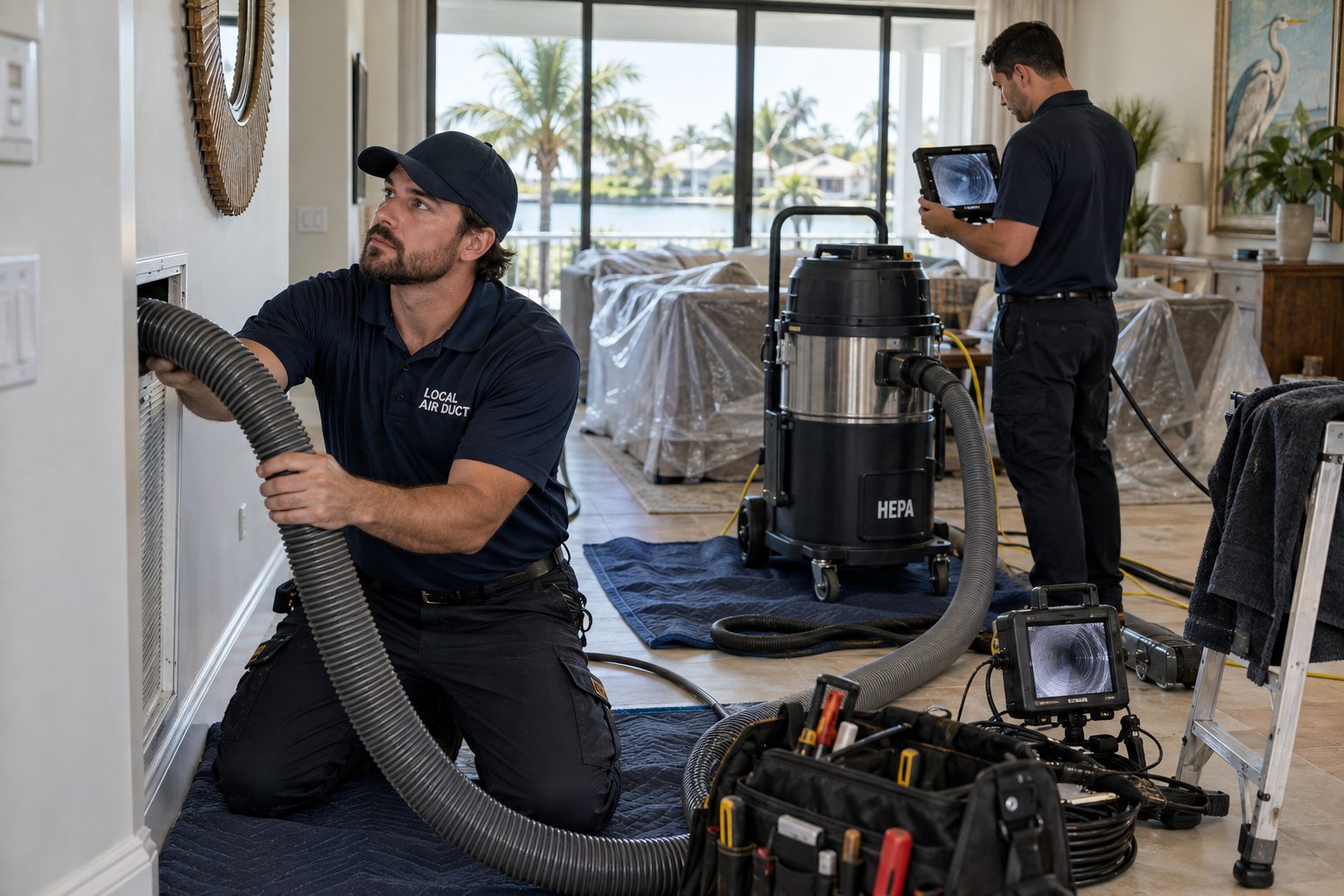
Apartment style living and the way air moves through it
A great deal of South Florida housing is stacked, shared or attached. People in condominium buildings and townhome rows often assume their duct system works like the one in a freestanding house, and sometimes it does, but the layout can differ in ways that change the whole job. A unit might have a single air handler in a closet, a short run of duct above a dropped ceiling, and a handful of registers.
That compact layout has real consequences. Because there is less duct, there is also less room for error. A small amount of debris in a return can have a visible effect, and a closet air handler that draws air from a dusty storage space can load the system with debris in a short time. On the other hand, a smaller system can be inspected thoroughly in a short visit.
This page is general guidance for people in Hallandale Beach. It does not describe specific buildings, and it does not claim that any particular property has been serviced. What it offers is a framework for thinking about your own unit, so you can describe it clearly on the phone and understand the answers you receive.
Does your unit have its own air handler?
The first fact worth knowing is whether the equipment serving your home belongs to your home. In many condos and townhomes each unit has its own air handler and outdoor condenser, and the ducts stop at the unit walls. In other buildings, parts of the system may be shared or maintained by the association, and the decision to clean them is not one an individual owner can make alone.
If you are unsure, look at where the air handler sits and what it feeds. A closet with a return grille in the door and a handful of supply registers in the rooms around it usually points to a unit level system. If the building has a central plant, risers or common air handlers, you may need to ask management what is included.
Tell the person you speak with what you know and what you do not. It is perfectly fine to say you are not sure. Clear information about the equipment helps the inspection start in the right place, and it prevents a visit from being planned around an assumption that turns out to be wrong. Requirements for work in multi unit buildings vary, so ask your association or manager.
Coordinating with management and neighbors
Work in a condominium rarely affects only one household. Equipment can make noise, doors and hallways may be in use, and carts or hoses may need to move through shared spaces. Many associations like to know in advance when outside workers are coming. Whether you need to submit notice, share paperwork, or reserve a time for a service elevator depends on your building, so ask the office what they expect.
If you rent, the owner or property manager may need to approve the work, and some leases spell out who is responsible for maintenance. Check before you book so there are no surprises on the day. Owners who rent out a unit may also want a documented inspection between tenants.
Think about the practical side too. Technicians bring hoses, a collection unit, drop cloths and sometimes a ladder. Knowing where they can set up, where they can park and how they will carry equipment to your door saves time for everyone and keeps common areas clear of clutter. Ask your building contact what is usual, and pass that along when you call. Neighbors can also be considered. Ductwork often runs near shared walls, and loud tools can carry. A brief word to the household next door, or at least a sensible choice of timing, keeps relations friendly. Your technician can explain what the equipment sounds like so you know what to expect and can pass that along.
What an inspection looks at in a compact system
The inspection is the same in principle in any property but it is shaped by the space. The technician typically opens the air handler cabinet, looks at the filter slot and the blower compartment, and examines the plenum where the ducts connect. They then follow the supply and return paths as far as access allows, using a light and a small camera where they cannot see by eye.
In many condos the ducts are in a soffit or above a ceiling, which makes access panels important. If no panel exists, the technician may find a way in through a register opening or the air handler itself. Cutting into finished ceilings is something that should be discussed and agreed before it happens, not decided silently.
The result of the inspection is a plain description of what was seen and what the options are. You should hear about dust levels, signs of moisture, damaged or disconnected sections, and the condition of the return. The scope and price are explained before work begins, so you can compare the findings with your own observations and decide how to proceed.
Moisture, odor and the closed up unit
Units that sit closed for long periods, such as seasonal residences or properties between tenants, have their own pattern. With the air conditioner set high or turned off, humidity builds indoors, and when the system restarts it may push a musty smell through the house. That smell can come from many places: damp dust in the ducts, a dirty coil, a drain pan that has held water, or soft furnishings.
Opening the windows is a natural reaction but in humid weather it often makes things worse. A better first step is to ask for an inspection so the source can be found. If the smell clears after the system has run for a while, that tells you something. If it persists, it tells you something else.
The indoor air quality testing page describes how testing can help when you want measured information rather than a hunch. Testing is not required for most cleaning jobs, but it can be useful when someone in the household has symptoms and you want to understand what is in the air before spending money.
Dryer vents in multi unit buildings
Dryer vents in condos and townhomes can be surprisingly long. The exhaust may travel through a wall, a ceiling space or a shaft before it reaches the outdoors, and each bend gives lint a place to settle. A vent that is long, bent or fitted with a flexible foil hose collects debris more readily than a short straight one.
Warning signs include clothes that stay damp after a normal cycle, a laundry closet that feels unusually warm, a burning smell of hot lint, or a flap outside that no longer opens fully. Because lint is flammable, a blocked vent is not something to put off. Do not poke tools into the duct yourself, and do not run the dryer repeatedly hoping it will clear.
The dryer vent cleaning service page and the local guide to dryer vent cleaning in Hallandale Beach explain how a vent is cleaned and checked. In a building, ask the office whether vents run to a shared exterior wall or roof terminal, since access can differ from a house.
Closets, soffits and the small spaces that hold the equipment
In a compact home the air handler often shares a closet with the water heater, cleaning supplies or stored boxes. That arrangement affects air quality more than most owners realize. The return side of the air handler pulls air from wherever it can, and if the closet door is louvered or the cabinet has gaps, it may draw dusty closet air into the system every time it runs.
A simple check is to look for daylight or loose seams around the air handler cabinet and the return connection. Gaps can be sealed by a professional so the return pulls from the rooms and not from the closet. Keep the space around the equipment clear so a technician can reach the filter, the access panels and the drain line without moving a pile of belongings.
Soffits and dropped ceilings are another small space worth understanding. Ducts hidden behind them are still part of the system, and a loose joint there can leak conditioned air into a cavity where it does nothing useful. If one room is persistently uncomfortable, mention whether it sits at the end of a long run, because the inspection can then look at that stretch with extra care.
None of this requires you to open walls or take anything apart. Describing where the equipment is, how the rooms feel and what you notice is enough to start. The technician does the rest, and tells you plainly what could be done and what is optional.
Houses and townhomes with attic air handlers
Not every property in the city is a high rise. Single family houses and townhomes often put the air handler in an attic, where heat and dust are part of the environment. Attic ducts are wrapped in insulation and exposed to hot air, so any gap or tear can pull in dusty attic air, and damaged insulation can sweat when it meets cold ducts.
If your system lives in an attic, the inspection will usually include a look at joints, connections and the condition of the outer wrap. You might hear about repair or sealing in addition to cleaning, because a leaky duct draws attic dust into the airstream no matter how clean the inside was made. The duct repair and sealing page explains that work.
Attic work is hot and tight, so technicians will plan carefully. Keep pets away from the access point, clear the area under the hatch, and make sure someone can let the technician in. Photographs taken in the attic often reveal more than people expect, which is one reason the before and after pictures matter.
Another practical point is the age of the building. Older properties may have a mix of original duct and later additions, such as a section added during a renovation. The seams between old and new work are common places for leaks, so the technician will pay attention there and mention anything that looks loose, crushed or poorly supported.
What a fair scope and price conversation sounds like
Before work begins, you should be told what will be cleaned, how, and why. The explanation should refer to your system: how many returns and supplies, whether the coil or blower compartment is included, and what will not be touched. If a price is quoted, it should be tied to that scope, not to a vague package that could mean anything.
Ask also what the technician will do if something unexpected appears mid job, such as a collapsed section of flex duct or wet insulation. The right answer is that they stop, show you, and explain the options before continuing. Surprises handled that way are manageable, while surprises handled silently are the ones people regret. Be cautious about pressure. A sound recommendation can survive a night of consideration. You are entitled to ask for time, to ask questions, and to ask for the findings in writing or in photographs so you can think about them or share them with the association or owner.
Our process is plain. You call and describe the property and what you notice. The system is inspected. The scope and price are explained before work begins. Before and after photos and a final check are shared with you. The scope guide goes into more detail about what each line of a scope can mean.
Reading before and after photos
Photographs are only useful if you know what to look at. A good before photo shows the interior of a specific duct or register at a recognizable point, so the after photo can be taken from the same place. If the pictures show different spots, the comparison means little.
Look for the floor of the duct, the seams, and the area around the register boot. Dust that hides in corners is a common leftover when the job is done carelessly. A clean result looks even and bare, without clumps of grey felt or shadowy patches. Ask what you are looking at if anything is unclear.
There is a longer explanation in the before and after photo guide. It helps owners and property managers judge results in a calm, practical way, and it is worth a read if you plan to keep records for a unit you rent out or intend to sell.
Planning the visit and looking at nearby areas
On the day, expect the technician to walk through, look at the equipment, and explain the plan. Clear access to the air handler, move delicate items away from the registers, and secure pets. If the work is in a building, make sure doors and elevators are arranged, so equipment does not wait in a hallway.
After the work the technician reconnects what was opened, checks that the system runs, and shares the photos. If you manage several units or look after a family member's home, keep a simple note for each one with the date, the findings and the photos, so later decisions are easier. A short written history also helps if you ever compare notes with an association, a buyer or an equipment technician, because everyone then starts from the same facts instead of memory. Take a moment to ask any remaining questions, and keep the information somewhere you can find it later. A habit of periodic filter changes will keep the benefits going longer than most people expect.
If you are comparing guidance for the wider area, the pages for Aventura and Fort Lauderdale raise similar points for their own readers. The air duct cleaning in Hallandale Beach guide and the service area page give extra context.
Common questions
Can I clean my condo ducts if the building shares the air system?
Not on your own authority. If any part of the system is shared or maintained by the building, the decision belongs to management or the association. Ask the office what is shared and what is yours. Once that is clear, the inspection can focus on the parts that serve your unit and the scope can be explained accordingly.
Do I need permission from my association before a visit?
Requirements vary from building to building, so ask your association or property manager. Some want advance notice, some ask for paperwork, and some set times for outside workers or use of the service elevator. Checking first avoids a delay on the day and keeps good relations with neighbors.
My unit smells musty when the air conditioner starts. What should I do?
Describe the smell and when it appears when you call. Possible sources include damp dust in the ducts, a dirty coil, a drain pan that held water, or items in the closet. An inspection can find which it is, and the plan is explained before any work begins, so you stay in control.
How long are dryer vents in condos and townhomes?
It varies a lot. Some are short and straight, and others travel through walls, ceilings or shafts with several bends. Longer, bendier runs and flexible foil hoses collect lint more readily. A clogged vent is a safety issue, so if your laundry takes extra cycles to dry, have the vent looked at.
What will I see after the work is finished?
You will receive before and after photos showing the inside of the same parts of the system, along with a final check that the equipment runs normally and everything is put back. If something was found that cleaning cannot solve, such as damaged duct, that is explained so you can plan the next step.
Is this page about a specific building?
No. It is general guidance for people in the city and does not describe or claim any particular building or past work. The details that matter most are yours: whether the air handler is yours alone, where it is, how the ducts run, and what symptoms you have. Share those when you call.