South Florida
Fort Lauderdale Air Duct Cleaning: A Local Homeowner Guide
A stale or musty smell is the most common reason people in Fort Lauderdale start asking about their ducts. This general guide helps you trace the cause, decide what is worth doing, and avoid paying for the wrong fix.
Call (954) 686-6201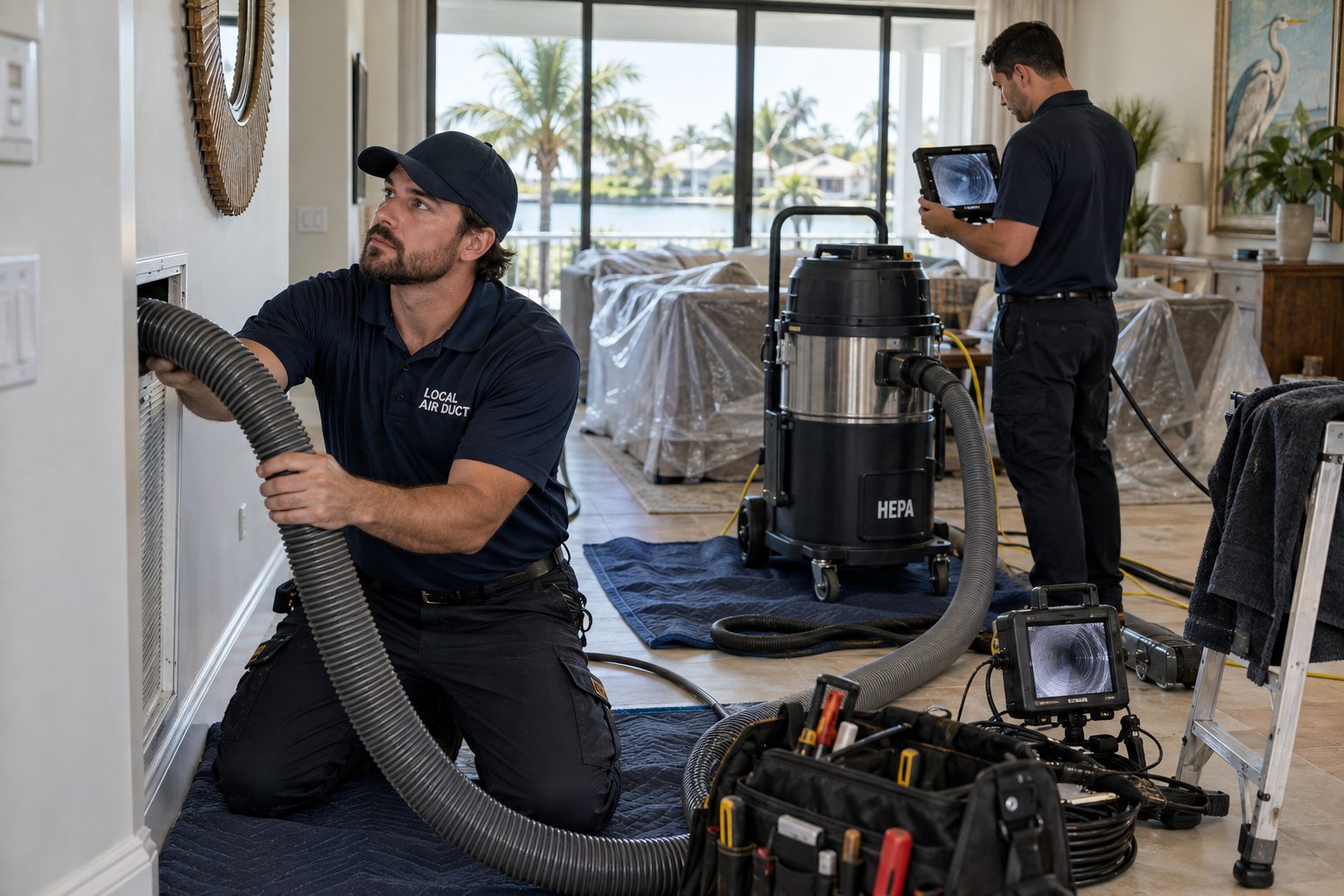
Discuss the property and the actual symptom
Describe the symptom, the rooms affected and what the cleaning or repair needs to achieve. The scope is explained to you first.
Call (954) 686-6201Starting with the nose
Smell is a useful but unreliable signal. A room can smell stale because of a damp carpet, a full trash bag, a wet towel or a closet with no airflow, and none of those has anything to do with the ducts. Before you decide that the air system is to blame, spend a few minutes noticing when and where the smell appears.
The pattern matters more than the intensity. If the smell appears only when the air conditioning starts, then fades, the cause is probably inside the system, such as damp dust on the coil or a wet drain pan. If it is constant in one room, look at that room itself. If it appears after rain or after a stretch of humid weather, moisture is the likely theme.
This page is general guidance for people in Fort Lauderdale and nearby, and it makes no claims about any specific building or street. It is meant to help you sort the possibilities so that a phone call to a duct professional can be short and precise.
Write your observations down in a few lines. Include the room, the time of day, the weather that week and whether the smell is sour, earthy, dusty or sharp. Those words help more than you might expect.
Try a simple test as well. Close the doors in the room, run the system for a full cycle, then step in and breathe near a supply vent and near a return grille. If the smell is stronger at the vent, the supply side is involved. If it is stronger at the return, the air is picking it up on the way in.
Another clue is whether anyone else notices it. Our own homes become familiar, and we stop smelling what visitors catch at the door. Ask a friend or relative to walk in and tell you honestly what they notice, and where.
How humid weather works on an air system
In warm, damp conditions, an air conditioner is constantly removing water from the air. The coil gets cold, moisture condenses on it, and the water drips into a pan and out through a drain line. If any part of that path is slow or blocked, water lingers, and anything that stays wet in the dark begins to smell.
Ducts add another factor. Cold supply air moving through warm attic or ceiling space can cause condensation on the outside of a duct if the wrap is thin, torn or missing. That moisture can darken insulation and, over time, feed an odor that seems to come from the vents.
Long cooling seasons make all of this more noticeable. A system that runs most of the year has little time to dry out, so small issues that would fade in a drier region can stay present here. That is not a failure of the home. It is simply how the climate treats air handling equipment.
Keeping the filter fresh, the drain clear and the ducts sealed and wrapped goes a long way toward managing it.
Thermostat habits play a part too. Setting the temperature very high while you are out lets indoor humidity climb, and the system then has a lot of water to remove when it restarts. A steadier setting keeps the coil working at a sensible pace and gives surfaces less opportunity to stay damp.
Some owners add a standalone dehumidifier or a humidity monitor. These can help you understand what is happening, but they do not replace a clean, sealed duct system. If a monitor shows persistently high readings, mention that when you call, since it points toward moisture sources worth finding.
Mixed building ages and what they mean for ducts
Fort Lauderdale has homes and buildings from many periods, and each period tends to use different duct materials and layouts. Older properties may have rigid metal runs, fiberglass duct board or early flexible duct, sometimes with later additions. Newer properties often rely heavily on flexible duct with plastic inner liners.
Age does not equal condition. A well kept older system can be in good shape, while a newer system with crushed flexible runs may perform poorly. What matters is what is found when someone looks.
Renovations complicate things. Over time, rooms get added, walls move and equipment is replaced, and the duct system may not have been reworked to match. A trunk line that once served three rooms may now serve five, which can leave the farthest ones weak and prone to damp, stale air.
If you know approximately when your building was built, or when the air handler was last replaced, mention it when you call. It helps the inspector set expectations.
For condos and townhomes, the air handler is often small and tucked into a closet, and the ducts above the ceiling are short. For larger houses, trunk lines can be long with many branches. Both can hold odors, but the way they are cleaned and the time needed differ, and the explanation of scope should reflect that.
Buildings with several floors may also have separate systems for each level. If your odor is on one floor only, say so. It may mean the problem is limited to one system and does not need the whole property treated.
Common sources of a stale smell
The air handler is a frequent origin. A drain pan with standing water, a coil coated in dust and damp, or insulation inside the cabinet that has absorbed moisture can each produce a sour or earthy smell that spreads through every vent.
Dust on the blower wheel and in the first section of ductwork is another source. When the system starts, airflow disturbs it and pushes it through the registers. The smell is often described as dusty or like an old closet, and it fades as the system runs.
Return side problems also matter. If the return pulls air from a dirty space such as a closet, a garage or an attic gap, the smell travels with it. This is a sealing problem and not a cleaning problem, although cleaning may still be wise.
Finally, the room may be the source. Mildew in a bathroom, a damp mattress or a wet area beneath flooring creates smells that the air system merely carries around.
- Standing water or slime in the drain pan.
- Damp dust on the coil or blower wheel.
- Torn or wet insulation on the outside of a duct.
- A return that pulls air from a garage, closet or attic gap.
- A damp room that has nothing to do with the ducts.
What to check yourself, safely
Start with the filter. Slide it out and look at it. A gray, heavy filter or one that has collapsed can restrict airflow and let dust pass onto the coil. Replace it with the correct size, and write the date on the frame.
Next, look at supply and return grilles. Remove a cover if it unscrews easily and use a flashlight. Note any visible dust, dark spotting or dampness. Do not poke into the duct with tools, and do not remove anything that is taped or sealed.
Look around the air handler without opening it. Is there water on the floor, a rust stain, a wet ceiling nearby or a drain line that seems disconnected? Any of these is worth mentioning. Never touch electrical parts, and turn to a professional for anything inside the cabinet.
Finally, check the rest of the home for the source. Look under sinks, near the washer and around windows after rain. Sometimes the answer is simple and has nothing to do with the air system.
One thing to avoid is masking the smell. Air fresheners, scented sprays and ozone gadgets can hide an odor for a while but do not remove its source, and some can irritate people who are sensitive. Finding the cause is more useful than covering it.
Keep a basic log for a week. Note the date, the room, the thermostat setting, the weather and the strength of the smell on a scale you invent, such as faint, clear or strong. A week of notes often reveals a pattern that a single impression cannot.
What an inspection adds
A trained inspector can see parts of the system you cannot reach. With a light and camera or mirror, they can look into the trunk line, check the blower, view the coil where accessible and examine the drain pan. They can also tell the difference between ordinary dust, damp buildup and signs of moisture damage.
The inspection should end with a plain explanation of what was seen and what, if anything, should be done. The scope and price are explained before work begins, and nothing should be started until you agree. You may also be shown photos, which is helpful when you are deciding.
If an inspection reveals that the cause is outside the ducts, that is useful news. It saves you from paying for work that would not fix the smell and points you to the real issue.
The scope guide explains how the size of a job is judged, and the air duct cleaning page describes the service itself.
You are entitled to ask questions during the inspection. Why does that area look damp? What would you expect to see if the problem were in the return? How would the smell change if the coil were cleaned? An inspector who answers plainly is giving you the knowledge to decide for yourself.
Be wary of any suggestion that a single product or treatment will solve every smell. Odors have causes, and causes differ. The right plan starts with identifying which cause applies to your property, and the inspection exists to answer that question.
When cleaning helps and when it does not
Cleaning helps when dust, lint and debris have built up on duct walls, the blower or the coil. Removing that material can reduce odors that come from damp dust and can restore airflow. It is a physical process: vacuum, agitation and wiping, followed by a check.
Cleaning does not fix a clogged drain, a torn duct wrap, a leaking return or a damp wall. If those problems exist, they continue to produce smells no matter how clean the duct interior may be. A good provider will say so honestly.
Cleaning also does not replace testing if you have a real health concern. If someone in the home has persistent breathing trouble and you suspect mold, the indoor air quality testing page explains what testing offers. A medical professional should guide any health decisions.
Set your expectations accordingly. Cleaning is one useful step in a sequence that may also include repair, sealing and better filter habits.
If the blower wheel is heavily coated, cleaning it can make an immediate difference to airflow, and stronger airflow often helps a room dry out and smell fresher. The coil and blower cleaning page explains why that part of the system matters so much when odors are the complaint.
Repairs and sealing for odor problems
If the return pulls from a poor source, the fix is usually sealing. Gaps at the air handler, around the filter slot or along return plenums let unfiltered air in. Sealing them with appropriate materials improves filtration and reduces the odors that ride in with leaked air.
If insulation is the issue, replacing or rewrapping the affected section stops the sweating and lets the area dry. The attic duct insulation page explains how this relates to comfort and moisture, and the duct repair and sealing page covers leaks and loose joints.
Order matters. Repair first, then clean, then replace the filter. That sequence keeps new dust and moisture from undoing the cleaning. If budget limits you to one step, ask which will make the biggest difference in your situation.
Insist on seeing the problem before you pay to fix it. Photos from the inspection should show the damaged or leaking area clearly.
Ask also how the repair will be finished and checked. A sealed joint should be solid and neat, and a rewrapped duct should be snug, with no gaps where cold metal can touch warm air. The final check should confirm that the system runs normally after the work and that no new noises or leaks have appeared.
Dryer vents and bathroom exhaust as smell sources
Not every smell travels through the air conditioning ducts. A dryer vent clogged with lint can push damp, warm air back into the laundry area, producing a hot, musty smell. A bathroom fan that does not vent properly leaves moisture in the room and on the ceiling.
Check the outside cap of the dryer vent. The flap should open freely when the dryer runs. If it is blocked or stuck, air has nowhere to go. The dryer vent cleaning page explains how this line is cleaned and why it is a separate task.
Bathroom fans should pull a tissue against the grille. If they do not, the fan may be dirty, or its duct may be disconnected in the attic. Both are worth fixing in a humid climate where moisture lingers.
Treating these lines as separate from the air conditioning ducts also helps you read estimates correctly.
Kitchen exhaust is a third line worth a look. A range hood that vents outdoors can carry grease that coats the duct, and a greasy duct holds odors. If your kitchen smells stale even when it is clean, check the hood filter and the outdoor cap, and mention both when you call.
Looking at neighboring areas and planning the call
The neighboring guides show how the same ideas apply in nearby places. The Wilton Manors guide and the Oakland Park guide are good companions to this page, and the Fort Lauderdale city page offers a broad overview.
Before you call, collect your notes on the smell: when it appears, where it is strongest, what the weather has been and what you checked yourself. Add the filter date and whether you saw any dampness.
Then call and describe the property and the symptom. The system is inspected, the scope and price are explained before work begins, and before and after photos with a final check are shared with you.
Afterward, watch whether the smell changes. If it persists, tell whoever did the work, with the same notes, so that the next step is based on evidence.
Common questions
Does a musty smell always mean mold?
No. Damp dust, a slow drain, a wet towel or a closed closet can all smell musty without any mold at all. If you do see dark fuzzy growth or active dampness, avoid disturbing it, take photos and describe it when you call so the source can be found.
Why does the smell appear only when the air starts?
Startup airflow disturbs dust and damp residue on the coil, blower and first stretch of duct and pushes it through the vents. That pattern points toward the air handler or ducts, which is why an inspection of those parts is a sensible first step.
Can a dirty filter cause odors?
Yes. A filter loaded with dust and moisture can smell on its own and can restrict airflow, letting more dust reach the coil. Replacing it with the right size is the lowest cost and simplest first check, and it should be part of any routine.
Will cleaning remove a smell from a leaking return?
Not by itself. If unfiltered air is leaking into the return from a closet, garage or attic gap, the smell comes back. Sealing the leak is the right fix, and cleaning may be added afterward to remove what has already collected.
Is it safe to run the air if I see dampness near the unit?
Standing water near the air handler should be checked before heavy use. Turn the system off if there is a risk of electrical contact with water, and describe what you see when you call. Never touch wet electrical parts or open the cabinet yourself.
How will I know the work solved the problem?
Compare the before and after photos, then run the system through a full cycle and note whether the smell appears at startup. If it does, tell the provider with your notes. The cause may lie outside the ducts, and a follow up check can look there.