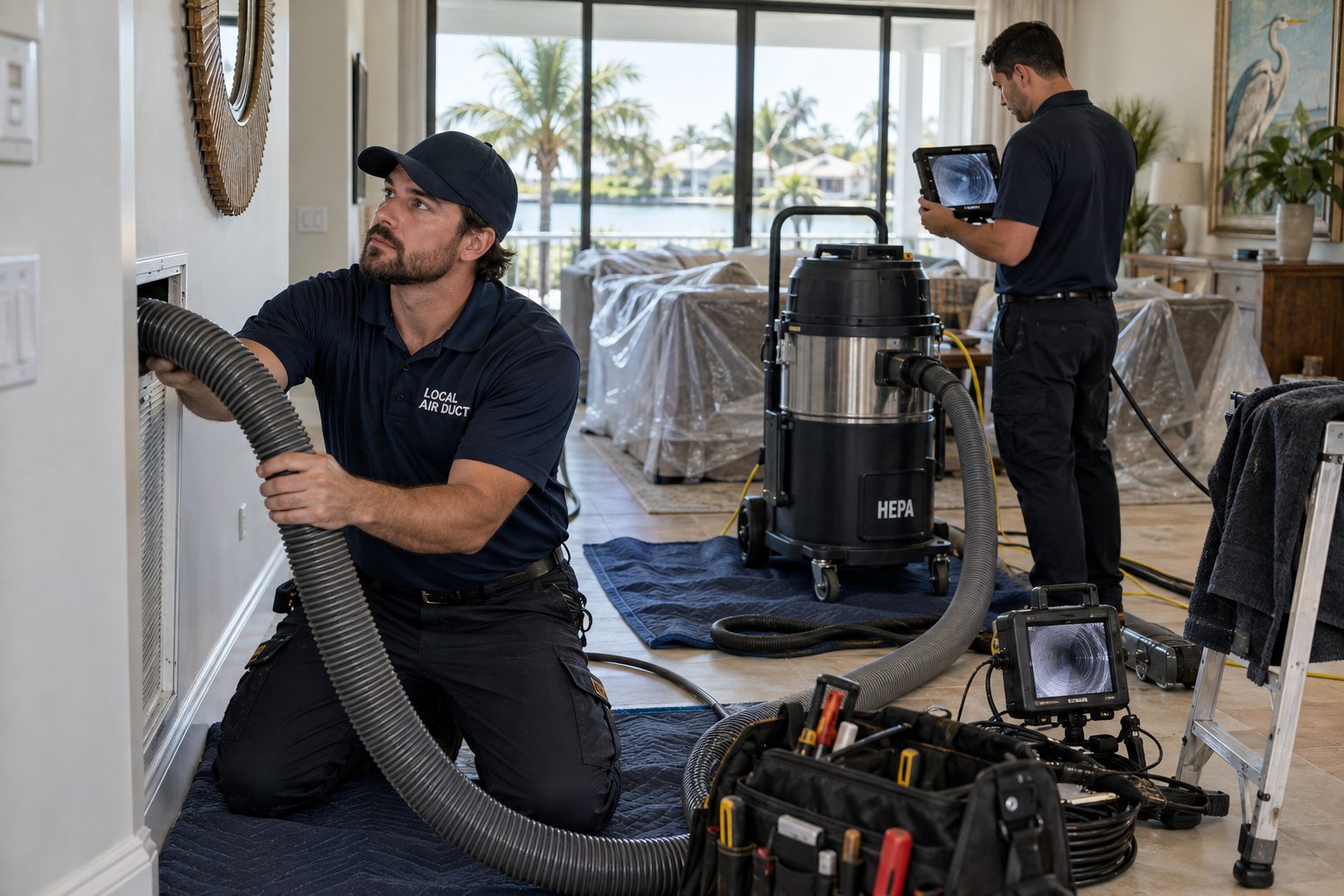
What this page is, and what it is not
This page offers general guidance for people living or managing property in Boca Raton, Florida. It does not describe particular neighborhoods, streets or developments, and it does not claim that any past work was done in a specific community. Its purpose is simpler: to help you understand what duct cleaning involves and how to prepare for a sensible conversation about it.
Boca Raton has a wide mix of property types, from compact townhomes to large single family houses with several cooling zones, as well as offices and retail suites. Because that range is so broad, the most useful advice is about how to think through your own system, not about a typical house. Read the sections that match your situation and skip the rest.
If anything on the page conflicts with a rule from your homeowners association, your condo board or your city, follow the local requirement. Those rules vary, and the right person to ask is your association manager, the city building office or the property owner.
A final word on expectations. Duct cleaning is a maintenance task that removes accumulated material from the air path, and it works within the limits of what the system and the building allow. It does not replace repairs, and it does not change how the house is built. When a provider describes the work in those honest terms, you can trust the rest of the conversation more easily.
Why bigger homes mean more to check
A larger house usually has more than one air handler, and each handler feeds its own set of supply and return runs. One upstairs unit may serve bedrooms while another serves the main living area, and a third might sit in a garage or attic for a guest wing. Each of those systems collects its own dust and deserves its own look.
More ductwork also means more places where problems can hide. Long runs through attics can sag, separate at joints or lose insulation. Supply plenums can develop gaps at the air handler where the metal meets the duct board. When a home has several systems, one may show heavy buildup while another looks clean, and the scope should reflect that difference.
Ask the provider to count the systems, name the ones included, and explain how each will be reached. A single sentence like clean the whole house does not tell you whether a second or third air handler is part of the plan. The more precise the description, the easier it is to compare the finished work against it.
Zoned systems add another wrinkle. Dampers inside the ducts open and close to send air where it is needed, and they can stick or fail. A technician cleaning a zoned run should work around the dampers carefully and note any that appear stuck, since a damper that no longer moves is a repair matter for the heating and cooling trade, not a cleaning matter. Mentioning your zones up front lets the crew plan for them.
- How many air handlers the property has and where each one sits.
- Which supply and return runs belong to each system.
- Whether any zone has a damper or a separate thermostat.
- Whether additions or renovations changed the original layout.
- Which areas have limited access such as tight attic spaces.
The case of the house that sits closed
Many Boca Raton properties are not occupied every week of the year. Seasonal residents leave for part of the year, owners travel, and rental homes go through gaps between guests. A closed house in a warm, humid climate behaves differently from one with people coming and going, and the air conditioning often stays on a low setting that keeps humidity only partly controlled.
When a house is closed up, stale air and settled dust accumulate at registers and in the return. If humidity creeps up, damp dust gets stickier and may stain the metal around vents. A musty smell when you return and restart the system is common enough to be worth noting, though it does not by itself identify the cause.
Before you leave for a long absence, think about filter condition, thermostat settings and whether someone can check the home. When you come back, look at the registers with a flashlight before assuming everything is fine. A small amount of staining is a good reason to ask for an inspection, and a bigger concern is a reason to ask for a closer look at the coil and drain pan.
Rental owners and property managers face a version of the same problem. Between guests, the house may be cooled lightly or not at all, and the next guest walks into stale air. A short checklist for turnover can include looking at filters, glancing inside a few registers, and noting any smell. Catching a pattern early is easier than answering a complaint later, and photos from each inspection build a useful record over time.
Dust from renovations and remodels
Larger homes are often updated, and updates make dust. Sanding drywall, cutting tile, refinishing floors and removing old fixtures all release fine particles, and if the air conditioning ran during the work, some of it was pulled into returns. Drywall dust in particular is fine enough to travel deep into duct runs.
The usual protection is to cover registers and returns during construction. Unfortunately, that step is not always taken, and homeowners sometimes only realize afterward that a haze keeps appearing at the vents. If a renovation has happened recently, tell the provider what work was done and which rooms were involved, so the inspection can look in the right places.
Construction debris is different from ordinary household dust, and it can include small pieces of material that scratch or clog parts of the system. This is another reason to talk about the history of the property before the visit. The cleaning plan should match what the system has actually been through.
If the renovation was large, consider whether the system was left running with open ductwork. Sometimes the crew removes a register for painting and the open duct collects overspray, dust or debris. A look inside the opening is often enough to tell. If you find construction material in a duct, show it to the provider so the cleaning can address that specific problem and not just general dust.
Coils, blowers and the work behind the registers
Cleaning visible vents does little if the blower wheel and evaporator coil are coated. The blower moves all the air in the house, so a dusty wheel loses efficiency and spreads whatever it carries. The coil removes heat and moisture, and a dirty coil restricts flow and holds damp grime in a cool, dark space.
In Boca Raton homes with attic air handlers, access can be tight and hot, so a technician needs room to work and light to see. In garage installations, the unit is easier to reach but may be surrounded by stored belongings. Either way, plan for a clear path, and mention anything that blocks the way.
The coil and blower cleaning page explains what is typically included and why it is a different task from cleaning the ducts. Many owners choose both together, but each deserves its own line in the scope so you can confirm it was done.
Ask to see photos of the blower and coil before and after. These parts are hidden inside a metal cabinet, and without a picture there is no easy way to know what condition they were in. Good photos show the same angle twice, with the surfaces clearly visible. If the cabinet cannot be opened safely or the coil is not accessible, the provider should explain that honestly and describe what can be cleaned instead.
Reading a scope you are handed
After the system is inspected, you should receive a plain description of the work. It should name the supply registers, the returns, the trunk lines, the plenums and the air handler components that will be cleaned, and it should state what is excluded. It should also explain what happens if the crew finds damage.
The scope guide gives a checklist that works for any property. Compare it with the description you receive. If a piece is missing, ask about it. If something is included that does not seem necessary, ask about that too. A fair provider will explain without defensiveness.
The price should be given before work begins, with a note on what could change it. A larger home with multiple systems can reveal surprises, such as a disconnected branch or crushed flexible duct, and the correct response is to pause, show you, and agree on the next step.
Take your time with the decision. Ask for the scope in writing or in a message you can read again, compare it with any other quote you have, and check that the same items are being priced. Two descriptions that look similar may leave out entirely different parts of the system. Clear language at this stage prevents disputes after the work is finished.
When leaks and gaps matter more than dust
Sometimes the real problem is that the duct system is leaking. A supply duct that leaks in a hot attic wastes cooled air, and a return that leaks pulls in attic air, dust and moisture. Cleaning can improve the look of the duct, but it will not change the fact that the system is drawing contamination in from outside the conditioned space.
Signs of leakage include rooms that never reach temperature, dust streaks near joints, and insulation that looks stained or wet. A technician looking at the system should be able to point to the area and explain what is happening. The duct repair and sealing page describes how those fixes work in general terms.
Insulation matters too. Bare or damaged duct wrap allows sweating in humid conditions, and sweating leads to staining and odors. If your attic runs look rough, read about attic duct insulation and ask whether it belongs in the plan.
Not every attic problem requires a big fix. A single torn section of wrap or a loose strap may be all it takes to bring a run back into shape, and the right provider will say so. Be cautious about any suggestion that every duct in the house must be replaced without evidence from the inspection. Ask to be shown what is wrong, and why the proposed repair fits the problem.
Air quality worries and sensible next steps
Some homeowners call because of sneezing, odors or a general sense that the air feels heavy. Duct cleaning can remove accumulated dust, but it is rarely the only factor. Humidity, filters, pets, cooking and outdoor air all contribute, and a good provider will say so rather than promise a cure.
If you want more information about the air itself, consider the indoor air quality testing page. Testing is its own service, and it works well when you have a specific question. Likewise, sanitizing treatment should be chosen for a reason, not added by default.
Keep a simple log of symptoms and the time they occur. If problems appear only when the system runs, that is a clue. If they appear after rain or a leak, that points elsewhere. Details like these make any inspection more useful.
Filters deserve a mention here as well. A clean filter of the correct size helps keep the coil and blower cleaner between services. Check it on a regular schedule, especially during the long cooling season, and replace it before it looks packed. If you are not sure which type your air handler accepts, ask the provider to note it for you during the visit.
Offices, retail suites and small commercial spaces
Boca Raton also has commercial properties, and the principles are similar but the logistics change. Offices often use rooftop packaged units or ceiling air handlers, and the ductwork may be hidden above a tile ceiling. The work must be planned around business hours, access to the roof or mechanical room, and the comfort of the people inside.
Tenants and landlords may split responsibility, so check your lease. Whether the building owner or the business pays for duct work depends on the agreement, and that varies widely. Read about commercial duct systems for a sense of how those jobs are scoped.
Ask about timing, protection of furniture and electronics, and how the area will be left at the end of the visit. A clear plan prevents most problems that arise in occupied spaces.
Think too about what the staff will notice. Return grilles in a ceiling that look gray, diffusers that streak the surrounding tile, or a stuffy corner in one suite are all clues worth writing down. Share those observations with the provider, and with your building manager if the equipment is shared. A clear picture of the symptom helps the inspection find the cause more directly and keeps the work focused on what matters to the people who use the space every day.
Neighboring cities and where to go next
If you are comparing nearby places, you may find the pages for Delray Beach and Coral Springs useful, and there is a separate Boca Raton duct cleaning guide with more about the process. You can also read the near me page for ideas on choosing a provider.
The steps are the same everywhere. Call and describe the property and the symptom. Expect the system to be inspected, the scope and price to be explained before work begins, and before and after photos and a final check to be shared.
After the visit, keep the notes and photos in one place, along with the date, the areas cleaned and any recommendation for later. A simple folder on your phone or computer is enough. When a new owner, tenant or air conditioning technician asks what has been done, you will have a clear answer instead of a guess. They are your reference if you want to compare conditions next season.
Common questions
How do I know if my Boca Raton home has more than one air system?
Look for more than one thermostat, more than one air handler in a closet, attic or garage, and separate sets of vents serving different parts of the house. If you are unsure, tell the provider what you see and let the inspection confirm the count before the scope is written.
Should I clean the ducts after a renovation?
Often it is worth a look, especially if drywall, tile or sanding work happened while the system could run. Tell the provider what was done and where. The inspection will show whether debris reached the ducts and how much cleaning the system really needs.
Is a musty smell when I return from a trip a sign of mold?
Not necessarily. It can come from stale air, damp dust, a dirty coil or drain pan, or another source. The right step is an inspection that looks at the coil, pan and ducts, and, if needed, a separate testing service. Avoid guessing from smell alone.
Will the crew move furniture in a large house?
They will usually need clear access to registers, returns and the air handler, so small items near vents may need to be moved. Talk through furniture, pets and fragile items when you call, and expect protection to be planned for the areas the crew will cross.
Can dryer vents be included in the same visit?
They can be discussed together, but dryer vent cleaning is its own service with its own scope. If clothes are slow to dry or the laundry area runs hot, mention it on the call so the plan can include a separate look at the dryer exhaust.
Does this page mean work has been done in my neighborhood?
No. It is general guidance for Boca Raton and does not claim past jobs in any neighborhood. To find out what can be arranged for your property, call, describe the home and the symptom, and let the process begin with an inspection.