Why the age of the house matters more than the size
Ask a dozen owners how big their home is and you will get a number. Ask how old the duct system is and many will shrug. Yet the age and history of the ducts say more about what a cleaning visit should look like than square footage does. A newer system with a single run of flex duct is a different job from a house where a second air handler was added during an addition twenty summers ago.
South Florida has housing from many eras, and a single street can include homes built with very different materials. Older systems may use metal trunk lines with fiberglass wrap, duct board, or flexible duct that has been patched. Newer ones lean on flex duct with plastic liners and mastic or tape at the joints. Each reacts differently to cleaning tools and to time.
This page is general guidance for people in Hollywood who want to understand their options before calling. It does not describe any particular street, and it does not claim any past work in the city. The aim is to help you describe your house accurately, because an accurate description leads to an accurate inspection.
The materials inside the walls and attic
Sheet metal duct is durable and can usually handle brushes and air tools well, though old insulation wrap can crumble and the seams may have loosened over the years. Duct board, a rigid fiberglass material used for some trunk lines and plenums, has an inner surface that can be damaged by aggressive agitation, so the method needs more care. Flexible duct has a thin inner liner stretched over a wire helix, and that liner can tear if it is handled roughly.
Why does this matter to you? Because a cleaner who treats every material the same may harm the thing they are cleaning. A sensible technician identifies the material first, chooses tools to suit it, and tells you if something is too fragile for the usual approach. That might mean a gentler method, a partial scope, or a recommendation to repair or replace a damaged run instead of cleaning it.
If you do not know what you have, say so. A photo of the attic hatch, the air handler closet, or a register with the grille removed is enough for many callers to describe their system. The inspection then confirms the details and gives you the real answer.
Leaks: when the duct system pulls in what you do not want
A duct system is meant to be a closed loop. Return ducts pull room air back to the air handler, and supply ducts carry cooled air out. When joints, seams or connections leak, the system exchanges air with the attic, wall cavity or closet around it. In a hot, humid attic, that means dusty, warm, damp air gets pulled into the stream you breathe.
Leaks also waste cooled air. You might notice rooms that never reach the temperature on the thermostat, or an air conditioner that seems to run constantly. Those symptoms can have many causes, so they are not proof of a leak, but they are reasons to ask the technician to look at the connections and the plenum.
This is where cleaning and sealing connect. Cleaning removes what has collected, but if the leaks remain, the next round of dust arrives from the attic. The duct repair and sealing page explains how repairs are made. It is worth thinking about whether cleaning alone or cleaning plus sealing fits your situation.
- Rooms that do not reach the temperature you set.
- Dust that returns soon after cleaning the house.
- Visible gaps, loose tape or sagging sections in the attic.
- Ducts that feel hot or damp on the outside.
- Higher cooling use than the house seems to need.
Past repairs, additions and patchwork
Many older homes have had work done by different people at different times. A room may have been added, a bathroom fan rerouted, or an air handler replaced with a different model. The result is sometimes a duct layout that does not follow a clear pattern. It still can work, but it deserves a careful look.
During the inspection, tell the technician about any renovations you know of. They help explain why a certain run is longer than expected, or why one room has a register that seems oddly placed. Knowing the history can also reveal why airflow is uneven.
It is not unusual to find old duct left in place after an upgrade, capped off but still sitting in the attic. Dead runs can collect debris or moisture without anyone noticing. If one is found, the technician should point it out and discuss whether it can stay, be sealed properly or removed. You decide, with the facts in front of you.
Another thing to expect in older houses is that access can be awkward. Attic hatches may be small, closets may be crowded, and ceilings may have no panels at all. A technician will look for the least disruptive way in, and will talk to you before cutting anything or moving something fragile. If you have a preference, say so early.
What an inspection looks like in an older system
Expect a longer conversation than for a newer home. The technician will probably start with the air handler, since its condition says a lot about the whole system. They will look at the filter slot, the blower compartment, the coil if it is visible, and the drain pan area. Rust, residue or water stains point to moisture problems, which are different from simple dust.
Next come the plenums and trunk lines, then branches and registers. A small camera lets them see inside runs they cannot reach by eye. They will look for crushed sections, disconnected joints, torn liner, wet insulation, and debris levels. They may check the return path closely, since that is where most of the load enters.
You should be given a plain account of what was found, ideally with photographs. If something needs repair before cleaning makes sense, that is said clearly. The duct inspection guide for Hollywood describes what to expect in more detail, and the scope guide helps you read what the technician writes down.
Insulation: the layer you rarely see
Attic ducts wear a jacket of insulation, and that jacket does a quiet job. It keeps cold air cold on its way through hot space and stops the duct surface from sweating. When insulation is torn, compressed or missing, the duct can develop condensation, which can dampen surrounding material and cause stains on ceilings below.
Sweating ducts are one of the more common moisture sources in warm climates, and they are easy to confuse with roof leaks. A water stain on a ceiling near a register may come from a duct, not the roof. A technician can tell you which it looks like and what to do about it.
If the insulation is the problem, cleaning the inside will not help. The attic duct insulation page describes how it can be addressed. Some owners handle the insulation first, then schedule cleaning, and others do both at once while the attic is open. The right order depends on what the inspection found.
What cleaning accomplishes in an older system
Cleaning can still do a lot in a house with older ducts. It removes accumulated dust, lint, pet hair and construction debris. It can improve airflow where buildup restricted it, and it gives a fresh starting point for the filter and the coil.
What it cannot do is fix structural problems. A crushed duct stays crushed. A disconnected joint stays disconnected. A badly sized system remains the wrong size. The honest approach is to separate what cleaning can fix from what needs another kind of work, and to list each in the scope.
If the coil and blower are dirty, they should be considered together with the ducts. A dirty blower wheel moves less air and can throw dust through the system, and a dirty coil affects cooling and odor. Ask whether coil and blower cleaning is part of the plan, and if not, why not. Both answers can be fine, so long as they are explained.
Comfort complaints that can point back to the ducts
People rarely call about ducts because they are curious. They call because something in the house is off. A bedroom that stays stuffy, a living room that cools unevenly, a hallway that whistles, or a register that blows weakly are all common triggers. Each of these can come from the duct system, but each can also come from the equipment, the thermostat, the filter or the way the house is used.
The useful habit is to note the pattern before you call. Which rooms are affected? Is it worse in the afternoon, when the sun hits one side of the house? Does it change when doors are closed? Does the problem follow a recent project, such as new flooring or a repaint? Answers like these give the technician a map, and they save time during the inspection.
Whistling or humming at a register can come from a restricted grille, a crushed branch or a high velocity of air squeezing through a small opening. Rattling may suggest a loose connection or a damper. Sounds are worth describing as exactly as you can, and a short phone video can say more than a paragraph of explanation.
None of this should be treated as a diagnosis. It is the starting list of things to check. A good inspection will rule items in or out, and you will hear which ones apply to your home, and which are only possibilities. If the answer is that the ducts are fine and the real cause lies elsewhere, that is a useful result too, because it stops you from paying for work that would not help.
Keep in mind that houses change through the year. Furniture moves, doors get closed, new appliances arrive, and a room that once worked well can become a problem after a layout change. Mention any such changes, however small, so the picture is complete.
Filters, returns and everyday habits for a house of any age
Whatever the age of the ducts, the filter and the return path decide how much dust they collect over a season. Many older houses have a single large return in a hallway, which pulls air from the whole home through one grille. That grille is a magnet for lint, pet hair and dust, and a clogged filter behind it starves the system of air.
Check the filter at regular intervals and replace it when it looks gray and loaded. A filter that is too thin for the slot, too restrictive for the blower, or installed backwards does less than you would hope. If you are unsure which type suits your system, ask the technician during the visit rather than guessing at a store shelf.
Look at the return grille itself. If it has a fuzzy mat of dust on the front, it is working hard. Vacuuming the grille surface with a soft brush is a safe, simple chore, as long as the system is off while you do it. Do not remove ducts, open sealed panels or push anything into the openings.
Finally, consider how the household behaves. Cooking, laundry, pets, smoking and open windows each add load to the air. You do not have to change your life, but knowing the main sources of dust helps you decide how often an inspection is worth scheduling.
Landlords, buyers and anyone managing a property
If you own a rental or are thinking of buying, the duct system is one of the hidden parts of the house that affects comfort, bills and health. A documented inspection with photos gives you evidence to talk about with a seller, a tenant or a contractor. It turns a vague worry into something concrete.
For landlords, scheduling matters. Tenants need notice, access has to be arranged, and the work should be explained to them in plain language. Keep a record of the date, the findings and the photographs, and note which rooms were affected.
If you are buying, consider asking the seller about the age of the equipment and any prior duct work. Do not assume that a clean looking register means a clean system. The inside can tell a different story, and an inspection takes the guesswork out. Requirements for sales or rentals vary, so ask your agent, lender or local office what applies to you.
The visit itself and how the work is shared with you
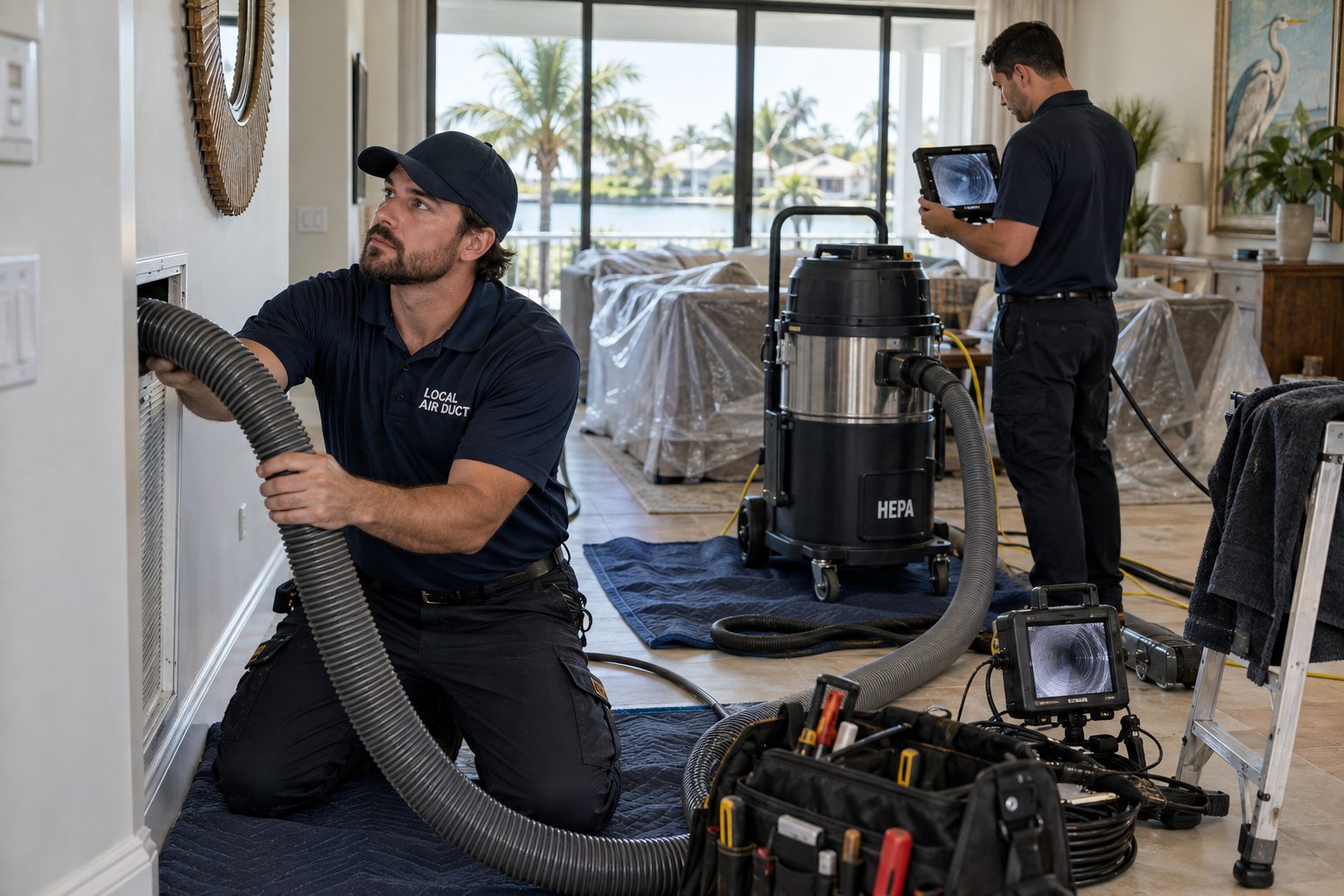
On the day, the technician arrives, confirms what you described, and walks through the plan. They protect floors and furniture near the work, open access where needed, and set up equipment. You should be told roughly what to expect in terms of noise and activity so the household can plan around it.
When the work is finished, the system is reassembled, the registers are replaced, and the equipment is run to confirm it operates normally. Before and after photographs are shared with you, and a final check confirms the work area is tidy. If something was found that needs a separate decision, it is explained then.
Keep the photographs and notes together with other papers about the house, such as equipment manuals and service records. Years later, when someone asks what was done and what was seen, you will have a clear answer, and the next inspection can be compared against it. That kind of record turns a one time visit into a useful history for the property, which matters if you sell, rent or hand the house to family. Our process is simple and does not change. You call and describe the property and the symptom. The system is inspected. The scope and price are explained before work begins. Photos and a final check are shared. Nearby readers in Hallandale Beach and Miramar will find similar points, and the air duct cleaning in Hollywood guide gives further context.
Common questions
Can older duct systems be cleaned safely?
Often yes, but the method has to match the material. Sheet metal tolerates brushes well, duct board needs gentler handling, and flexible duct can tear if treated roughly. A technician should identify what you have first and tell you if any part is too fragile for the usual approach, then adjust the scope instead of forcing it.
If my ducts leak, is cleaning a waste?
Not a waste, but incomplete. Cleaning removes what has built up, while leaks keep pulling dusty attic air into the system. If the inspection finds leaks, you can decide whether to clean first, seal first or do both. The plan and price are explained before work begins so you can choose.
How do I tell a sweating duct from a roof leak?
You often cannot tell by looking alone. A stain near a register may be condensation from a poorly insulated duct, or water from above. A technician can examine the duct, insulation and surrounding area and tell you which it looks like. Describe where the stain is and when it appears.
What if I do not know what kind of ducts I have?
That is common. Take a photo of the air handler closet, the attic hatch, or a register with the grille removed, and describe what you can see. The inspection confirms the material, the condition and the layout, and the technician explains the findings before recommending any work.
Should I clean before selling or renting?
It depends on what an inspection finds. A documented look inside the system with photos can give a buyer or tenant something concrete. Rules and expectations for sales and rentals vary, so ask your agent, lender or property manager. If cleaning is useful, the before and after photos serve as a record.
Does this page describe work done in Hollywood?
No. It is general guidance for people in the city and does not claim any past jobs or describe specific streets. The most useful details are your own: the age of the house, the type of ducts, past repairs, and the symptoms you notice. Share those when you call so the inspection starts in the right place.