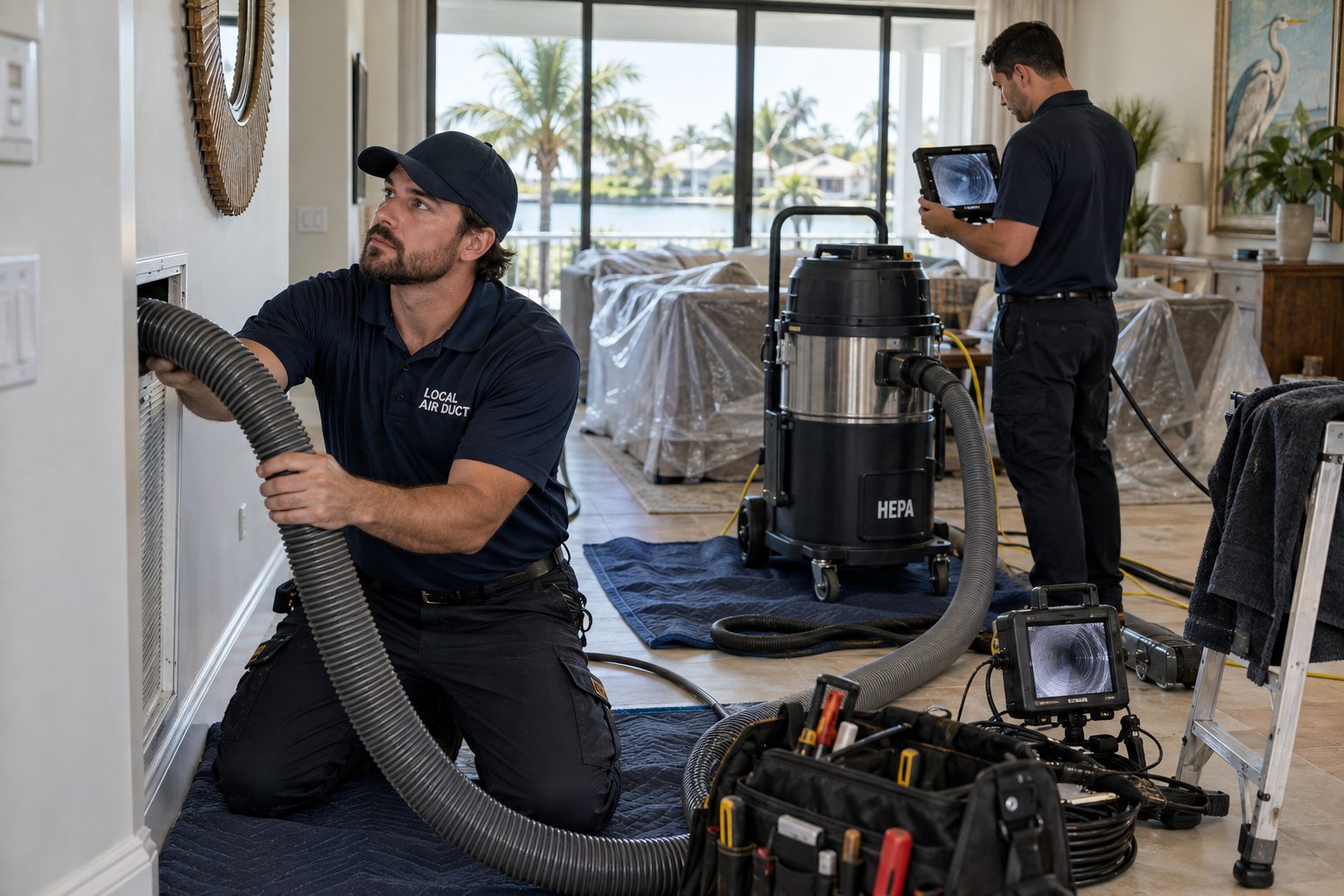
Why a closed up property is a special case
A house that is lived in every day has a rhythm. The air conditioner cycles on and off, doors open and close, moisture is carried out by the system, and small problems get noticed early. A seasonal home, a rental between guests, or a unit left empty for weeks has none of that rhythm, and a different set of problems tends to appear.
When the cooling system is turned off or set high for a long period, indoor humidity climbs. In South Florida's climate, damp air indoors can settle on surfaces, soak into soft furnishings and encourage musty odors. Ducts are not immune. Dust inside them can absorb moisture, and a coil that was wet when the system stopped can stay damp.
This page is general guidance for people in Pompano Beach. It does not describe any specific street, building or development, and it does not claim past work in the city. Its purpose is to help owners and managers of properties that are not occupied all the time think clearly about what to check and when to ask for an inspection.
The smell that greets you at the door
The most common symptom is the smell when you return. It may be faint and stale, or it may be sharp and damp. Often it fades once the system has run for a while, and owners shrug and carry on. But a smell that returns every season is information, and it is worth finding out where it comes from.
Possible sources are many. Damp dust in the ducts, a dirty or wet coil, a drain pan that held water, stored linens, soft furniture, a bathroom that stayed humid, or even a small leak somewhere in the building. A technician cannot tell by sniffing alone, and neither can you. The sensible approach is to look.
If the smell is strong, if you see spotting on ceilings or walls, or if the air feels heavy and wet, do not ignore it. Describe what you noticed, where, and when. Photographs help. Do not scrub suspicious patches or spray them yourself, since you may spread the problem or hide the clues. Ask for an inspection and let the findings guide what you do next.
- A musty smell that returns each time the property is reopened.
- Dark spotting on ceilings, walls or around registers.
- A coil area or drain pan that looks wet or stained.
- Air that feels heavy and damp after the system has run for a while.
- Stored linens or furniture that smell of damp.
Humidity control while nobody is home
The most effective protection for a closed property is to control humidity while it sits. Many owners leave the air conditioner running at a higher setting, so that the system still removes moisture without overcooling an empty house. That choice has costs and benefits, and the right answer depends on the property, the equipment and your habits.
Whatever you choose, make sure the equipment is in good condition before you leave. A clean filter, a clear drain line and a working thermostat reduce the chance of trouble. A drain line that clogs while no one is home can overflow, and a stopped system lets humidity rise.
Ask a technician whether the system suits the way you use the property. Some owners add a dehumidifier or a smart thermostat. These are decisions for you and your equipment professional, not something a duct visit alone settles. What the duct visit can do is show you the condition of the system, so that your choices rest on facts.
Think about who checks the property while you are away. A neighbor, a cleaner or a property manager can look at the thermostat, listen for the system running, and notice a smell or a puddle. A simple message with a photograph from them can catch a problem within days instead of months. If you have such a helper, give them clear instructions about what to look for and whom to call.
Opening up for the season: a sensible checklist
When you arrive at a property that has been closed, resist the urge to throw every window open. In humid weather this can bring in more moisture than it removes. Instead, start the air conditioner, check the thermostat, and see how the system behaves over the first hour or so.
Look at the filter. If it is loaded or damp, replace it. Check around the air handler for water, rust or stains. Look at the drain line and the pan if they are visible. Check the registers for dust or dark spotting. Smell the air near a few registers, and compare them with the air in the rooms.
If anything looks wrong, call before the property fills with guests or family. Problems found early are much easier to deal with than ones discovered after a complaint. A short inspection with photographs gives you a clear record, and it can help you decide whether cleaning, repair or something else is the right step.
Also take a moment to look at things that are easy to overlook. Check that closet doors around the air handler close properly, since gaps let stored items shed dust and odor into the return. Make sure nothing is stacked against the return grille. Confirm that the outdoor unit is not blocked by plants or debris. These small checks cost nothing and often explain why a system seems to struggle at the start of a season.
Rentals and turnovers: keeping records and keeping guests comfortable
Owners and managers of rentals have a particular challenge. Guests come and go, the system works hard, and a complaint about odor or comfort can arrive at any time. A property that smells musty or feels uneven can lead to unhappy visitors, even if the cause is minor.
A routine for turnovers helps. Check the filter between stays or at a regular interval. Look at the registers and returns when you clean. Run the system briefly after cleaning the unit to confirm it works. Keep notes of the dates, so that patterns become visible.
When a duct inspection or cleaning is done, keep the photographs with your property records. If a guest or tenant raises a question, or if you are selling, you will have evidence of what was seen and done. Requirements for rental properties vary, so check with your property manager, association or local office about what applies to you.
Communicate with guests in a friendly, plain way. If a visitor reports a smell, respond with interest and follow up. A short note saying that the system was checked and what was done is usually appreciated. It builds trust, and it gives you a documented response if the same concern appears again later.
Vacant units, new owners and properties between occupants
Not every closed property is a vacation home. Some are units waiting for a buyer, a renovation, an estate decision or a new tenant. These properties may sit with the power on or off, with the air conditioner running at a trickle or not at all, and with nobody checking the small things that normally get noticed.
If you have just bought such a property, treat the duct system as an unknown. You may not know when the filter was last changed, whether the coil was ever cleaned, or whether any moisture event happened. An inspection with photographs gives you a baseline, and it helps you plan repairs and budgets with real information.
If you are about to sell, a record of the system's condition can be a quiet asset. It does not need to be dramatic. A set of photographs and a short note showing clean, dry ducts and a maintained air handler tells a buyer that the system has been looked after. Requirements for sales vary, so ask your agent or lender about what applies.
For landlords preparing a unit for a new occupant, the same logic holds. A short inspection before move in lets you fix small problems before they become complaints. It also gives you something to point to if a dispute about air quality or comfort ever arises.
Storms, water intrusion and what ducts can tell you
South Florida weather can bring heavy rain, wind and occasional flooding to buildings. After a storm, water can enter roofs, attics and wall cavities, sometimes without visible signs. Ducts and insulation in the attic can get wet, and wet insulation can sag, stain and hold moisture against the duct.
If you suspect water intrusion, treat it seriously. Turn off the system if you see water near the air handler or if the ceiling is wet, and call the right professionals for the building itself. Do not run a system that is wet inside or standing in water. Safety comes first.
Even without visible signs, it is worth noting how long it has been since the roof, the attic or the air handler area was last looked at. A property that has been through a heavy storm season may have small leaks that have not yet made themselves known. Early attention to a damp spot is far simpler than dealing with stained ceilings and softened insulation later.
Once the building is dry and safe, a duct inspection can show whether moisture reached the system, and whether any damage needs attention. The duct repair and sealing page describes how damaged sections can be handled, and the indoor air quality testing page explains how testing can add information if you are concerned.
Dryer vents in rental and vacation units
Laundry rooms in vacation and rental units get heavy use in a short time. Guests do load after load of towels and sheets, and the dryer vent collects lint at an accelerated pace. Owners rarely see the vent, and so it often goes unchecked for a long time.
Warning signs include towels that stay damp after a full cycle, a hot laundry area, a smell of burnt lint, or a vent flap outside that barely moves. A restricted vent makes the dryer work harder and creates a fire risk, since lint is flammable. Do not push tools into the vent yourself.
The dryer vent cleaning page explains the work, and the Pompano Beach dryer vent guide covers local planning. If you manage several units, it makes sense to ask for the vents to be checked together, with photographs for each.
What the inspection and scope look like for an empty or seasonal property
The visit is much like any other. You call and describe the property and what you noticed. The system is inspected. The scope and price are explained before work begins. Before and after photos and a final check are shared with you.
With an empty property, access is the main practical question. Who will let the technician in? Is there a lockbox or a property manager? Is the air handler easy to reach? Are utilities on? Sort this out in advance, and tell the technician what to expect on arrival.
Because you may not be there, ask for clear photographs and a written or spoken summary afterwards. Ask what was found, what was done, and what is recommended next. If anything unexpected appears, you should hear about it before decisions are made. The before and after photo guide helps you read the pictures even from a distance.
Sanitizing and testing: optional, never automatic
Owners of closed properties sometimes ask about sanitizing treatments or air testing, especially after a musty smell or a water event. These are separate from cleaning, and each has a purpose and limits. A sanitizing treatment is applied to cleaned surfaces and does not replace removing debris. Testing gathers information and does not fix anything.
Neither is needed for every property. If the inspection shows a clean, dry system, you may not need either. If it shows signs of moisture or growth, you can discuss options with the technician, and decide what makes sense. The sanitizing treatment page explains the treatment.
Whatever the choice, the cause of moisture must be addressed, or the smell and growth will return. A technician who explains this honestly is giving you useful information. Nothing should be added to the scope without your agreement.
Be wary of anything presented as a routine add on for every property. A musty smell is a symptom, and a sensible plan starts by finding its source. If the source is a wet coil, cleaning the coil may be the answer. If it is a leaking drain pan, the pan needs attention. If it is stored fabric, the ducts are not the cause at all. The honest sequence is to find, explain, then choose.
Planning ahead and where to read more
The simplest plan for a seasonal or rental property is a routine. Before closing up, change the filter, check the drain line, set the thermostat sensibly and note the date. When reopening, look, smell and run the system before settling in. Once a year or whenever something changes, consider an inspection.
Nearby pages may also be useful. The Deerfield Beach page and the Fort Lauderdale page cover related questions for their readers, and the service area page shows where work is done.
For more on the local picture, the air duct cleaning in Pompano Beach guide pulls the main points together. Take your time, and ask whatever questions you need to.
If you own more than one property, consider keeping a simple table with one row for each: when the filter was last changed, when the system was last inspected, what the photographs showed, and what you decided. A few minutes of record keeping each season turns scattered impressions into a clear picture, and it makes every future conversation with a technician shorter and more useful.
Common questions
Why does my seasonal home smell musty when I return?
Humidity usually rises when the air conditioner is off or set very high. Damp dust in the ducts, a wet coil, a drain pan that held water, stored linens or soft furniture can all contribute. An inspection can show which it is. Describe the smell and when it appears when you call.
Should I leave the air conditioner running while I am away?
Many owners leave it on at a higher setting to keep humidity down, but the right choice depends on your property and equipment. Make sure the filter is clean and the drain line is clear before leaving. Ask an equipment professional about options such as a dehumidifier or a smart thermostat.
What should I do after a storm if I suspect water in the attic?
Turn off the system if you see water near the air handler or a wet ceiling, and call the right professionals for the building. Do not run a system that is wet inside. Once the building is dry and safe, a duct inspection can show whether moisture reached the system.
How often should rental unit dryer vents be checked?
There is no single schedule, because use varies. Rental and vacation units tend to have heavy laundry use, so lint can build up sooner than in a family home. If towels stay damp or the laundry area feels hot, have the vent checked. Keep photographs with your records.
What if I cannot be at the property during the work?
Arrange access in advance through a property manager or lockbox, and tell the technician what to expect. Ask for clear photographs and a summary of what was found and done. Anything unexpected should be explained to you before decisions are made, so you stay in control from a distance.
Does this page describe jobs done in Pompano Beach?
No. It is general guidance for people in the city and does not describe particular streets or buildings, or claim past work. The details that matter are yours: how the property is used, how long it sits closed, and what you notice on arrival. Share those when you call.