// THE SERVICE
Dryer Vent Cleaning Across Broward, Palm Beach & Miami-Dade
A dryer vent's job looks simple: carry hot, moist air and lint from the dryer drum to the outside of the home. Over months of normal laundry use, lint builds up along the inside of the duct, at the transition hose behind the machine, and at the exterior hood. That buildup restricts airflow, forces the dryer to run longer and hotter, and is widely cited as a leading contributor to residential dryer fires. Cleaning the vent restores proper airflow and reduces that fire risk, which is the core reason this service exists.
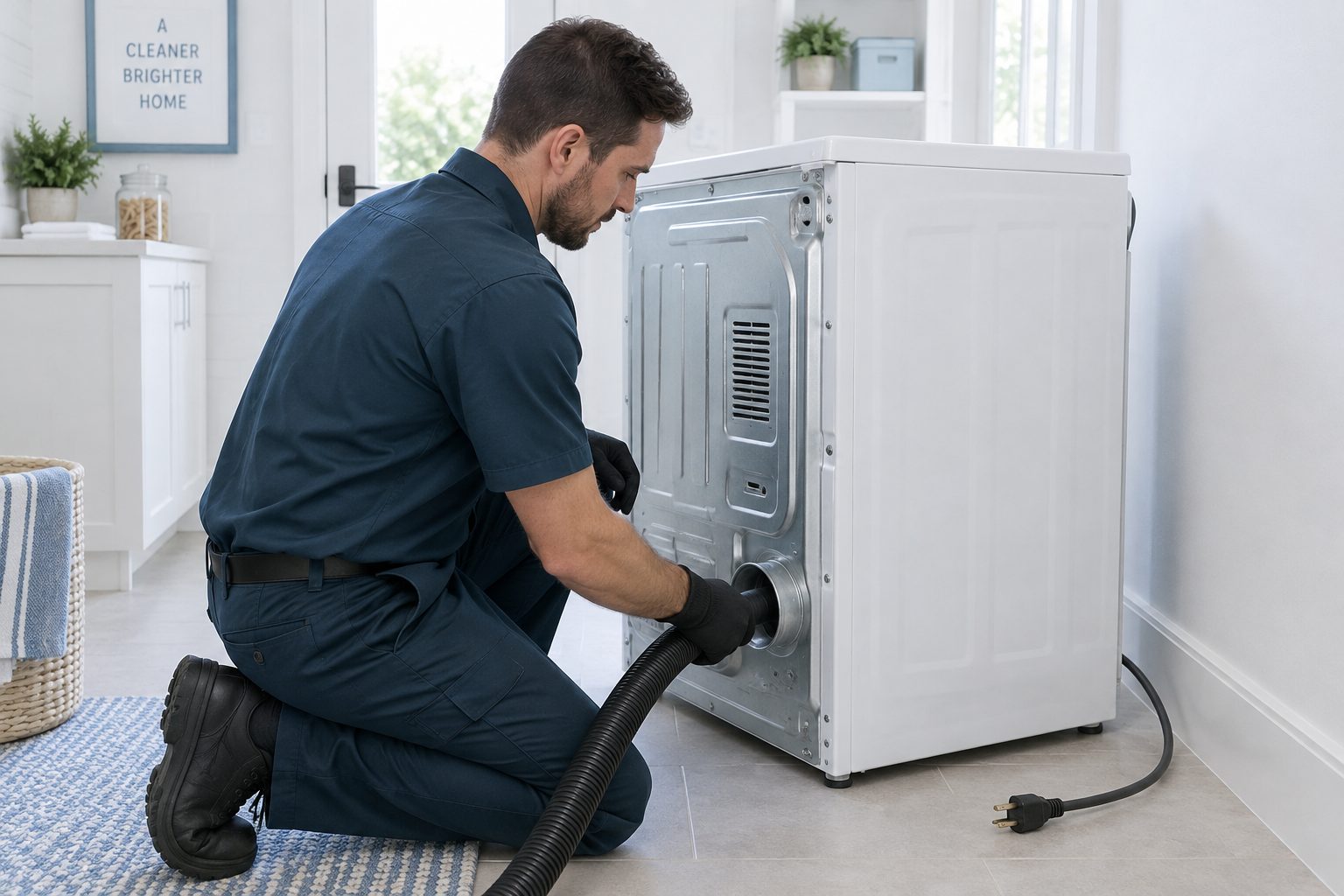
We clean the complete vent run, not just the accessible section behind the dryer. That means the transition hose, the wall or floor duct, every elbow and turn, and the exterior termination point where air actually exits the structure. A vent that looks clear near the machine can still be badly clogged twenty feet away at a bird-blocked hood or a sagging low point, so a partial cleaning can leave the real obstruction untouched. Working the full path is the only way to confirm the vent is actually open end to end.
South Florida homes and condos add their own wrinkles: long horizontal runs in single-story houses, multiple 90-degree turns in townhomes and stacked condo units, high ambient humidity that makes lint stick rather than blow through, and coastal exterior hoods that invite birds, lizards, and insects. Each of those factors is addressed differently, which is why an inspection of your specific vent layout comes before any cleaning begins. Call (954) 686-6201 to schedule service in Broward, Palm Beach, or Miami-Dade County.
// WHAT IT INCLUDES
What a Full-Run Dryer Vent Cleaning Includes
Full-Run Brushing and Agitation
A rotating brush or agitation tool is worked through the entire duct run in sections, breaking up compacted lint along the interior walls rather than just at the ends. Turns, elbows, and long straight sections are each addressed, since lint tends to accumulate unevenly depending on airflow speed and duct geometry.
Exterior Termination Check
The exterior vent hood is opened and inspected for lint blockage, damaged flappers, and pest debris. This is where airflow finally exits the home, so a partially closed or clogged hood undoes the benefit of cleaning the rest of the line. The hood is cleared and its flap movement is checked before the visit is considered complete.
Airflow Test
After brushing, airflow is checked at the exterior termination to confirm the vent is actually moving air freely, not just visually clear of large lint clumps. Weak airflow after cleaning can point to an undersized duct, an excessively long run, or too many turns, which may call for a booster fan or duct correction.
Transition Hose Inspection
The flexible or semi-rigid hose connecting the dryer to the wall duct is inspected for crushing, kinks, sagging, or the wrong material. Foil or plastic accordion-style hose traps lint in its ridges and is a common source of restriction; where appropriate we note if replacement with rigid or semi-rigid metal hose would improve airflow.
Lint at the Trap Housing
Lint that has escaped past the lint trap collects in the housing behind and below it, sometimes packing tightly enough to restrict the duct connection point. This area is cleaned out along with the vent itself, since leftover buildup here can re-clog a freshly cleaned line within a few loads of laundry.
Damper and Pest Guard Check
The exterior damper and any pest guard or screen are checked for proper operation and for signs birds, lizards, or insects have nested or built debris inside. A stuck-open or stuck-closed damper and a clogged guard both interfere with normal airflow and are flagged as part of the visit.
// QUESTIONS
Dryer Vent Cleaning Questions from Florida Homeowners
How do I know my dryer vent needs cleaning?
Common signs include clothes taking noticeably longer to dry or coming out still damp, the dryer or laundry room feeling hotter than usual during a cycle, a burning or musty smell when the dryer runs, visible lint around the exterior vent hood, and the vent hood flap barely moving or not opening at all when the dryer is on. Any of these point to restricted airflow somewhere along the duct run.
Why does humidity make this more of an issue in South Florida?
High ambient humidity means the air moving through the vent carries more moisture, which makes lint damp and sticky instead of dry and loose. Damp lint clings to duct walls, elbows, and hose ridges rather than blowing straight through to the exterior, so buildup accumulates faster here than it typically would in a drier climate, even with similar laundry habits.
Why do long or bent vent runs in Florida homes and condos matter?
Every extra foot of duct and every 90-degree turn adds resistance that slows airflow, and slower airflow lets lint settle instead of getting carried out. Single-story homes with long runs to an exterior wall and condos or townhomes with stacked, multi-turn duct paths both fight this resistance, which is why the layout of your specific vent affects how often it should be cleaned.
What is a booster fan and does my home need one?
A booster fan is an inline fan installed along an unusually long or heavily turned duct run to help push air the rest of the way to the exterior termination when the dryer's own fan can't overcome the added resistance. Not every home needs one; it's typically considered only after inspection shows the duct length or turn count exceeds what standard airflow can reliably clear, even when clean.
Are bird or pest guards on the exterior vent hood a problem?
A pest guard is meant to keep birds, lizards, and insects from nesting inside the duct, which is a real issue on coastal and suburban exterior walls alike. The guard itself can become clogged with lint and debris over time, or nesting material can build up behind it, so it needs to be checked and cleared along with the rest of the vent rather than assumed to be maintenance-free.