South Florida
Aventura Air Duct Cleaning: A Local Homeowner Guide
Aventura living often means shared buildings, managers and building rules. This guide explains how duct cleaning works in that setting, what to coordinate ahead of time and how to judge the result. It is general guidance only.
Call (954) 686-6201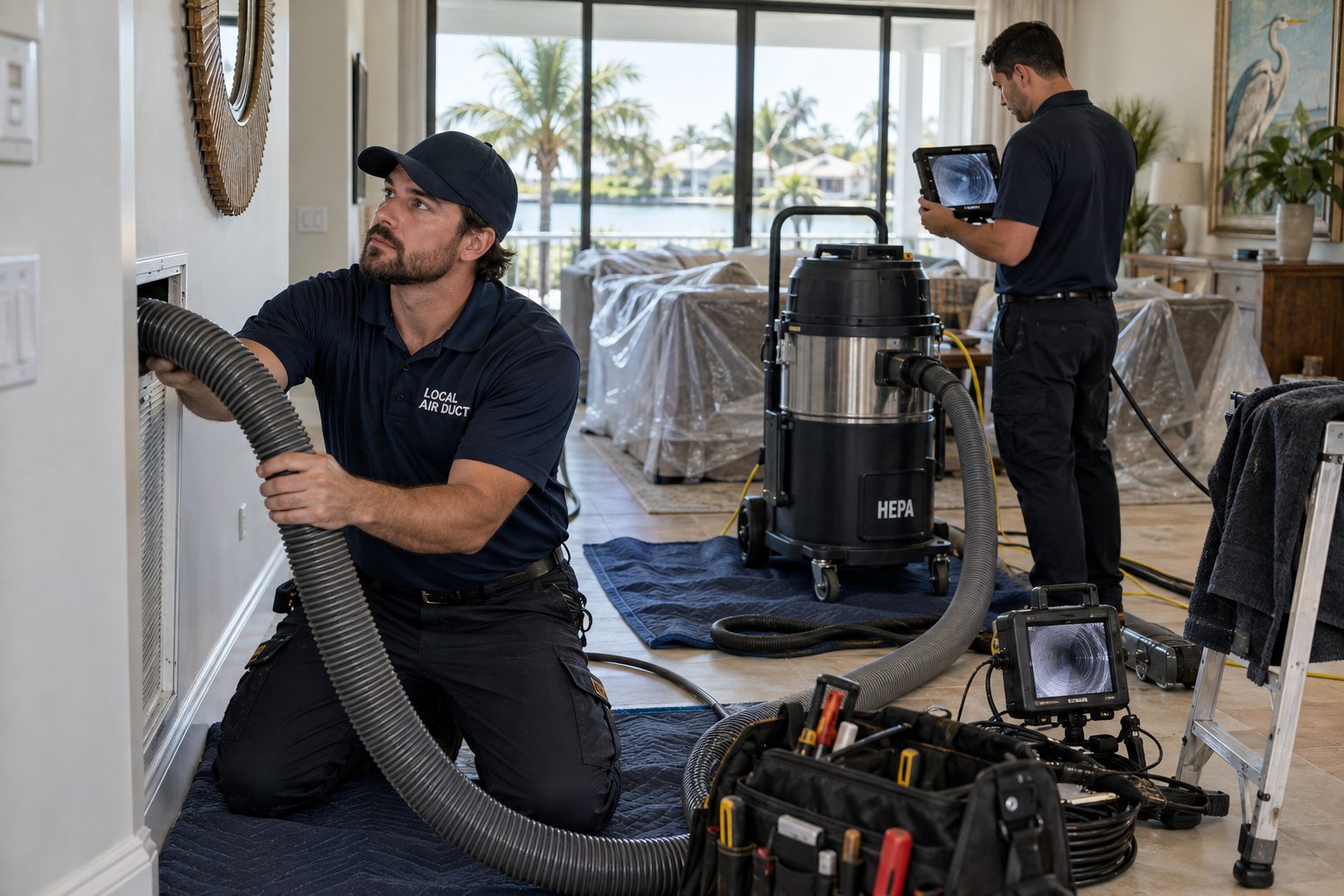
Discuss the property and the actual symptom
Let us know what you noticed, what still seems normal and what result you expect. Before work begins, the scope is explained.
Call (954) 686-6201Cleaning ducts when you share a building
Many people in Aventura live in condominiums or townhomes rather than detached houses, and that changes how duct cleaning gets planned. Inside a unit, the air handler, the ductwork above the ceiling and the registers are usually the owner's concern. Outside the unit, there may be shared risers, common exhaust lines and building systems that belong to the association. Understanding that line before you call saves confusion later.
This page is general guidance for residents of Aventura and nearby areas. It does not state building rules, because those differ from one association to the next, and it does not claim anything about particular buildings. What it offers is a way to think through the job so that you arrive at the phone call prepared and the visit goes smoothly for you and your neighbors.
In a shared building the work also has to fit around other people. Noise, elevator use, parking for equipment and hallway protection can all matter. A provider who asks about these details when you call is thinking about the whole situation, not only your living room, and that is a useful early sign.
It also helps to remember that apartment systems are often compact. Supply ducts may be short, tucked above a dropped ceiling, and reached through small access openings. That compact layout can make a unit easier to clean than a sprawling house, but it can also make access tricky. Describing your ceiling and closet layout on the phone gives the provider a head start.
Who decides what: unit owner and association
Start by finding out what your association documents say about contractors. Many buildings require notice, a certificate of some kind, or approved hours before outside workers can enter. Requirements vary, so the person to ask is your property manager or the association office. Do this first, because it affects when the visit can happen.
Next, clarify which parts of the system are yours. In many units, the air handler and the ductwork inside the unit belong to the owner, but there are exceptions. Some buildings use central systems, shared chilled water loops or common exhaust ducts for kitchens and bathrooms. If your system is not entirely inside your unit, the association may handle part of it.
Tell the provider what you learn. A clear statement such as the air handler is in the closet, the supply ducts run above the ceiling, and the dryer vent leaves through the exterior wall lets them prepare the right scope. If you are renting, the landlord or management company may need to authorize the work, so check before scheduling.
Keep a short written record of what you were told, by whom and when. Association answers given by phone are easy to forget, and a short note in your own file avoids disputes later. If a rule seems unclear, ask for it in writing, since the person who answers the phone may not know the latest version of the policy.
- Ask your property manager what notice and paperwork contractors need.
- Confirm which components are inside your unit and which are shared.
- Find out when work is allowed and where equipment may be placed.
- Check whether the landlord must approve the work if you rent.
- Tell the provider everything you learn when you call.
Common symptoms in an Aventura home
Residents in humid coastal conditions often notice the same few things. A musty smell when the air conditioning starts, dust settling soon after cleaning, vents that show dark streaking, and rooms that never feel evenly cooled are the typical complaints. Closets that hold the air handler sometimes feel damp or smell stale, which can point to moisture around the coil or drain.
Units that were renovated recently have another source of trouble. Drywall dust, tile cutting dust and paint particles can be pulled into open returns during construction. If a remodel happened while the system was running, the ducts may carry a fine layer of debris that keeps blowing into the room after the contractors leave.
Consider also the way the unit is used. Apartments that are closed for part of the year may have ducts that sit unused, collecting dust without circulation. When the system is turned on again, that dust moves. If you return to a unit after a long absence and notice an odd smell, an inspection before relying on the system is a sensible idea.
How the visit works in an occupied unit
The sequence is simple. You call and describe the property and the symptom. The system is inspected, and the scope and price are explained before work begins. When it is done, before and after photos and a final check are shared with you. That outline applies whether you live on a low floor or high up in a tower.
During the cleaning, technicians typically create negative pressure on the duct system so that loosened dust is drawn into a collection device. They agitate the duct surfaces, treat the supply and return sides, and clean the registers. In an apartment, protection of floors and furniture matters, and so does keeping dust from reaching hallways. Ask how they handle both.
Plan on being present, or have a trusted adult there. You will want to approve the scope, see the inspection, and walk through the final check. The more open you are about parking, access and any building requirements, the easier the visit goes. If you want a visual record, read the before and after photo guide beforehand so you know which pictures to expect.
The air handler closet deserves attention
In a condominium, the air handler is often tucked inside a closet near the entrance or a hallway. Space is tight, and the cabinet is exposed to whatever dust and moisture the closet collects. The coil and blower in that cabinet are the part of the system most likely to produce smells, so they deserve their own look. The coil and blower cleaning guide for Aventura explains the work in more detail.
Closets also tend to become storage. Stacks of boxes or cleaning supplies against the cabinet block access and can restrict return air. Before a visit, clear the area so the technician can open panels and work safely. Do not stack items against the door of the closet afterward either, because the return air path needs space.
If you see water stains, rust or pooling around the base of the air handler, mention it. A clogged drain line is a common cause and can lead to leaks into the unit or the one below. Cleaning crews are not always the ones who clear drains, but they should note it, show you, and suggest who should look at it.
The return grille is the other piece of the closet story. Many units pull air through a large grille in a hallway or door, and the filter sits behind it. A grille that is furred with dust, or a filter pressed flat, tells you the system has been working hard. Look at it before the visit so you can describe the condition when you call.
Dryer vents in multi story buildings
Dryer exhaust in a multi story building often travels a long way. The duct may run horizontally through a wall or ceiling to reach an outside termination, with bends along the path. Longer paths collect lint more readily, and a partly blocked vent means longer drying cycles and warmer laundry areas. Lint is also flammable, so a clogged run is a safety concern.
Because layouts vary widely, the first step is to find out how your dryer vents. Some are direct to the outside wall, others share a vertical duct with neighbors. If yours is shared, the association may manage it. If it is a dedicated run, you are likely responsible. The dryer vent cleaning guide for Aventura goes through typical signs and questions.
Signs of trouble include clothes that stay damp, a laundry room that feels hot, lint around the dryer, and an outside flap that does not open fully. If any of these apply, mention them when you call, and ask what access the crew will need.
If the vent leaves through a balcony wall or a shared facade, the crew may need permission to reach the exterior opening, and some buildings restrict what can be hung or worked on outside. Raise this with management ahead of time. The interior portion of the vent can often be cleaned from the laundry area, but the outside end matters for confirming airflow, so plan for it.
What an inspection should tell you
An inspection is the step that turns a general worry into a clear plan. It lets the provider look at registers, return paths, the air handler and the condition of accessible duct sections. A useful inspection ends with a conversation about what was found, what could be done, and what price and scope apply. Our duct inspection guide for Aventura describes what to expect.
A decent inspection should also tell you what is not needed. If the ducts are in fair shape and the real problem is a dirty filter or a drain issue, you should hear that. Providers who recommend the same large scope for every home are not really inspecting. You are looking for a person who can explain why a particular scope fits your unit.
Do not hesitate to ask for pictures from the inspection itself, not only from the cleaning. A photo of the conditions found gives you something to consult as you decide. If you want a second opinion, you will have something concrete to show.
Finally, ask about recommendations that go beyond cleaning. Sometimes a torn flexible section, a loose connection above the ceiling or wet insulation turns out to be the real source of the complaint. In that case, duct repair and sealing may be part of the answer. You can decide on those items later, once you have had time to think.
Unit owners who rent or manage multiple apartments
If you own several units or manage a building on behalf of owners, consistency matters more than any single visit. Decide on a standard scope, a standard photo request and a standard way of recording results. When each apartment gets the same treatment, you can compare condition across units and spot problems earlier.
Scheduling several units on the same visit can reduce the number of disruptions. Coordinate with tenants well ahead of time, explain what the crew will do, and make sure someone is available to provide access. Tenants who understand the process are more cooperative, and the visit goes more cleanly.
Keep a simple log for each unit: the date, the scope, the photos and any notes about conditions. When a tenant moves out or a unit changes hands, the log tells the next person what has been done. It also lets you notice if one unit needs attention much more often than the others, which can point to a building or equipment issue rather than housekeeping.
For common spaces, offices, retail suites and building equipment rooms, the needs are different. Larger systems use different equipment and require different planning, and the commercial duct cleaning guide for Aventura covers those situations separately.
Comparing with nearby communities
Aventura sits among several communities with similar building styles and similar questions. If you want to read how the same topics apply a little further along the coast, take a look at the pages for Sunny Isles Beach, North Miami Beach and Hallandale Beach. The general method is the same, while property types and association habits differ.
Reading across these pages is useful because it shows you which questions are universal and which depend on the building. For example, every community has to deal with humidity and dust, but only some have central exhaust systems. Knowing the difference helps you ask sharper questions.
There is also a general overview page for Aventura that summarizes services in one place, and a main page about air duct cleaning that explains the work itself in more depth.
Timing and habits that keep the system cleaner
There is no single schedule that fits every unit. Households with pets, smokers, heavy cooking or recent construction may need attention sooner than quiet apartments. A reasonable approach is to check the filter regularly, look at your registers now and then, and watch for changes in smell or comfort. When something changes, schedule an inspection.
Filters are your first defense. A fresh filter of the right size and rating, replaced on a regular schedule, catches a great deal before it reaches the ducts. In a tight apartment the filter may be located in the air handler closet or in a return grille, so find yours and learn how it comes out.
Keep humidity under control as well. Running the system consistently, using bathroom exhaust fans, and repairing any leaks promptly reduce the conditions that encourage musty smells. These habits cost little and add up over time, and they make the next cleaning more effective.
Consider also how long the unit sits closed. If you leave for a period, set the thermostat so the system keeps humidity from climbing, and ask a neighbor or manager to check for odors on your return. Moisture that builds up while nobody is home is one of the more common reasons residents return to a musty apartment.
Taking the next step
When you are ready, call and describe your unit: the type of building, where the air handler is, how many systems you have and what symptom you are noticing. Mention any building requirements you already know. The person you speak with should ask follow up questions, because the answers shape the scope.
Expect the scope and price to be explained before work begins, and expect before and after photos and a final check afterward. If something is unclear, ask. A provider who is comfortable explaining the work in plain words is usually comfortable doing it carefully.
Keep your records. Photos, notes and any association paperwork belong in a folder you can find later. If you sell, lease or hand the unit to a manager, that record shows the system has been looked after.
Common questions
Do I need association approval before a duct cleaning visit?
It depends on your building. Many associations set rules about contractors, notice, paperwork or work hours, and these vary. Ask your property manager or association office before scheduling, and tell the provider what they say so the visit can be planned around it.
Who is responsible for the dryer vent in a condo?
That depends on how your building is built. A vent that runs only from your dryer to an outside wall is usually the owner's concern, while a shared vertical duct may be handled by the association. Ask management, and describe the layout when you call so the scope fits.
Can duct cleaning be done in an occupied apartment?
Yes. Occupied homes are normal for this work. A careful crew protects floors and furniture, contains dust with negative pressure, and cleans up afterward. Plan to be present, clear access to the air handler closet, and secure pets so they are not frightened by equipment.
Why does my unit smell musty when the air conditioning starts?
A musty smell can come from the coil, the drain pan, damp insulation or dusty ducts. It does not point to one cause by itself, which is why an inspection comes first. A provider should show you what they see and explain whether cleaning, a drain fix or repair is the right step.
Should I clean the ducts after a renovation?
Often yes, if the system ran during the work or the returns were open. Fine drywall and tile dust can settle inside ducts and keep blowing into rooms. An inspection will show whether debris is present, and you can decide on a scope based on what the photos reveal.
Does this page apply to my specific building?
It is general guidance for the area and does not describe any particular building, rule or association. Your own documents, your property manager and your system layout decide the details. Use the page as a checklist of questions, then confirm specifics locally before you book.