South Florida
Coral Springs Air Duct Cleaning: A Local Homeowner Guide
Not every home needs a duct cleaning today. This general guide for Coral Springs helps you decide between cleaning now, repairing first, or waiting and watching, using signs you can check yourself.
Call (954) 686-6201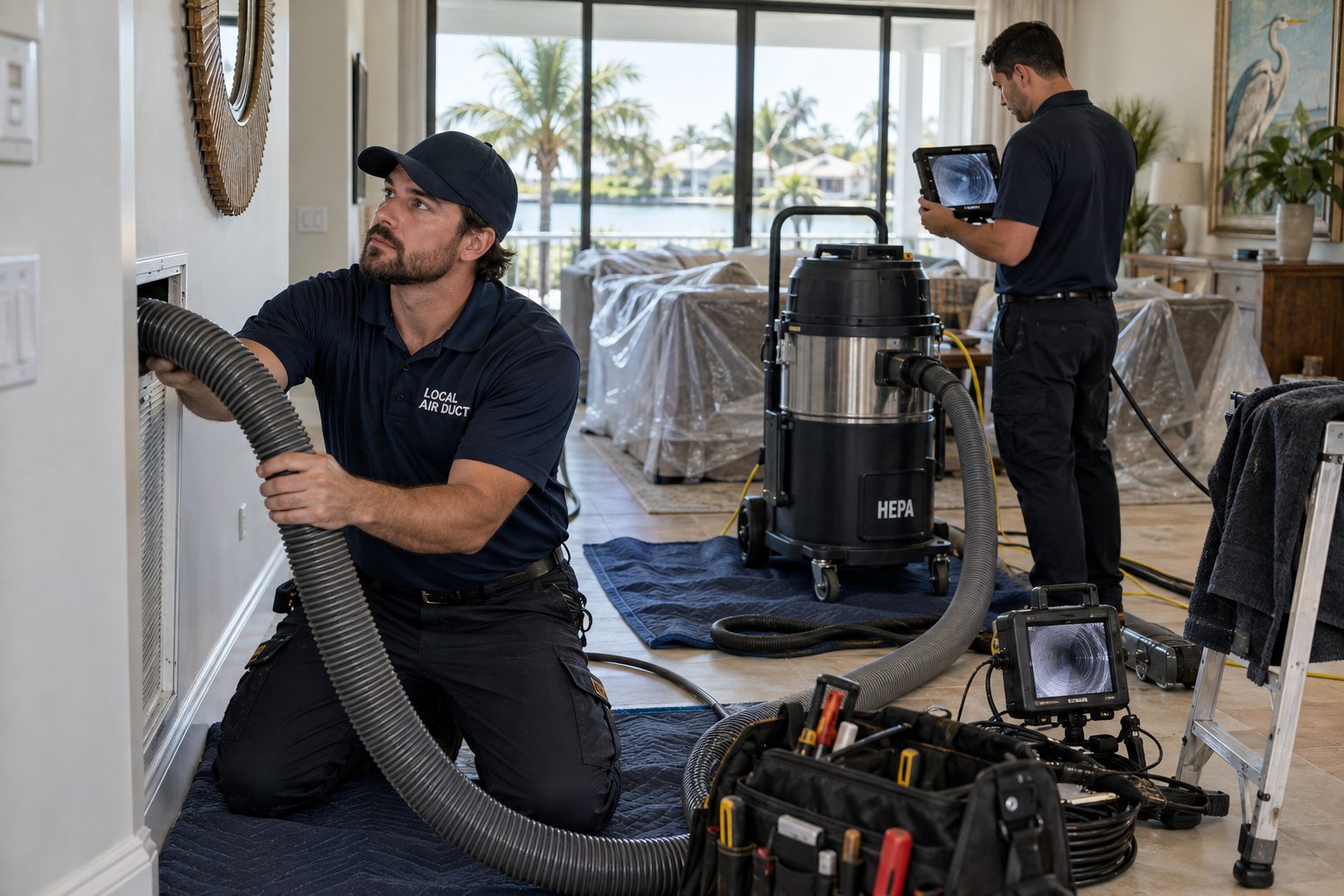
Discuss the property and the actual symptom
Tell us what changed in the home, which vents or rooms still work and what you want fixed. We explain the scope before any work starts.
Call (954) 686-6201Three paths, one decision
When a homeowner begins to wonder about ducts, there are really only three sensible outcomes. You can clean the system now because the evidence shows buildup. You can repair it first because leaks or damage are the real problem. Or you can wait and watch, because nothing yet justifies spending time or money. Good advice helps you choose among these honestly.
This page is general guidance for residents of Coral Springs and nearby cities. It does not claim anything about particular neighborhoods, builders or local rules, and it does not assume your situation. It gives you a way of thinking so that a phone call or an inspection leads to a decision that fits your house.
The decision is easier when you separate three questions: is there buildup, is there damage, and is there a symptom that matters to you? Many people mix them together and end up buying the wrong fix. Taking them apart one at a time gives you a clearer picture and a better conversation.
There is also a fourth, quieter option that people forget: do something small now and decide about the bigger step later. Replace a filter, vacuum around returns, clear a blocked register and see whether the symptom changes. Small actions are low effort tests, and the result tells you whether the larger decision is even necessary.
Whatever you choose, treat it as a decision you can revise. New information changes the answer, and a good plan leaves room for that. Keep notes as you go so that you can explain to a provider, or to yourself next year, why you chose what you chose.
Signs that point toward cleaning
Cleaning makes sense when the evidence shows loose buildup inside the system. Look into registers with a flashlight. A layer of grey fluff, scattered debris or a felt like coating on the metal suggests accumulation. Check the return grille too, since returns often show the heaviest dust. If both sides show buildup, the argument for cleaning grows stronger.
Other signs include dust that returns soon after wiping, filters that turn grey after a short while, visible debris blowing from a register when the system starts, and leftover construction dust after a remodel. A recent flood of insulation or drywall fibers is another clear case. None is proof on its own, but together they tell a story.
Also consider the air handler. A coil or blower coated with dust restricts airflow and can hold moisture. If there is a stale smell at start up, the coil deserves a look. For an overview of what the work covers, read about air duct cleaning and the coil and blower service.
Consider how the buildup got there. A home with a long cooling season and open returns near a busy kitchen accumulates differently from a sealed apartment. Matching the likely source to the evidence helps you judge whether cleaning will last. If the source continues, as with ongoing construction nearby, plan for the dust to return and time the cleaning accordingly.
Humidity is another factor. Damp conditions help dust cling and can feed growth on surfaces. If you see dark spots on duct surfaces or insulation, photograph them and do not scrub. Surface staining and something more significant look similar to the eye, and an inspection is the right way to tell them apart.
- Visible grey felt or debris inside several registers.
- Dust returning soon after you clean surfaces.
- A stale smell when the system starts that fades after a few minutes.
- Leftover dust after a remodel or construction.
- A coil or blower that looks matted when you see it.
Signs that point toward repair first
Repair comes first when the problem is air that never arrives or escapes along the way. One room that is always warmer than the rest, a ceiling stain below an attic run, a duct that hangs loose, or a register that blows weakly while its neighbors blow strongly all suggest damage or disconnection.
Cleaning a leaking system is only a partial fix. If a joint is open in the attic, dust and humid air will be pulled in again after the cleaning, and the cooling effort will keep leaking out. Repair and sealing at joints, collars and damaged sections give the system a chance to stay clean once it has been cleaned.
The page on duct repair and sealing describes the typical work. When a provider recommends repair, ask to see the damage in a photo, ask what materials will be used, and ask how the repair will be checked. A confident, specific answer is a good sign.
Sequence matters when both repair and cleaning are on the table. Repair first, so the system is sound; clean second, so the effort is not undone by leaks. If budget or time limits you to one step, ask the provider which one gives you more benefit now and what the risk of delaying the other would be.
Insulation damage belongs on the repair side. Wet, flattened or missing wrap on attic ducts causes sweating, which stains ceilings and keeps surfaces damp. Cleaning inside the duct does not change that. If you see brown rings on a ceiling, mention it early, because it points to a cause outside the airflow path itself.
Signs that point toward waiting
Sometimes the honest answer is to wait. If your registers look clean inside, your filter loads slowly, your rooms cool evenly and no smell comes from the system, there may be no reason to spend on cleaning yet. Waiting is a legitimate choice, as long as you keep watching.
What does waiting look like in practice? Replace the filter regularly. Check registers occasionally. Notice if your household changes, because a new pet, a remodel or a new baby can shift what the system needs. Write down the date of your last filter change and your last inspection, so you can see how long it has been.
A provider who tells you that you do not need work today is not turning away business. They are showing you how they think. If you later need cleaning, you will know who to call, and you will know that their advice is based on evidence rather than on a sales target.
Set yourself a clear trigger for acting. For example, if the filter becomes matted in a short time, if a smell appears that lasts, or if one room stays uncomfortable for more than a few days in a row, you call. Writing the trigger down turns waiting from a vague hope into a plan with an exit.
The role of an inspection in the decision
An inspection is where the three paths come into focus. It brings someone with experience to your registers, returns, air handler and accessible duct sections. They can compare what they see to what you describe, and they can show you pictures that make the decision concrete.
Ask what the inspection includes, and ask to see photos of what was found. A useful result is a plain statement: the ducts show moderate buildup and cleaning would help, or the main problem is a disconnected duct, or the system looks fine and you should keep watching. The Coral Springs duct inspection page goes into the steps.
After the inspection, you do not have to decide on the spot. Ask for the findings with photographs and a written scope, then take time. The right provider will not mind. Pressure to decide immediately is a signal to slow down.
Come to the inspection with your own observations. Tell the provider which rooms bother you, what you noticed in the registers and when the symptom happens. Your notes make the visit more efficient, and they let you compare what the provider finds with what you already saw.
If you are renting or managing a property for someone else, share the findings with the owner before agreeing to anything. Photographs and a clear summary make it easier for the owner to decide, and they keep responsibilities clear between the people involved.
Putting the decision into a simple table
Some people find it helpful to write the decision down. Make three columns: evidence of buildup, evidence of damage, and symptoms that bother you. Under each, list what you have seen with dates and photos. When you see which column is longest, you know which path to lean toward.
If the buildup column is long, lean toward cleaning, and think about whether the coil and blower should be included. If the damage column is long, lean toward repair, followed by cleaning when the system is sound. If only the symptom column has entries, ask for an inspection to find the cause before choosing anything.
Keep the page. Revisit it every six months or whenever something changes. A written record makes it much easier to see slow trends, and it gives a provider a head start whenever you call.
Add one more row for the air handler itself. Note the condition of the filter, the area around the cabinet, any water stains and any unusual sounds. The air handler is where several of the three paths meet, since dust, damage and moisture often show up in the same place.
What a cleaning visit involves when you choose it
If you decide on cleaning, the process is straightforward. You call and describe the property and the symptom. The system is inspected, then the scope and price are explained before work begins. When the work is finished, before and after photos and a final check are shared with you.
Technicians typically use negative pressure to draw loosened dust into a collection unit, agitate the duct surfaces with brushes or air tools, clean the registers and, where included, the coil and blower. They protect floors and furniture, and they reinstall the registers neatly. You should be present to approve the scope and see the final check.
Use the scope guide to compare what is offered, and the photo guide to judge the pictures you receive. These two resources help you stay in control of the visit.
Prepare the house the evening before. Clear access to the air handler, move small furniture away from floor registers, and secure pets in a separate room. These small steps let the crew begin promptly with the inspection rather than moving belongings first, and they reduce the chance of damage to your things.
After the work, replace the filter with a fresh one and keep a copy of the photos. Wipe surfaces and vacuum in the following days, and notice whether dust settles differently. A calm, honest look at the results tells you whether the path you chose was the right one.
Dryer vents and the decision to act
The same three paths apply to the dryer vent, but the stakes are different because lint is flammable. If your clothes take longer than they used to, if the laundry area is warm or if you see lint at the outside opening, treat the vent as a priority rather than a wait and watch item.
Clean the lint trap before every load and keep the area behind the dryer clear. If you suspect a clog, reduce use and arrange for the vent to be looked at. The Coral Springs dryer vent cleaning page explains the signs and the work.
If you are already planning duct work, ask whether the dryer vent can be inspected during the same visit. That avoids a second appointment and gives you a more complete picture of the airflow paths in your home.
Vent material and length matter in the same way they do for ducts. A short, smooth, rigid run clears easily, while a long, bent, ribbed one traps lint. Describe yours when you call, and ask for photos of the outside opening before and after. A flap that opens freely and a clear path are the evidence you want.
Neighboring cities and related pages
If you want to see how the same decision plays out nearby, read the pages for Parkland, Coconut Creek and Tamarac. Each takes a different angle on the same underlying questions.
The overview for Coral Springs collects the services in one place. For larger buildings, the page on commercial duct cleaning in Coral Springs covers different needs.
If you want data rather than impressions, consider indoor air quality testing. It can add measurements to your notes, and it helps separate duct problems from other causes.
Sanitizing is a different question again. Some households ask about sanitizing treatment after cleaning, and it is fair to ask a provider what it does and does not do. Cleaning removes debris first, and any treatment follows rather than replaces it. Decide on it separately, using the same evidence based approach.
Habits that keep every path open
Whichever path you choose, a few habits help. Replace filters on a regular schedule, using the size and rating your equipment calls for. Keep supplies and returns clear. Run the system consistently during the long cooling season and use exhaust fans to control humidity.
Pay attention to changes and write them down. A small note beats a vague memory when you describe a problem. The sooner you notice a shift, the easier it is to find the cause.
Keep all records together: filter dates, photos, scopes, notes and any association paperwork. When you sell or hand over the property, that folder shows the system has been cared for.
Finally, revisit your decision at the start of each cooling season. That is when the system begins working hardest, and a short check of the filter, registers and air handler area can head off problems. A few minutes of attention before the heat arrives is worth more than a long scramble once something fails.
If you manage a small office or shop rather than a home, the same three paths apply, though the equipment is larger and the hours of use are different. The questions about buildup, damage and symptoms stay the same. Ask the provider to describe how the larger layout changes the scope, and keep photos tied to equipment locations so you can compare year to year.
Whichever path you take, aim for a decision you can explain in two sentences. For example: the registers show heavy buildup and the coil smells, so we are cleaning both; or the ducts are clean but one run is disconnected, so we are repairing it first. If you can say it plainly, you probably understand it, and that understanding is the real goal.
Common questions
How do I know whether to clean or repair?
Look at the evidence. Visible buildup inside several registers points toward cleaning. A hot room, a loose duct or a ceiling stain points toward repair. An inspection should separate the two. When both exist, repair usually comes first so the cleaned system stays clean.
Is it ever fine to wait?
Yes. If registers look clean inside, filters load slowly, rooms cool evenly and there are no smells, there may be no reason to act yet. Keep changing filters, watch for changes in your household or system, and schedule an inspection if anything shifts.
Should I decide during the inspection?
You do not have to. Ask for the findings with photographs and a written scope, then take time to think or compare. A good provider expects questions and will not hurry you. Pressure to commit on the spot is a reason to pause.
Does cleaning always include the coil and blower?
Not always. These parts are often a separate item, and some proposals cover only the ducts. Ask whether the air handler is included, what condition the coil and blower are in, and how access will be handled, so you know exactly what you are agreeing to.
How do I treat the dryer vent in this decision?
With more urgency, because lint is flammable. Longer drying times, a hot laundry area or lint at the outside opening are reasons to act rather than wait. Clean the lint trap every load and arrange for the vent to be inspected if you suspect a clog.
Does this guide cover Coral Springs local rules?
No. It is general guidance and does not state local requirements, association rules or facts about particular neighborhoods. Requirements vary, so ask your property manager or association before scheduling, and tell the provider what you learn.