South Florida
Dania Beach Air Duct Cleaning: A Local Homeowner Guide
If you live in Dania Beach and wonder whether your ducts need attention, this page walks through the signs, the process and the decisions in plain words. It is general guidance, written to help you ask better questions.
Call (954) 686-6201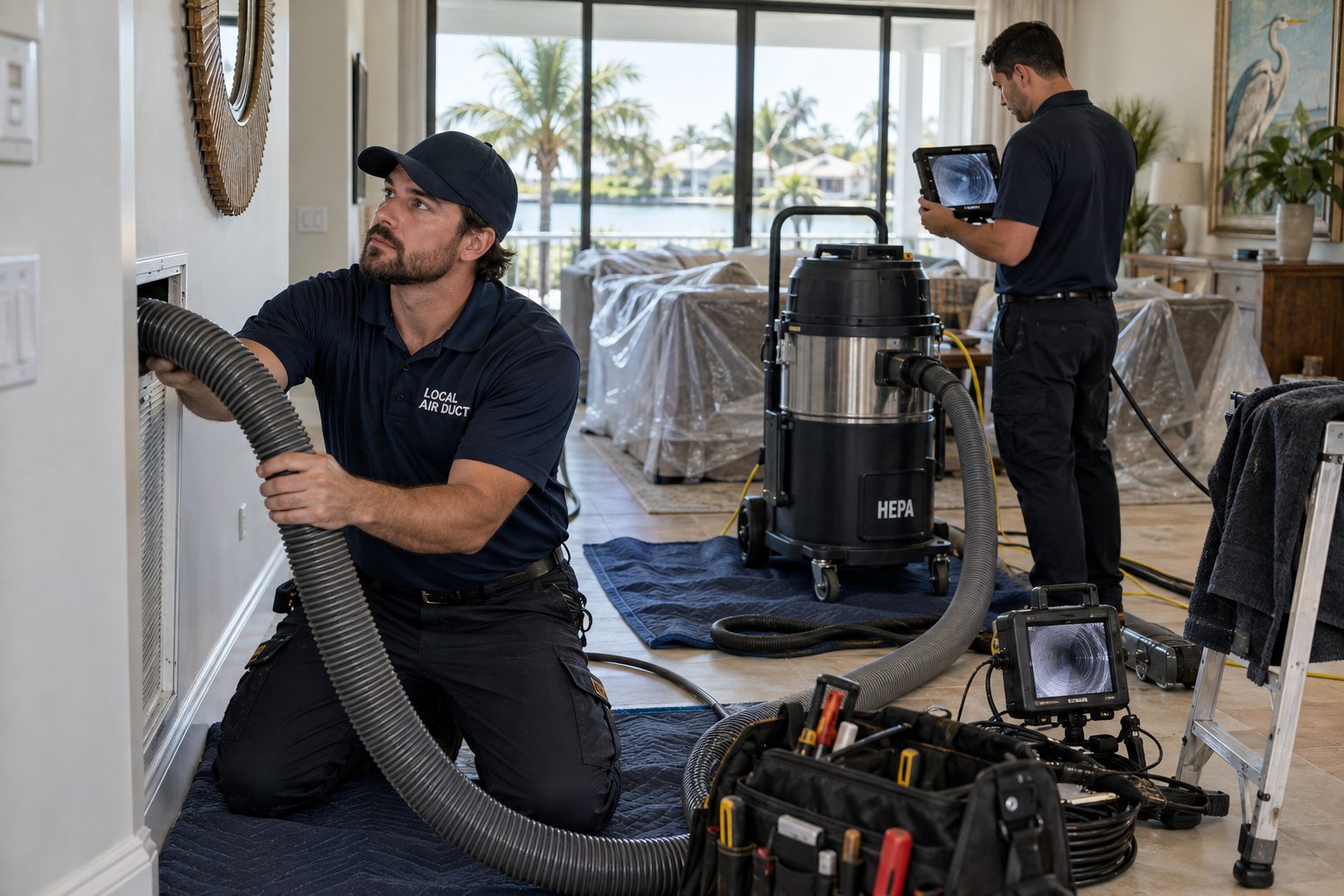
Discuss the property and the actual symptom
Say what is different since the system last ran well and what you want the finished job to look like. We go over the scope with you before starting.
Call (954) 686-6201What this guide is meant to do
Most people start thinking about their ducts only after something bothers them. A room smells stale, dust returns a day after wiping, or a neighbor mentions a cleaning appointment. This page is for that moment, when you want to understand the topic before you pick up the phone.
Everything here is general guidance for people living in Dania Beach and the surrounding area. It does not describe particular streets, buildings or local rules, and it does not claim that any specific property has a problem. Think of it as a checklist of ideas that apply to most South Florida homes that run air conditioning for much of the calendar.
If you would rather talk it through, the air duct cleaning service page explains the work in a broader way, and the scope guide shows how the size of a job gets decided.
Why ducts collect dust in a humid place
A duct system is a set of sealed channels that move cooled air from the air handler to every room, then bring room air back to be cooled again. Along the way the air carries fine particles: lint, skin flakes, pollen that drifted in through a door, and construction dust from any work done nearby. Some of it lands on the inside walls of the metal or flexible duct and stays there.
Humidity changes how that dust behaves. In a damp climate, particles that settle inside a duct can pick up moisture and cling more stubbornly, and the cooling cycle itself produces condensation near the coil and supply registers. A cooling season that runs for many months means the system cycles on and off thousands of times, and each cycle pulls more air through the same surfaces.
None of this means a home is unhealthy. It means that a system working hard in warm, damp conditions has more chances to hold on to debris than the same system in a dry, cool region. That is the main reason South Florida owners ask about cleaning more often than people elsewhere.
Construction and remodeling add another layer. Sanding drywall, cutting tile or opening a wall sends fine powder into the air, and if the system was running or the registers were left uncovered, much of that powder ends up inside the returns. A home that has recently been renovated is a common reason for a first inspection, even when nothing smells or looks wrong yet.
Pets, cooking and open windows matter too. Pet dander is light and travels easily through return grilles, and kitchen grease can drift into a nearby return and build up as a sticky film that traps even more dust. These everyday sources are normal, and they explain why two homes of the same age can have very different amounts of buildup inside.
Signs that deserve a closer look
Some signs are easy to spot with your own eyes. Dust or dark streaks around supply vents, a fine gray film on furniture that returns soon after you clean, and visible debris when you take a register cover off are all worth noting. A return grille with a thick gray mat on its surface suggests the filter is not catching everything, or the return path is pulling in dust from somewhere it should not.
Other signs are about smell and comfort. A musty note when the system first starts, uneven airflow from one room to the next, or a room that never quite cools can point to a blockage, a crushed flexible duct, or buildup on the blower. These symptoms can have more than one cause, which is exactly why an inspection comes before any promises.
Write down what you notice and where. Which rooms, what time of day, whether it happens when the system starts or all the time. That short note makes the first phone call far more useful, and it helps whoever inspects the system know where to look first.
- Dust that returns very soon after cleaning the room.
- A stale or musty smell when the system starts.
- One room that is weaker or warmer than the others.
- Visible debris or dark buildup around supply registers.
- A return grille that collects a thick mat of lint.
Single family homes, townhomes and condos
The type of building changes the work. A single family house usually has its own air handler, often in a closet or attic, with a duct run that is easy to describe. A townhome may share walls but still have its own system, while a condo unit often has a compact air handler in a utility closet with ducts running above the ceiling.
Access is the practical difference. In a condo, getting to the air handler may involve building management, elevator scheduling or notice rules, and the association may have its own requirements about contractors working inside the building. Those requirements vary from place to place, so the right move is to ask your association or property manager what applies before you book anything.
In a house, the question is more often about where the ducts run. Ducts in a hot attic behave differently from ducts in a conditioned space, and older flexible ducts can sag, kink or collect debris in low spots. Knowing which type you have helps you describe the property clearly when you call.
Townhomes and condos have one more quirk worth knowing about. Dryer vents, bathroom exhausts and kitchen hoods may run through shared or tight spaces, and lint or grease that builds up there is a separate topic from the air ducts. If you have a dryer, the dryer vent cleaning page explains why that line deserves its own attention.
Whatever the building type, the most useful preparation is simply knowing the basics: where the air handler is, where the filter slides in, and roughly how many vents each system serves. A short description from you saves time on the phone and helps the inspection start in the right place.
What an inspection should actually cover
A good inspection is more than a glance into one register. It should look at the supply vents, the return path, the air handler cabinet, the blower wheel and the coil if it can be reached. The goal is to learn what is inside the system before anyone decides what needs to be done.
The inspector should also look at the condition of the ductwork itself. Torn insulation wrap, loose connections, damp spots and crushed sections are not cleaning problems. They are repair questions, and they are covered separately on the duct repair and sealing page. Cleaning a duct that leaks does not fix the leak.
If the property has symptoms, tell the person looking at it. If you simply want a baseline, say that. Either way, the scope and price should be explained to you before work begins, so you can decide with the facts in front of you.
It helps to know what a thorough look includes, because a hurried one can miss the very thing you are worried about. A camera or a mirror and light into the trunk line, a look at the filter slot, and a check on whether the return is sealed to the air handler all reveal different pieces. Gaps at the return can pull in attic or closet air, and that air is often dustier than the room.
Ask to see what the inspector sees. Photos taken during the inspection are not decoration. They give you a record that you can compare with the photos taken after the work, and they let you make the decision calmly instead of relying on a description.
How cleaning is performed, step by step
Professional duct cleaning generally relies on two ideas working together. First, the system is placed under negative pressure with a strong vacuum so that loosened debris is pulled out instead of blown around the house. Second, the inside surfaces are agitated with brushes or compressed air tools so that stuck debris loosens and travels to the vacuum.
The work moves through the system in a logical order. Access points are made or used, the supply and return runs are cleaned branch by branch, and the register covers are removed and cleaned or wiped. Flexible duct needs gentler handling than rigid metal, so technique matters.
Afterward the technician checks the system again and shares before and after photos so that you can see the difference with your own eyes. That final check is part of the process described on the before and after photo guide, which is worth reading before your visit.
Not every duct needs the same treatment. Rigid metal trunk lines can take firmer agitation, while flexible duct with a thin inner liner needs light tools so the liner is not torn. A technician who explains this difference before starting is showing that they understand the material in your walls and ceiling.
Be wary of any explanation that sounds like a magic fix. Cleaning is physical work, and it takes patience to move through every branch and every register. If the description of the process is vague, ask for details until it makes sense to you.
The air handler, blower and coil
Many homeowners think of ducts as just the tubes, but the air handler is where a lot of the real dirt collects. The blower wheel looks like a small drum with many blades, and a thin coat of debris on those blades can reduce how much air the system moves. The coil, where air is cooled, can also gather a film that traps moisture.
Cleaning the air handler is its own kind of work, because the parts are delicate and the electrical connections must be respected. It is covered in more detail on the coil and blower cleaning page. If your main symptom is weak airflow or a system that runs long without cooling well, this area deserves attention along with the ducts.
A dirty air filter that has been left in place for too long can also push debris past the filter and onto the coil. Checking and replacing the filter on a regular schedule is the simplest habit that protects everything downstream.
Filter choice also matters. A very dense filter catches more but restricts airflow if the system was not designed for it, and a loose or poorly fitted filter lets air slip around the edges. If you are not sure what size and type your system expects, read the label on the old filter and ask when the system is inspected.
Another small habit is looking at the condensate drain line near the air handler. In a damp climate this line can clog with slime and dust, and water backing up can soak insulation and the cabinet. You do not need to fix it yourself, but noticing water or a musty smell near the unit is worth mentioning.
Moisture, mold questions and the limits of cleaning
In a humid place, people often worry about mold. Duct cleaning can remove loose debris, but it is not a mold remediation service, and it cannot turn a damp system into a dry one. If there is active moisture, such as a leaking drain pan, a wet insulation wrap or a damp ceiling near a vent, the source of the water needs to be dealt with first.
If something looks like mold and you are unsure, do not scrub it yourself or run the system with the area open. Take a photo, turn off nothing that is unsafe to touch, and describe it when you call. The indoor air quality testing page explains when testing can help you understand what you are seeing.
Honest expectations matter here. Cleaning will remove what it can reach and show you the result. It will not repair structural moisture, fix a poorly insulated duct or change how a building was built. Knowing that in advance keeps the project from disappointing you.
A few habits reduce the odds of moisture trouble. Keep the thermostat fan on auto rather than constantly on during humid weather, since a fan that never stops can blow moisture off the coil and back into the ducts. Make sure supply registers are not blocked by furniture, and keep interior doors from sealing a room off from its return path.
Getting the home ready
Preparation is simple. Clear the area around the air handler and any furniture sitting right beside floor or wall registers so that technicians can reach them. Secure pets in a room away from the work, and let everyone in the home know that the system will be off while the work is happening.
If you have fragile items on shelves near ceiling vents, move them. Cover nothing with tape or plastic unless you were asked to, because the crew will have its own methods for protecting floors and furniture. An occupied home is normal for this type of work, so there is no need to move out.
Make a short list of questions before the visit. Ask what will be inspected, what is included in the price, what the photos will show and what happens if the technician finds a repair issue. Good answers are specific and calm.
Deciding how often and where to go next
There is no single schedule that suits every property. A home with pets, smokers, recent renovation or heavy dust will usually benefit from attention sooner than a quiet, well filtered home. If you cannot remember the last time anyone looked inside the system, that alone is a reason to schedule an inspection.
If you are comparing neighboring areas, you may find it helpful to read the guides for nearby places, such as Hollywood and Fort Lauderdale, since many of the same principles apply. You can also see the Dania Beach city page for a general overview of services in the area.
When you are ready, call and describe the property and the symptom. The system is inspected, the scope and price are explained before work begins, and you receive before and after photos with a final check. That sequence protects you from surprises.
Keep your own simple record afterward. Save the photos, note the date, and write down anything the technician mentioned about filters or repairs. When you look back later, that small file tells you whether the system has changed, and it makes the next conversation shorter and clearer for everyone involved.
Common questions
How do I know if my ducts really need cleaning?
Look for steady dust around registers, a musty smell at startup, weak airflow in some rooms, or debris you can see when you remove a vent cover. None of these proves a problem alone, which is why a short inspection is the sensible first step before deciding on any work.
Will cleaning the ducts stop all the dust in my home?
No. Dust also enters through doors, windows, clothing and pets, and settles on surfaces regardless of the ducts. Cleaning removes what has collected inside the system, and a good filter plus regular replacement helps keep it from building up again.
Do I have to move out while the work is done?
You do not. Duct cleaning is normally done in an occupied home. You will want the area around the air handler and vents cleared, pets kept in a closed room, and the system off while the technicians work, but daily life can continue elsewhere.
What happens if the technician finds a damaged duct?
Damage such as torn wrap, loose joints or crushed flexible duct is a repair matter rather than a cleaning matter. It should be shown to you, explained, and priced separately before anything is done, so you can decide whether to repair it now or later.
Can duct cleaning get rid of mold?
Cleaning removes loose debris but is not a mold remediation service. If you suspect mold, the moisture source has to be found and corrected first. Testing may help you understand what you are seeing, and the inspection can point out damp areas worth addressing.
Is condo duct cleaning different from a house?
The cleaning itself is similar, but access and rules can differ. Condo associations may have requirements for contractors, and air handlers are often in tight closets. Ask your association or property manager what applies to your building before you schedule any work.