South Florida
Davie Air Duct Cleaning: A Local Homeowner Guide
Homes in and around Davie often have more than one air conditioning system, long duct runs or additions. This general guide explains how that affects cleaning, what to ask, and how to judge the finished work.
Call (954) 686-6201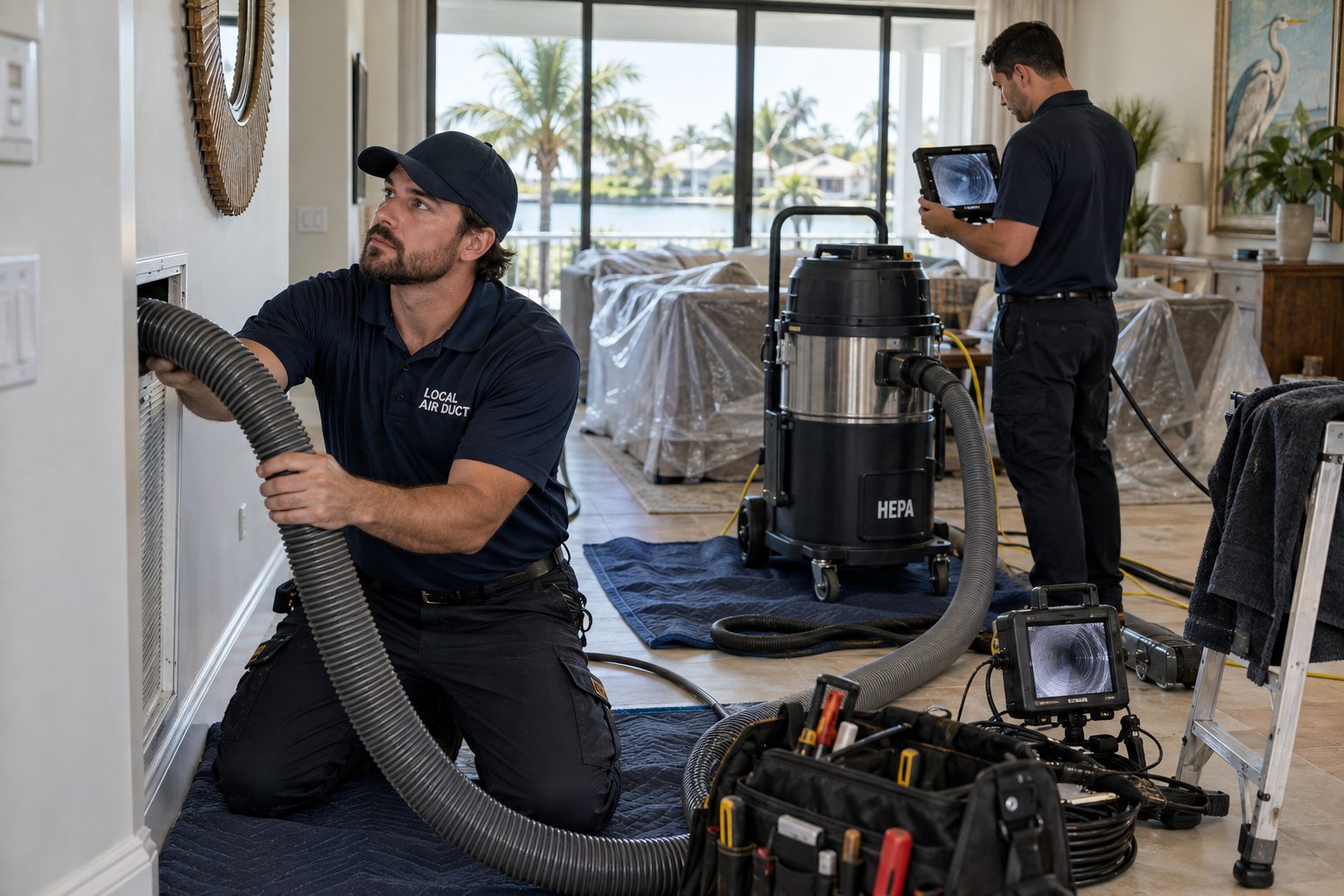
Discuss the property and the actual symptom
Describe the symptom, the rooms affected and what the cleaning or repair needs to achieve. The scope is explained to you first.
Call (954) 686-6201When one house means several systems
Plenty of South Florida houses are cooled by a single air handler, but larger homes, two story layouts and houses with additions frequently have two or three. Each system has its own air handler, its own filter, its own supply and return runs, and its own history of dust. When you ask about duct cleaning, it helps to know how many systems your property has, because the scope grows with each one.
You can find out by looking for the air handlers themselves. They sit in closets, garages, attics or utility rooms, and each is connected to a thermostat. Count the thermostats and you will usually count the systems. If you are not sure, take a photo of each thermostat and mention it when you call. A short list of where each air handler sits is even better, because it tells the inspector how many separate duct systems to plan for.
This page is general guidance for people living in Davie and nearby, not a description of any specific neighborhood or building. If your property is a townhome or condo with only one small system, much of the advice still applies, just on a smaller scale.
How an addition changes the airflow
When a room, a garage conversion or a second floor is added to a house, the ducts are usually extended or a new system is installed. Extensions can be long, with several turns, and sometimes they are made with flexible duct that was stretched farther than ideal. Long runs lose pressure, so the farthest rooms may feel weaker even when the equipment is working properly.
Construction dust is another factor. If the old system kept running while walls were open, a lot of fine powder could have entered the returns. That powder then coats the inside of the ducts and the blower, and it can show up as a film of dust around vents long after the contractors have left.
If your home has been remodeled at any point and no one has looked inside the ducts since, a baseline inspection is a reasonable idea. The scope guide describes how larger and more complex systems are measured so the job is described fairly before work starts.
Ask whether the addition shares an air handler with the original house or has its own. An oversized load on one system is a common reason that an addition feels warm in the afternoon, and no amount of cleaning will change a mismatch between equipment size and room size. Cleaning can, however, remove restrictions that make the mismatch feel worse than it needs to be.
It is also worth asking who built the extension, if you know. Sometimes the original paperwork or a past contractor can tell you where trunk lines run, which saves time during the inspection and reduces the need to open more access points than necessary.
Attic air handlers and hot, tight spaces
Many homes keep their air handler in the attic. It is out of the way, but it is also the hottest and most awkward place to service. Ducts in an attic are exposed to heat, and their insulation can sag, tear or collect dust. Access hatches may be narrow, and the work requires care so that insulation is not disturbed more than necessary.
Because attic work is physically demanding, a clear description of access helps. Tell whoever you call where the hatch is, whether there is a floor or only joists, and whether there is a light. This is not a detail to leave until the day of the visit, since it affects how the work is planned.
An attic system also tends to show its problems through the ceiling. Water stains near a vent, a damp smell or a drip from a register can point to condensation or a drain problem, which is a moisture question and not just a dust question. Mention anything like this when you call, and treat it seriously.
Safety deserves a sentence here. Attics in this climate become extremely hot, and walking on ceiling joists without a proper floor can lead to a fall or a foot through the drywall. Leave attic work to people trained for it, and do not climb up there yourself to check on a problem. Looking from the hatch with a flashlight is enough to describe what you see.
- Tell the caller where the attic hatch is and how wide it is.
- Mention any ceiling stains or drips near a vent.
- Note whether the insulation around the ducts looks torn or flattened.
- Say how many air handlers are in the attic.
Reading your own vents before the visit
You can learn a lot in ten minutes with a flashlight. Look into a few supply registers and note whether you see a thick gray layer, a dark ring or visible fibers. Check the return grilles, which are usually larger and located in hallways or on the ceiling, and see whether lint has built up on the metal behind them.
Compare rooms, because the contrast is where the clues are. If one bedroom has a clean vent and another has a dusty one, the difference tells you something about the duct runs behind each. A room that is dirty and also weak in airflow suggests a blockage or a sagging flexible duct in that branch.
Take a photo of what you see. Photos make the phone conversation concrete, and they give you a starting point to compare against the before and after images that come with a completed job.
Do not remove duct components yourself beyond lifting off a register cover. Flexible duct can tear easily, and a disturbed joint can leak for months before anyone notices. Looking is safe only when you leave the structure alone, so use the flashlight and a camera, not a screwdriver on the duct itself.
If you share the photos before the visit, the person you speak with can often tell you whether your situation sounds routine or whether it deserves a closer look at the air handler first. That small bit of preparation helps the inspection go in the right order.
What a thorough cleaning looks like
On a larger property, cleaning is organized system by system. Each air handler is isolated, a negative pressure vacuum is connected, and the branches are cleaned in a planned order so that debris is pulled toward the vacuum rather than pushed into rooms that have already been done. Agitation tools loosen buildup from the duct walls while the vacuum runs.
Registers and grilles are removed, cleaned and put back, and the technician checks that each one is secure. The blower compartment and the coil area are examined and, where appropriate, cleaned as a separate step; see the coil and blower cleaning page for how that part works.
At the end, the technician shares photos and does a final check with you. If your home has several systems, ask for photos from each one so you can see all the work and not just the easiest run.
A fair question is how long a system should be left open. The answer is only as long as the work requires, and the technician should close every access point properly, using sealed covers or tape suitable for ducts, so that nothing leaks later. Ask to see how each opening was closed.
On homes with older flexible duct, a careful technician may recommend leaving a section alone if it is too fragile to clean safely. That kind of honesty is a good sign. It means the person is thinking about the long term condition of your system, not just finishing the job.
Dryer vents, bathrooms and the other exhaust lines
People often assume that duct cleaning covers every tube in the house. It does not. Dryer vents, bathroom fans and kitchen hoods are exhaust lines that leave the building, and they collect lint, moisture and grease rather than the dust found in air conditioning ducts.
A dryer vent with a long run, several bends or a crushed section can hold a lot of lint, and lint is a fire concern as well as an efficiency problem. If your clothes take multiple cycles to dry or the laundry room feels hot and humid, read the dryer vent cleaning page to understand what that service involves.
Treat the dryer line as its own appointment topic. You may choose to have it done at the same time, but it should be described and priced separately, so you know exactly what you are agreeing to.
Between visits, you can help the dryer line by keeping the lint trap clean after every load and by making sure the flexible transition hose behind the dryer is not crushed against the wall. A dryer pushed too tight against the wall is one of the most common reasons for a bent, restricted hose.
Also look outside at the vent cap if you can reach it safely from the ground. The flap should open freely when the dryer runs. If it is stuck shut, covered in lint or blocked by a nest or leaves, air has nowhere to go and the dryer works harder than it should.
Repairs that cleaning cannot replace
Sometimes the real issue is not dust but leakage. A duct that has pulled apart at a joint, a boot that has separated from the ceiling, or a damaged section of flexible duct leaks cooled air into the attic or wall space. You pay to cool air that never reaches the room, and the leaking area can pull in dust and humidity.
Sealing and repair are different from cleaning, and a technician should tell you plainly which one applies. The duct repair and sealing page explains what is typically involved. If a leak is found during an inspection, you should be shown where it is and given a clear explanation.
Do not feel pressured to decide on the spot. It is reasonable to clean first and plan a repair later, or the other way around, as long as the choice is yours and the facts are clear.
Ask what repair would involve before you agree to it. Some fixes are small, such as resealing a joint or reattaching a boot, while others mean replacing a whole run. Understanding the difference in effort helps you compare your options and set priorities among them.
A reasonable technician will also tell you what can wait. Not every imperfection needs immediate attention, and a calm explanation of risk versus inconvenience is more useful than a long list of everything that could theoretically be improved.
Insulation and the ducts above the ceiling
Ducts that run through hot attics rely on their outer wrap to prevent condensation. When that wrap tears, the cold surface of the duct meets humid attic air and sweats. Over time the moisture can stain ceilings, dampen insulation and encourage musty smells.
If your home has a reputation for hot rooms or a stuffy upstairs, the problem may include poor insulation as well as dirty ducts. The attic duct insulation page describes how insulation relates to comfort and moisture.
Good practice is to treat insulation, sealing and cleaning as three separate questions. Each one has its own cause and its own fix, and sorting them out keeps you from paying for work that does not address your actual symptom.
A simple way to separate them is by symptom. Dust and a dirty blower point toward cleaning. Rooms that stay warm no matter what, or ceilings that sweat, point toward sealing or insulation. If you have both, the order of work matters, and your inspector can suggest a sensible sequence.
When you receive the explanation, ask for it in plain words and ask to see the evidence. A photo of a torn wrap or a gap at a joint is far more convincing than a general statement, and it lets you keep a record for later reference.
How to compare options calmly
When you gather information from more than one source, compare the process rather than just the headline. Ask who inspects first, how the scope is described, whether the price is explained before work begins, and whether photos and a final check are shared. A clear process is a better sign than a confident promise.
Be cautious about anything that sounds like a standard package applied to every home regardless of size. A one system condo and a three system house are different projects, and an honest description reflects that.
If you want to understand how the work looks near you, the Pembroke Pines guide and the Plantation guide cover similar ground, and the Davie city page gives a general overview.
Finally, pay attention to how questions are answered. If you ask what is included and the answer is specific, with systems, vents and access points named, that is reassuring. If the answer is vague or changes each time you ask, it is reasonable to keep looking before you commit.
Planning the call
Before you call, gather a short list: how many systems you have, where the air handlers are, what symptoms you notice, and whether anyone in the home has allergies or breathing concerns. Add whether the property is occupied, whether there are pets, and any access limits such as stairs or tight hatches.
When you call, describe the property and the symptom. The system is inspected, the scope and price are explained before work begins, and before and after photos with a final check are shared. That is the full sequence, and it should never feel mysterious.
Afterward, keep the photos and any notes. They are useful if you later change filters, add a room or compare the system with how it looked when you first noticed a problem.
If anyone in the household has asthma, allergies or a sensitivity to dust, say so plainly. It does not change the process, but it can change how carefully the work area is protected and how thoroughly the final check is explained. Share what you notice after the visit as well, since changes in comfort are useful information for deciding when to look at the system again.
Common questions
How many systems does my Davie home have?
Count the thermostats, because each one usually controls its own air handler. Air handlers are found in closets, garages, attics and utility rooms. If you are unsure, take a photo of each thermostat and any visible unit and describe them when you call, so the inspection plan reflects the real layout.
Does a bigger house always mean a bigger project?
Usually, because each system has its own ducts, blower and filter. A large house with one efficient system may be simpler than a smaller house with two. That is why scope should be decided after an inspection rather than guessed from square footage alone.
Should the attic be cleaned along with the ducts?
Duct cleaning addresses the inside of the duct system, not the attic space itself. If the attic has torn insulation, leaks or stains, those are separate questions. The inspection should point them out so you can plan insulation or repair work independently.
Can I stay home during the work?
Yes. Duct cleaning is normally done in an occupied home. You will need the system off during the work and clear access to vents and air handlers. Keep pets in a closed room and move fragile items away from ceiling vents before the visit.
What if a vent has a stain or drip?
Treat it as a moisture clue, not just a cleaning issue. Water at a register can come from condensation, a clogged drain line or a damaged duct wrap. Mention it when you call and avoid running the system heavily until the cause has been checked.
Do dryer vents get cleaned during duct cleaning?
Not automatically. Dryer vents are separate exhaust lines with different buildup and different tools. They can be scheduled at the same visit if you wish, but the work and the price should be described separately so you know what each part includes.