South Florida
Air Duct Cleaning in Lauderdale-by-the-Sea, FL
A practical guide for people in Lauderdale by the Sea who wonder whether their air ducts need attention, what the work involves, and how to judge a good job before and after it happens.
Call (954) 686-6201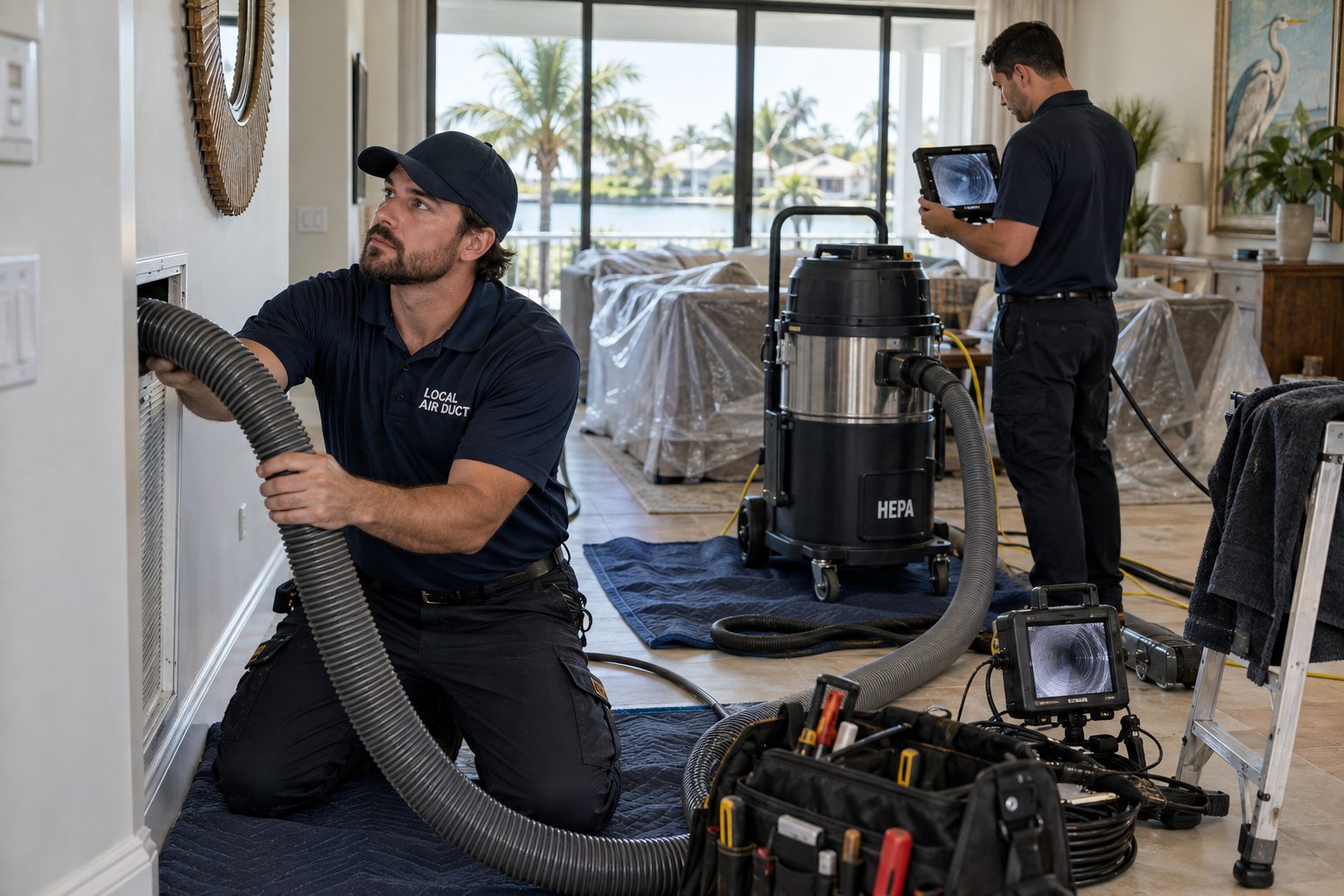
Discuss the property and the actual symptom
Say what is different since the system last ran well and what you want the finished job to look like. We go over the scope with you before starting.
Call (954) 686-6201A short note before we start
This page is general guidance for people living or managing property in Lauderdale by the Sea. It is not a record of local jobs, and it does not describe particular streets or buildings. What it does offer is a clear picture of how air ducts behave in humid coastal South Florida homes and what a sensible cleaning visit looks like.
If you already know something is wrong, such as a musty smell every time the air conditioning starts, you can skip ahead to the signs section. If you are only curious, read on from the top. Either way, the goal is the same: help you decide calmly instead of reacting to a pushy sales call or a vague worry.
Local Air Duct handles duct, dryer vent and air quality work for South Florida properties. When you call, you describe the property and the symptom, the system is inspected, and the scope and price are explained before any work begins. You will find that same order of events described again further down, because it is the part people most often ask about.
Why coastal ducts collect what they collect
An air conditioning system in South Florida runs for most of the year. Every hour it runs, it moves a large volume of indoor air across a cold coil and through a network of tubes hidden in walls, ceilings and closets. Warm, wet air meeting cold metal creates condensation, and anywhere that moisture lingers, dust sticks more firmly than it would in a dry climate.
Think about what that means over a long cooling season. A duct that is slightly damp on the inside for months at a time is a very different environment from one that dries out between uses. Fine dust becomes a paste, the paste becomes a layer, and the layer slowly narrows the path the air has to travel. Nothing dramatic happens on any given day, which is exactly why the buildup goes unnoticed until a smell or a weak room finally gets your attention.
Properties close to the water can add another layer. Salty, humid air tends to be hard on metal parts, and it can leave a film on surfaces that dust then clings to. Open a door and window during a cooler evening and the system will also pull in pollen, sand, and fine grit that rides in on shoes and pets.
None of this means every duct system near the beach is filthy. Plenty are fine for long stretches. It does mean the conditions favor buildup, so a look inside now and then is reasonable, especially in older buildings where the original ductwork has been through many seasons of heavy use.
Construction and remodeling matter as well. Sanding drywall, cutting tile, or replacing flooring throws fine dust into the air, and if the system was running while it happened, much of that dust ended up in the returns and ducts. If you have had work done recently and the house still feels dusty weeks later, the ducts are a likely place to look.
Small buildings, shared systems and seasonal use
Many properties in a small beach town are low rise buildings, townhomes, duplexes, and single family houses, with a fair number of units used part of the year. A unit that sits empty for weeks while the thermostat is set to hold temperature behaves differently from a family home with people cooking, showering and opening doors all day.
An unoccupied space with the air conditioning running at a low load can sweat in the same places a busy home does, but nobody is there to notice the first musty whiff. When someone returns and the air smells stale, the ductwork and the indoor coil are among the first places worth checking.
For owners of rental units, turnover is a natural moment to schedule a look. Between guests or tenants, the space is empty, access is easy, and any cleaning can be finished without working around belongings. If you manage several units, mention that when you call so the inspection can be planned around how the buildings are laid out.
Signs your ducts may need attention
The most common sign is simple: dust keeps returning to flat surfaces soon after you clean them. If you wipe a shelf and it looks gray again within days, particles may be circulating through the system instead of settling out of a clean airflow path. Check the vent covers too. Heavy dust furring the edges of a supply vent, or dark streaks around the grille on the ceiling, point to air that is carrying debris.
Smell is the other big clue. A damp, earthy odor that appears when the system starts can come from moisture in the ducts, the coil, or the drain pan. A sharp burnt dust smell on the first cool day often means lint and debris have settled on warm parts. Neither smell proves the ducts are dirty, but each one justifies a proper inspection.
Weak airflow from a few rooms while others feel normal can also tie back to blockage, a crushed section, or a loose connection. Keep notes on which rooms are affected and when. A short, specific description such as the back bedroom gets little air since the spring helps the person inspecting your system far more than a general complaint.
Weak airflow does not always mean dirt. A loose or crushed duct, a closed damper, a clogged filter, or a tired blower can each produce the same symptom, and cleaning will not fix those. That is the reason the inspection comes first: it sorts out which problem you actually have before any scope is set, so you do not pay for the wrong remedy.
- Dust returns to furniture soon after cleaning.
- Vent covers show dark rings, fuzz or visible buildup.
- A musty smell appears whenever the system starts.
- One or two rooms get much less air than the rest.
- Allergy or sneezing symptoms seem worse indoors than outdoors.
What happens during a visit
The process starts with a phone call. You describe the property, how old the system seems to be, and what you have noticed. From there the system is inspected, which usually means looking inside accessible ducts, checking the air handler, and seeing how the returns and supplies are built. Access points matter, so the inspector will note where a technician can safely reach the duct runs.
Once the inspection is done, the scope and price are explained before work begins. That means you hear what will be cleaned, what will be left alone, and why. If something needs repair rather than cleaning, such as a loose connection or a torn section, you hear about that separately instead of having it buried in a single total.
During the work, the technician typically creates negative pressure on the system and agitates debris loose with brushes or air tools while a strong vacuum draws it out. Registers and grilles are removed, cleaned, and put back. At the end, before and after photos and a final check are shared with you so you can see for yourself what changed.
Protecting an occupied home or condo
Most duct cleaning happens while people live in the space, so a good crew works around daily life. Expect floors and furniture near vents to be covered or moved, and expect vent covers to come off for a short stretch. Pets and small children should stay in another room while equipment is running, mostly because of noise and loose cables.
Think about timing within the day, too. Work that involves running a large vacuum and opening up the equipment area is easier on people who are home and not on a conference call or a nap schedule. Share any such constraints when you call, since a sensible plan around your routine is part of doing the job well.
If you live in a condo or townhome, ask your association or building manager whether there are rules about work hours, elevator use, or parking for service vehicles. Requirements vary from one building to the next, and the people who run yours are the ones to ask. Some buildings also want a contact name or a window of time so that security or neighbors are not surprised by equipment in the hallway. One question beforehand prevents a delay on the day itself.
Tell the inspector about anyone in the home with breathing sensitivities, and about any plants, aquariums, or electronics near the equipment. These details are easy to share on the phone and make the visit smoother for everyone.
Plan a little space too. The technician will need to reach the air handler, and sometimes an attic hatch or a closet panel, so clear a path of a few feet in front of those areas. If a small item is stored on top of a return grille, move it beforehand. Little preparations like these keep the visit focused on the work instead of on moving boxes.
Cleaning is only one part of the picture
Duct cleaning pays off most alongside basic upkeep. A fresh filter changed on a sensible schedule keeps most debris from reaching the ducts at all. A drain line that stays clear prevents the water backup that feeds odors and stains. A coil that has been cleaned lets the blower move air with less effort. If you suspect the equipment itself is dirty, our guide to coil and blower cleaning explains that side of the system.
Leaks matter as well. Ducts that are loose or torn can pull dusty attic or wall cavity air into the supply stream, which undoes some of the benefit of a thorough cleaning. If the inspection finds gaps, duct repair and sealing is the usual next step, and it is worth doing before or alongside a cleaning rather than after.
If your main worry is what you are breathing rather than what is on the metal, indoor air quality testing is a separate way to look at the question. Cleaning and testing answer different questions, and some households want one, some want both, and some want neither.
Dryer vents deserve the same attention
When people think about air quality at home, they often forget the dryer. Lint builds up in the exhaust duct behind the machine, especially when the run to the outside wall is long or has many turns. A clogged vent makes clothes take longer to dry, makes the laundry area hot, and puts extra strain on the appliance.
The warning signs are easy to spot: damp clothes after a normal cycle, a hot dryer cabinet, a burning smell, or lint collecting around the outside flap. If you notice any of these, avoid running the dryer repeatedly and call to have the line looked at. Our page on dryer vent cleaning walks through what the work involves.
Because many coastal homes have compact laundry closets and long vent paths, it makes sense to schedule dryer vent attention at the same visit as duct work when both are due. That way access, cleanup, and photos are handled together.
Neighboring places and related guides
If you are comparing notes with friends or relatives in nearby towns, the same general advice applies there, with local differences in building age and style. You may find it helpful to read the guides for Pompano Beach, Lighthouse Point, and Oakland Park, each written from its own angle.
For a wider view of what a cleaning does and does not include, the air duct cleaning scope guide is a good companion. It lays out the difference between a basic pass and a full system cleaning so you can compare quotes on equal terms instead of guessing.
When you are planning for a building with several units, think about whether the work should be done as a group. Systems that share a mechanical closet, a roof run, or a common return path are easier to inspect together, and the person looking at them can compare one unit with the next. That comparison often reveals which units are in rough shape and which are only a little dusty, which in turn helps you decide where to spend first.
You can also read the main air duct cleaning page for the full service overview, or browse the service area list to see which cities are covered.
Questions to ask any duct cleaner
Whoever you call, ask what the process is, who will be in your home, and what is included in the quoted scope. Ask whether the return side, the supply side, the main trunk lines and the air handler are all part of the work, or only the vents you can see. Ask how they will show you the result.
Be wary of a company that quotes a flat total over the phone without any information about the property, or one that tells you every home needs the same service. Systems differ in size, layout, material and condition, and an honest scope reflects that. A written or clearly spoken breakdown before the work starts is a reasonable thing to expect.
Finally, look at proof. The before and after photo guide explains what a useful photo set looks like, so you know what to expect when the job is finished and can compare it with what any provider shows you.
Finally, trust your own sense of the conversation. If the person on the phone listens to your description, asks about the age and layout of the system, and explains what they would look at first, that is a good sign. If they talk mostly about urgency or push you toward the largest package, slow down and ask for the scope in plain words. A clear explanation costs nothing, and it tells you how the rest of the job is likely to go.
Common questions
How do I know if my ducts in Lauderdale by the Sea need cleaning?
Look for dust that returns soon after wiping, dark streaks around vents, a musty smell when the system starts, or rooms with weak airflow. None of these alone settles the question, but together they justify an inspection. The inspection shows what is actually inside, so the decision rests on evidence instead of guesswork. Photos taken inside the ducts are especially helpful because they let you see the condition yourself rather than taking anyone's word for it.
Is it a problem if my unit sits empty for weeks?
An empty unit with the air conditioning running can still develop moisture and stale air, and nobody is present to notice early. If you return to a musty smell, have the system looked at. Between guests or tenants is a convenient time for an inspection because access is easy.
Will the cleaning be messy in an occupied home?
A careful crew covers floors, moves items near vents, and contains debris with a vacuum system. Expect noise and some temporary disruption in the rooms being worked on. Pets and children should stay in another room during the work, and you will see a final check and photos at the end.
Do I need dryer vent cleaning at the same time?
Not always, but it often makes sense to combine them. Lint buildup in the dryer exhaust is a separate problem from dust in the air ducts, yet the access and cleanup can be done in one visit. If clothes dry slowly or the laundry area gets hot, mention it when you call.
Should I check with my association before booking?
Yes, if you live in a condo or townhome. Rules about work hours, parking and building access differ from place to place, and your association or building manager is the right person to ask. A short question beforehand helps avoid delays when the crew arrives.
What will I see when the work is finished?
You can expect before and after photos and a final check shared with you. The photos show the duct interior, the vent covers, and where possible the air handler area. Seeing the comparison helps you judge whether the scope that was explained at the start was actually completed.