South Florida
Air Duct Cleaning in Lauderhill, FL
Lauderhill residents live in everything from garden apartments to single family houses. This guide explains how duct cleaning works across those property types and how to decide what your own system needs.
Call (954) 686-6201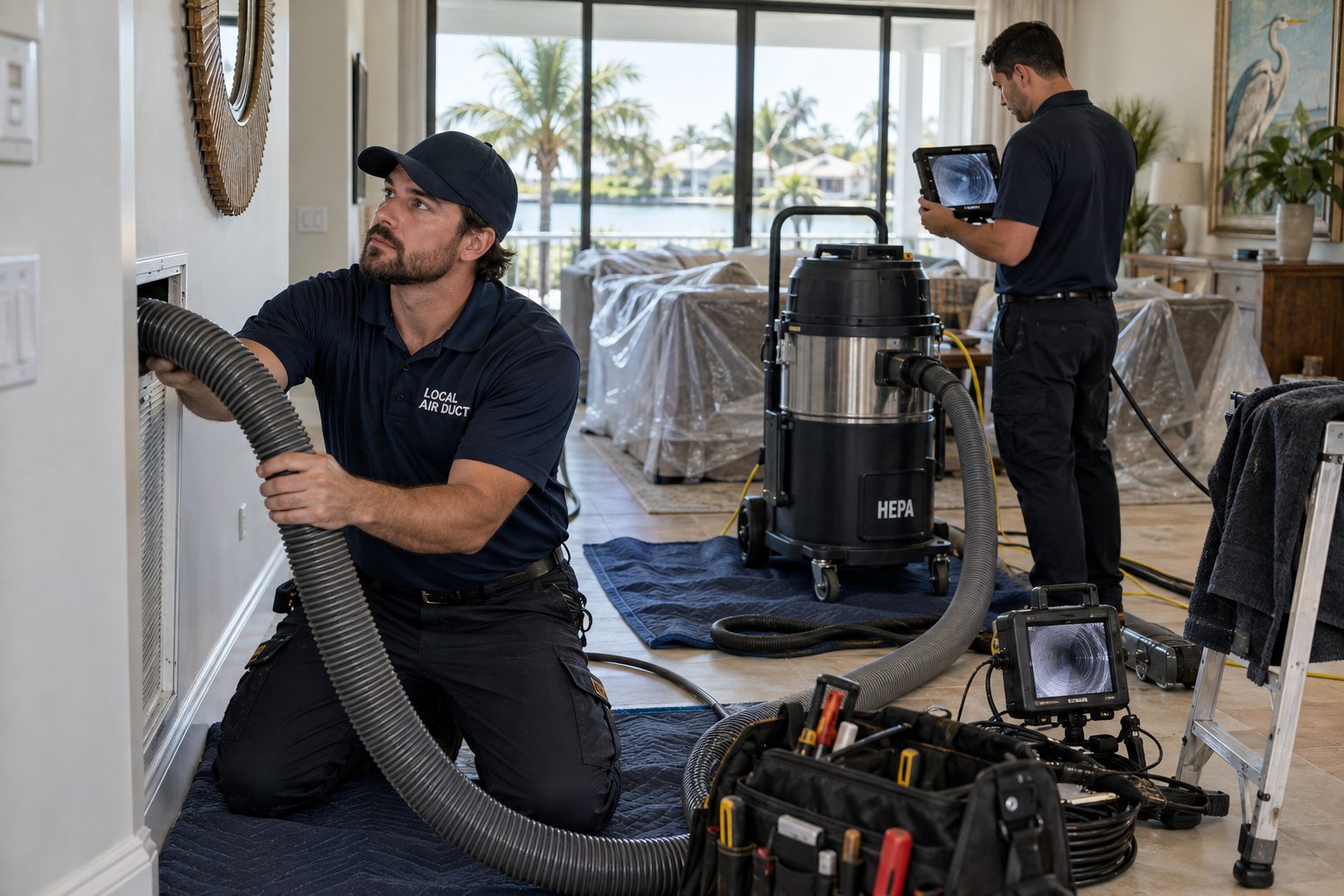
Discuss the property and the actual symptom
Let us know what you noticed, what still seems normal and what result you expect. Before work begins, the scope is explained.
Call (954) 686-6201Different buildings, different duct problems
Housing in a city like Lauderhill is a mix. There are condominium buildings, townhome rows, rental apartments, and detached houses, built across different decades. This page is general guidance for people in that situation, not a description of any specific complex, and it makes no claim about work done in particular communities.
The reason building type matters is simple. A single family house usually has one system with ducts running through an attic or a ceiling space. A condo unit might have a small air handler tucked in a closet with short duct runs. An apartment complex may have dozens of identical units, each with its own system but all aging at the same pace.
Knowing which category you fall into shapes the questions worth asking. Who owns the equipment, who is responsible for the ducts, and who needs to approve the work are all different answers in a house than in a rented unit, so start there before picking up the phone.
Age is the next thing to figure out. Older buildings may have ductwork made of materials that have been altered over time, with patches from earlier renovations and mismatched sections. Newer construction tends to have more uniform runs, though it is not immune to leaks or construction dust left behind by the trades. In either case, describing what you know about when the building was put up or last renovated gives the inspector a head start.
Once you have those answers, the technical side is easier to plan. The inspection is the same in principle everywhere: look inside, see what is there, and describe it plainly before any price is discussed.
Who is responsible for the ducts in your unit
Owners of a house or townhome usually decide everything themselves. Owners of a condo unit generally control the equipment inside their own walls, but the building may control shared risers, roof access, or the common hallways the crew will walk through. Renters should talk to the landlord or property manager before arranging anything, because the system belongs to the property, not to them.
If you manage rental property, think about how you want to handle the work across units. Some managers address ducts during turnover, when a unit is empty and cleaning is easy to schedule. Others handle a handful of units at a time after tenants report smells or weak airflow. Both approaches work, as long as you keep a simple record of what was found and what was done.
Whatever your role, requirements for access, notice, and work hours vary by building and by association. Ask the manager or board what applies to you instead of assuming. A short email or call up front keeps the day of the visit smooth.
Keep copies of whatever you receive. When photos and notes from the visit land in your inbox, file them with the lease or the unit paperwork. If a smell or airflow problem comes back later, that record shows what condition the system was in at the time of the cleaning, and it makes the next conversation with a technician much more concrete.
What dirty ducts look and smell like
The first clue is often on the vent covers. A supply grille with a gray fringe or dark streak along the louvers is catching particles that the air carries through every day. Look at the return grille too, since that is where dust, hair and fibers enter the system. If the filter slot behind the return is heavily coated, the ducts downstream have likely seen the same material.
Smell follows. A damp or earthy odor that shows up when the air conditioning starts can point to moisture in the ducts or the coil. A stale, dusty smell right after a long idle period is common and often fades, but if it returns every cycle it deserves attention. Burning smells are more serious and call for turning the system off and having it checked.
Finally, notice who in the household reacts. If sneezing, itchy eyes or coughing seem worse indoors, ductwork is one possible factor among many, including pets, carpets, and outdoor pollen. Cleaning can reduce one source of particles, but it is wise to treat it as part of a broader effort rather than a single cure.
Humidity plays a role here as well. In South Florida the air conditioner is doing double duty, cooling and pulling moisture out of the air. If the indoor humidity stays high because of a leak, a bathroom without proper ventilation, or a thermostat fan setting that keeps the blower running over a wet coil, mold smells can develop that no amount of vent cleaning will resolve alone. Mention these conditions when you describe the problem.
- Gray fringe or dark streaks around supply grilles.
- Heavy buildup on the return grille or filter slot.
- A musty smell at startup that returns every cycle.
- Noticeable dust on shelves soon after cleaning.
- One room that never feels as cool as the others.
The sequence of a standard visit
It begins with a phone call where you describe the property, the age of the system if you know it, and the symptom that made you call. From there the system is inspected. The inspector looks at the air handler, the return, representative supply runs, and the places where ducts connect to boxes and registers.
After the inspection, the scope and price are explained before work begins. You should hear in ordinary words what will be cleaned, what stays untouched, and whether anything found calls for a repair instead of a cleaning. If you decide to go ahead, work begins; if not, you have lost nothing but a little time.
When the cleaning itself starts, the technician connects a powerful vacuum to the system and uses brushes or compressed air to knock debris loose so it is drawn out. Grilles come off, get cleaned, and go back on. When the job is done, before and after photos and a final check are shared with you, so the result is something you can see instead of something you are told.
It helps to be home, or to have a trusted person present, for the start and the end of the visit. At the start you can point out the rooms that concern you most. At the end you can walk through the finished work, ask about anything that looks different from what you expected, and confirm that every grille is back in place and the air handler panel is closed properly.
Working around neighbors and shared walls
In multi unit buildings, noise and equipment in common areas can affect neighbors. A considerate crew limits cord runs across hallways, keeps doors from being propped open longer than necessary, and avoids blocking elevators or stairs. If the building has quiet hours, mention them early.
Shared walls also mean shared air in some cases. Older buildings sometimes have chases or openings where air and odors travel between units. If a neighbor's cooking or smoking seems to reach your unit, cleaning your own ducts will not fix that, and the inspection can help sort out what is happening.
If you are on a board or manage a community, it can help to prepare a short note for residents explaining what to expect. People accept disruption more easily when they know what the equipment looks like and how long it is likely to be around, in general terms.
Garage and parking arrangements deserve a mention too. Service vehicles often need to unload equipment near the entrance, and a building with limited visitor parking may need a heads up to avoid tickets or blocked lanes. Whoever handles parking for your building can tell you what is allowed, since those policies differ from one property to the next.
The air handler and coil matter too
Ducts are only the delivery route. The air handler holds the blower and the cold coil, and either can be a source of dirt and odor. A coil coated with debris restricts airflow and can hold moisture, which leads to musty smells. A blower wheel with caked dust moves less air than it should and works harder doing so.
When the problem is concentrated at the equipment, cleaning the ducts alone will not deliver the improvement you expect. Our coil and blower cleaning page explains what that work involves, and the inspection will show whether it belongs in your scope.
Condensate drains are another quiet trouble spot. If the drain line clogs, water backs up into the pan and can cause staining, odor, or overflow. It is not duct cleaning, but a careful inspector will notice standing water or rust and tell you about it.
Also look at the filter yourself. A filter that is too thin, installed backward, or left in place for months allows debris past it and loads the coil with dirt. Check the size printed on the frame, check the arrow for airflow direction, and replace it on a reasonable schedule for your household. Pets, smokers, and remodeling all shorten the interval.
When repair beats cleaning
Sometimes the real problem is a duct that has come apart. Flexible duct can sag, tear, or slip off its collar. Metal duct can separate at a seam. When that happens, the system pulls air from the attic or wall cavity, bringing dust and humidity with it, and cleaning the inside will not stop that from continuing.
In this case, the sensible order is to fix the leak and then clean, or to do both in one visit. Read about duct repair and sealing if the inspection shows loose joints or damaged sections. Sealing also helps the system deliver air where you want it, because air that leaks out before reaching a room is cooling a space nobody lives in. In a hot climate with long cooling seasons, that wasted air is easy to overlook and worth fixing when the ducts are already open and accessible.
Be cautious about any suggestion that every duct problem needs full replacement. Some do. Many do not. A fair inspection compares what is damaged with what is merely dirty, and it should give you the option of addressing each separately.
A useful habit is to ask what the technician sees with their own eyes. Torn insulation wrap, rust stains at seams, water marks beneath a duct, and daylight visible through a gap are all concrete findings you can point to later. Findings you can see in a photo are easier to act on than a general statement that the system is in poor condition, and they give you a fair basis for comparing a second opinion.
Dryer vents in apartments and condos
Laundry in a compact unit often means a short dryer duct that runs through a wall or ceiling to the outside. Short does not mean clean. Lint builds up at the bends and at the exit flap, and a partly blocked vent leaves clothes damp and the machine hot.
If your dryer takes longer than it used to, or the laundry closet feels unusually warm, those are warning signs. Do not keep running load after load hoping it will improve. Read about dryer vent cleaning and consider adding it to the same visit as your ducts.
In shared buildings, some vents exit through common walls or roofs, so check with the manager about who can authorize access. That is one more reason to ask before scheduling.
Lint is also a fire concern in general terms, which is one more reason not to ignore a slow dryer. Beyond that, a clear vent saves wear on the heating element and the motor, and it keeps the laundry closet from turning into a hot, humid corner that feeds mildew on nearby walls. If you can smell something warm or scorched while the dryer runs, stop the machine and have the vent checked before using it again.
Looking at nearby places
If you work in several cities or have relatives nearby, the guides for Tamarac, Sunrise, and Plantation follow the same overall approach with their own emphasis. Reading one or two can give you a sense of how consistent the process is from place to place.
Property managers with units in more than one city may also want to check the service area page to confirm coverage before planning a round of visits. Mentioning all the locations on the call helps the inspector plan sensibly.
The main air duct cleaning overview collects the general service description in one place if you prefer a broader view.
If you are curious about the inspection step on its own, you can also read about what a duct inspection covers in nearby cities such as Lauderhill. An inspection can stand alone if you only want to know the condition of the system and have not decided whether any cleaning is needed. That is a perfectly reasonable first step, and it keeps the decision in your hands.
Judging a quote before you accept it
A trustworthy quote follows an inspection or at least a detailed conversation, and it names what is included. Ask whether returns, supplies, trunk lines and the air handler are all in scope, or only the visible grilles. Ask how many access openings may be needed, and how those will be closed afterward.
Pay attention to how the company talks about results. Vague claims of dramatically healthier air are less useful than a plain description of what will be removed from where. The air duct cleaning scope guide helps you compare one proposal against another using the same checklist.
Also confirm how you will see proof. The before and after photo guide describes what a good set of photos should show, so you can recognize the real thing when it arrives.
One more point on quotes: be wary of urgency. A duct system that has accumulated dust over a long stretch did not become a crisis overnight, so you have time to ask questions, compare scopes, and talk with your household or board. A calm, well explained plan is a better sign than a deadline that disappears if you ask for a day to think it over.
Common questions
Who decides whether ducts get cleaned in a rental apartment?
The owner or property manager, because the system is part of the building. Tenants who notice smells or weak airflow should report it in writing and ask how the manager handles duct service. Managers who track what is found and cleaned across units usually make better decisions over time.
Do condo owners need permission to have ducts cleaned?
Often the unit owner controls equipment inside the unit, but the building may set rules for access, parking, work hours or elevator use. Requirements vary, so ask your association or building manager before scheduling. A short question up front avoids delays and keeps neighbors informed.
Will cleaning get rid of a musty smell?
It can, when the smell comes from dust and moisture in the ducts. If the source is the coil, a clogged drain, or a leak elsewhere in the building, cleaning the ducts alone will not fix it. The inspection helps identify the source so the right work is done.
How is the price decided?
After the system is inspected, the scope and price are explained before work begins. Price depends on the size and layout of the system, how many runs there are, how easy access is, and whether coil, blower or repair work is included. You decide after hearing it.
What proof will I get that the work was done?
You receive before and after photos and a final check shared with you. Photos can show the inside of duct runs, grilles, and the air handler area where reachable. Together they let you compare conditions and confirm the scope explained at the start was completed. Keep them with your property records in case you need them later.
Should I clean the dryer vent at the same visit?
If your dryer is slow to dry or the laundry area is hot, yes, it is sensible to include it. Dryer exhaust and air ducts are separate systems, but combining them saves a second visit and lets you look at both sets of photos together.