Where this guidance comes from
This page is general guidance for people in Delray Beach, Florida. It does not describe particular streets, buildings or neighborhoods, and it makes no claim that any work has been done in a specific place. The purpose is to give you a clear way of thinking about duct cleaning, so that your first phone call is informed and your decisions are your own.
The page leans toward life events that often trigger the question: finishing a remodel, buying a home, preparing to sell, moving a tenant in or out, or noticing that an older house has begun to smell stale. These moments are when owners look at their air systems with fresh eyes, and when a few good questions can save time and confusion.
Where rules or requirements come up, such as association policies, city regulations or lender conditions, the page says that requirements vary and points you to the person who can answer. Nothing here replaces the advice of the party responsible for those rules.
Take the page as a conversation starter with yourself. Ask what event brought you here, what you can see or smell, and what outcome you want. A homeowner finishing a kitchen remodel and a landlord turning over a unit have different goals, and the same service can be scoped differently for each, with different attention to access, photos and follow up notes. Clarity about your goal is the foundation of a fair plan.
Before you call, collect a handful of facts: how many air handlers the property has, where they sit, how many vents and returns you can count, and which rooms feel different from the others. Estimates are fine. The provider will confirm the real numbers when the system is inspected, but a rough picture lets the first conversation be specific instead of general.
Dust after a remodel
Renovation is the most common reason homeowners wonder about their ducts. Sanding drywall, cutting tile, refinishing floors, demolishing a wall or tearing out old cabinets sends fine particles into the air. If the air conditioning runs during the work, some of that material is pulled into return grilles and carried through the system.
Contractors usually seal registers and returns with covers during construction, but that step is not always taken or maintained. Open vents collect dust, and the dust moves deeper into the ducts every time the blower runs. After a project, owners may notice a fine haze on furniture, a gritty feel on vent covers or visible powder inside a register.
If this sounds familiar, tell the provider what work was done and where. The list matters because drywall dust, tile dust and wood dust behave differently, and the inspection will look in different places depending on the rooms involved. A bathroom remodel mostly affects nearby returns and the hallway, while a whole house project can touch every register. Say which rooms were opened up, and the plan can start where the dust most likely traveled. It also helps to know whether the system ran during the work.
Also think about what the project left behind in the ducts besides dust. Paint overspray, drywall compound crumbs, caulk, fasteners and scraps of tape occasionally fall into open duct ends or register boots. A careful technician looks for those items and reports what turns up. If you find debris yourself, do not push it deeper. Take a photo, leave it, and mention it on the call.
- Fine powder visible inside supply registers after the project.
- Gritty or chalky feel on vent covers or return grilles.
- Dust that returns soon after wiping, even after final cleanup.
- A smell of paint, adhesive or sawdust when the system starts.
- Open duct ends found uncovered during construction.
Older systems inside updated houses
Many houses in this area have been updated while the ductwork stayed the same. A new kitchen and bathroom can sit on top of an air system that has been running for a very long time. Materials such as flexible duct and duct board age, and joints loosen. The house looks fresh, while the system behind the walls tells a longer story. Tape on old joints dries and peels, mastic cracks, and straps that once held flexible duct up can loosen, letting a section droop and kink. None of that shows from the living room, which is why a look inside the attic or closet matters so much to the overall picture.
An inspection should look at the condition of the ducts, not just their cleanliness. Are the joints sealed? Is the insulation intact? Are the flexible sections sagging or kinked? Is the plenum tight at the air handler? Answers to those questions guide whether cleaning alone is enough or whether repair should come first.
The duct repair and sealing page explains how repairs are described in general terms. If an inspection finds damage, you should be shown the spot with photos, told what is wrong and given the choice of what to do. Pressure to replace everything without evidence is a reason to pause.
Insulation is part of the same story. In a warm attic, wrap protects cool ducts from sweating, and old or torn wrap invites condensation, stains and odors. If the inspection shows exposed or damaged sections, the attic duct insulation page explains what that work covers. Ask to see the affected sections and what the proposed fix would address.
Buying or selling and the duct question
A home sale often raises the question of ducts and air quality. Buyers may notice a stale smell during a showing, and sellers may want the property to feel clean. Whether duct cleaning is useful depends on what the system actually shows, not on a general rule.
If you are buying, ask what is known about the system and whether any records of past service exist. If you are selling, consider whether an inspection and cleaning would help the home show better, and keep photos that document what was done. In both cases, the facts matter more than the sales pitch.
Be careful with any claim that a cleaning will raise a home's value or pass a specific check. No provider can promise that. What a cleaning can do is remove accumulated material and give you a clear record, and that is a modest but honest benefit.
Honest disclosure matters in a sale. If you know about a problem with the system, such as a leak, a past water event or a failed component, talk to the professionals who handle your sale about how to handle it. Cleaning does not erase a defect. It is far better to document the condition and the work done than to hope the issue goes unnoticed.
Move ins, move outs and rental changes
Between tenants, a property is a blank page. The unit may have been sitting closed, a previous occupant may have had pets, and the filter may be long overdue. If the home was rented to people who smoked, cooked heavily or kept animals, the residue can cling to registers and returns. Mention that history if you know it, because it changes what the inspection expects to find. It is a natural moment to look at the air handler, replace the filter and glance inside registers before the next person arrives.
A short checklist works well: check and replace the filter, look at several supply registers, wipe the return grille, smell the air at startup, and look for moisture near the air handler. Photograph anything unusual and keep the pictures with the date. If something looks off, plan for an inspection.
For new owners and tenants, the same checklist works as a baseline. Knowing the condition of the system on day one makes it easier to notice changes later and to decide when professional help is useful.
Condo and townhome turnover adds another layer. Many associations have rules for contractors, such as notice to the office, restricted hours or elevator use, and those rules vary. Ask the manager before you schedule anything, and share the details with the provider. Planning around building rules keeps the visit smooth for you, the neighbors and the crew.
Moisture and the coil
Delray Beach summers are long and humid, like those across South Florida. The evaporator coil stays wet during cooling, and a coil coated with dust holds moisture and grime. A blower wheel packed with debris moves less air and strains the motor.
The coil and blower cleaning page explains what that work involves. It is a separate task from cleaning ducts, and in many homes it is the part that makes the biggest difference to airflow and odor. Ask whether it is included in the plan you are given.
Look for signs such as a musty smell at startup, water stains near the air handler or weak airflow from several vents at once. These clues point to the equipment, not just the duct runs, and the inspection should look there first.
The drain deserves a line of its own. The condensate line carries water away from the coil, and when it clogs, water backs into the pan and may spill. A stain on the ceiling near the air handler, a damp smell in the closet or a float switch that keeps shutting the system off are all signs to mention. Clearing a drain is a related but separate task, and the provider should tell you what is and is not part of the cleaning visit.
Reading and comparing a scope
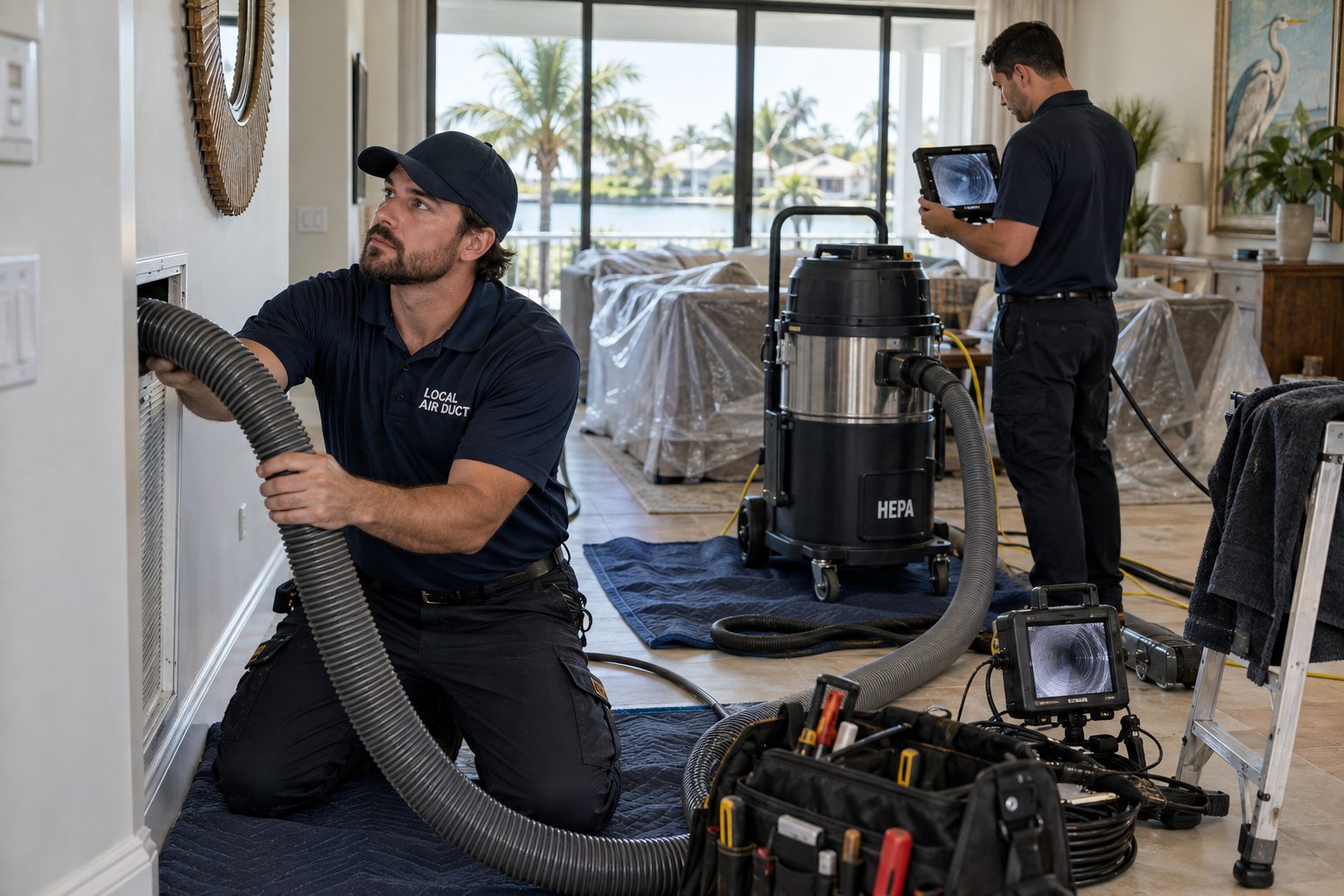
After the inspection, you should hear a plain description of the work. It should name the registers, returns, branch runs, trunk lines, plenums and air handler parts that will be cleaned, and it should state what is not included. A good provider also explains how debris will be contained and removed.
The scope guide offers a checklist for comparing descriptions. Use it to check that nothing important has been left out, and to ask about anything that seems unclear. Two descriptions that sound alike may cover very different amounts of work.
The price should be explained before work begins, along with what could change it. If the crew opens the system and finds something unexpected, the right step is to stop, show you and agree on the next move.
Ask how the work will be documented. Before and after photos of the same spots, including an interior view of a duct and the face of the coil if it is in the scope, make it easy to see what changed. The before and after photo guide explains what to look for. A final check of airflow and covers should close the visit.
Dryer vents in older laundry spaces
Laundry rooms in older houses are sometimes tucked into closets, garages or converted spaces, and the vent path can be long. In a house that has been remodeled, the dryer may have been moved without a matching change to the exhaust. Long, bent or crushed ducts collect lint.
Typical signs include towels that stay damp, a laundry space that gets hot, a burnt smell and lint around the outside cover. Read about dryer vent cleaning for a description of the service, and mention symptoms on the phone so the plan can include a separate look at the exhaust.
Do not work at height or reach deep into the wall yourself. Unplug the dryer, clean the visible lint trap and leave the rest of the run to a trained technician.
When a remodel moves the laundry, ask whoever did the work how the new vent path was routed and where it exits. A longer path or an extra bend raises the chance of lint buildup, and the outside cover should open freely. Telling the provider about the change helps the inspection focus on the right section, and it saves time that would otherwise go to tracing the run.
Air quality worries around a project or a move
Renovation, new paint and new flooring can leave odors that linger. Owners sometimes link those smells to the ducts, and sometimes they are right, but they can also come from materials in the room. Duct cleaning is one tool among several, and it is worth asking what the provider thinks is the likely source, and what evidence supports that opinion. A provider who points to a photo, a smell pattern or a specific part of the system is giving you something to check. One who simply says everything needs cleaning is not.
If you need more information, read about indoor air quality testing and sanitizing treatment. Each has its own scope and should be chosen for a reason. A provider should explain why they suggest either one.
Ventilation matters as well. Opening windows when the weather allows, running exhaust fans while cooking and keeping filters fresh all help. Small habits can reduce the load on the duct system.
Be patient with new materials. Fresh paint, sealants, new carpet and furniture release odors for a while, and the smell can seem to come from the vents because the air handler spreads it around the house. If the odor fades as the weeks pass, the source was probably the materials. If it stays or grows, mention it to the provider and ask for a closer look.
Nearby places and next steps
People in Delray Beach often read about neighboring areas, such as Boca Raton and Deerfield Beach. There is also a longer Delray Beach duct cleaning guide, and the service area page shows the wider region.
The process is the same everywhere. You call and describe the property and the symptom, the system is inspected, the scope and price are explained before work begins, and before and after photos and a final check are shared.
Keep your photos and notes in one place so that you can compare conditions later, explain the history to a buyer or tenant, and decide when to look again.
If your property includes a small office or retail space, you may also want to read about commercial duct systems, where larger equipment and business hours change the planning. The questions remain the same: what is the symptom, what does the system look like, and what would a clear scope include.
Common questions
Should I clean the ducts after a renovation?
Often it is worth an inspection, especially if drywall, tile or sanding happened while the air could run. Tell the provider what work was done and where. The inspection will show whether debris reached the ducts and how much cleaning the system really needs.
Will cleaning help me sell my house?
No provider can promise that. A cleaning can remove accumulated dust and give you photos that document the condition of the system, which may help a buyer feel informed. Whether it matters for a particular sale depends on the home and the buyer.
What if the inspection shows old, damaged ducts?
The crew should show you the damage, explain what is wrong and describe the options, including repair. You decide what to do, and any added work should be explained and priced before it begins. Cleaning alone may not hold if a duct is failing.
Is a paint or sawdust smell a duct problem?
Possibly, if dust or fumes were drawn into the system during work. It can also come from the materials in the room itself. An inspection helps sort out the source, and the provider should be honest about what is and is not likely to be fixed by cleaning.
Do I need to move furniture?
You should clear the area around the air handler and any registers blocked by furniture. Small items near vents may need to be moved. Describe your layout and any fragile items on the call so the crew arrives with a plan to protect them.
Does this page say work was done in Delray Beach?
No. It is general guidance for people in Delray Beach and does not claim past jobs in any neighborhood. To learn what can be arranged for your property, call, describe the home and the symptom, and let the process begin with an inspection.