// THE SERVICE
EPA-Registered Duct Sanitizing Treatment
After ductwork has been physically cleaned of dust, debris, and settled particulate, we offer an optional sanitizing treatment using an EPA-registered antimicrobial product applied to the interior duct surfaces. This step is designed to address residual odors and microbial residue on duct walls that mechanical cleaning alone does not always fully neutralize, particularly in South Florida's warm, humid climate where ductwork holds condensation and organic film longer than in drier regions.
Sanitizing treatment is a follow-up step, never a first step and never a substitute for cleaning. Applying an antimicrobial product over dust, dirt, hair, insulation fragments, or settled debris traps those contaminants against the duct surface and coats them rather than removing them. Our technicians clean the system mechanically first, using agitation and negative-pressure extraction, and only apply sanitizing product afterward, to a duct interior that is already physically clear of loose material.
We serve homeowners and businesses across Broward, Palm Beach, and Miami-Dade County. If your ducts smell musty, stale, or like standing water after your AC runs, or if a recent duct cleaning still left an odor behind, ask about adding sanitizing treatment as part of the service. Call (954) 686-6201 to discuss whether your system is a good candidate and what the process involves.
// WHAT IT INCLUDES
How the Sanitizing Treatment Works
Cleaning Comes First, Always
Sanitizing treatment is only performed after full mechanical duct cleaning has already removed dust, debris, and loose particulate from the system. We do not offer sanitizing as a standalone service or apply it over uncleaned ductwork, because product applied on top of debris coats contaminants instead of addressing the duct surface underneath, which defeats the purpose of the treatment.
EPA-Registered Antimicrobial Product
We use an EPA-registered antimicrobial product labeled for use on HVAC duct surfaces, applied strictly according to the manufacturer's label directions and intended dilution and contact time. The product is selected to help address odor-causing residue and surface microbial growth on duct interiors, not to serve as a general disinfectant for the home or a treatment for airborne contaminants.
Low-Pressure Fogging Application
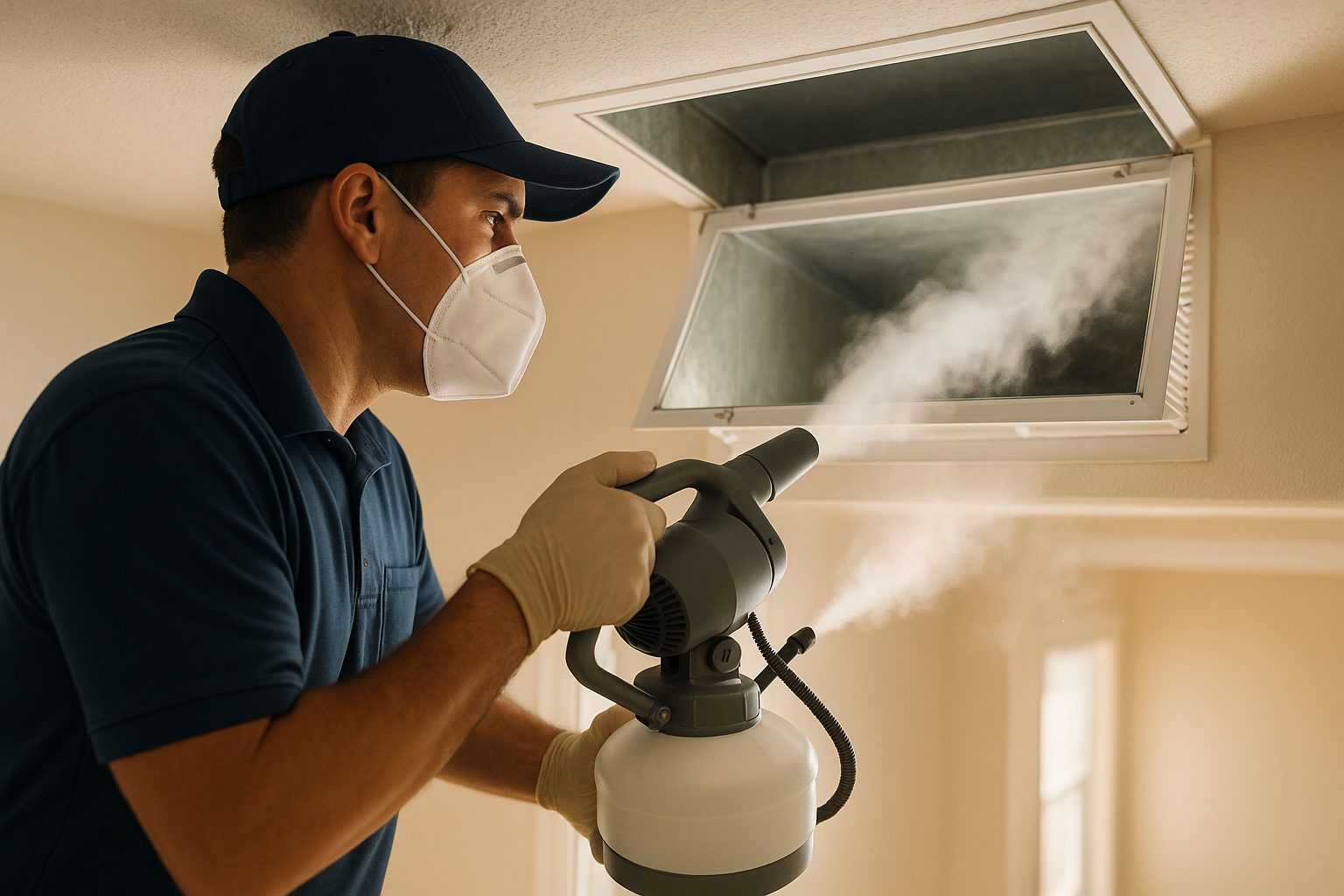
The product is applied to interior duct surfaces using low-pressure fogging or misting equipment introduced through service openings and access points created during the cleaning process. This distributes a fine, even coating of product across duct walls, plenums, and reachable interior surfaces without saturating insulation or leaving pooled liquid inside the ductwork.
Odor Sources Addressed in Humid Climates
South Florida's year-round humidity and near-constant AC cycling can leave a thin film of moisture, dust, and organic residue on duct interior surfaces, which produces musty or stale odors even after the system has been mechanically cleaned. The sanitizing step targets that residual surface film to help reduce the odor it produces, particularly in systems that have run for years without prior maintenance.
Occupant and Pet Safety
The product is applied by technicians following label safety guidance, and homes are ventilated as part of the service so occupants and pets can safely re-enter once application is complete and any recommended dry or air-out time has passed. We review specific label precautions with the homeowner before treatment, especially for households with infants, respiratory conditions, or sensitive pets.
What This Service Is Not
This is a surface-level sanitizing treatment for duct interiors, not mold remediation or a restoration service. If an inspection reveals visible mold growth beyond light surface residue, on insulation, in the air handler, or in wall or ceiling cavities connected to the duct system, we will tell you directly and refer you to a qualified mold remediation specialist rather than attempting to treat it ourselves.
// QUESTIONS
Sanitizing Treatment FAQs
Can you sanitize my ducts without cleaning them first?
No. We only apply sanitizing treatment after mechanical duct cleaning has already removed dust, debris, and loose material from the system. Applying an antimicrobial product over dirty ductwork traps contaminants against the surface instead of addressing them, so it does not deliver the odor and residue benefits the treatment is intended for. If your ducts have not been cleaned recently, cleaning is scheduled first, with sanitizing offered as an optional add-on afterward.
Is sanitizing treatment the same as mold removal?
No. This is a surface sanitizing treatment for duct interiors, intended to address odors and light residue, not a mold remediation or restoration service. If our technicians find visible mold growth beyond minor surface residue during inspection or cleaning, we will point it out and refer you to a qualified mold remediation specialist rather than treating it as part of this service, since that work requires different equipment and expertise.
Why do my ducts smell musty even after cleaning in South Florida?
South Florida's high year-round humidity, combined with AC systems that run almost continuously, leaves condensation and a thin organic film on duct interior surfaces even after mechanical cleaning removes loose dust and debris. That residual film on the duct walls themselves is often the source of musty odors, which is why a sanitizing treatment applied to those surfaces after cleaning can help address odor that cleaning alone did not fully resolve.
Is the sanitizing product safe for my family and pets?
We use an EPA-registered product labeled for HVAC duct applications and apply it according to the manufacturer's label directions, including any recommended ventilation or re-entry time. Our technicians walk through label precautions with you before treatment, which is especially useful for households with infants, people with respiratory sensitivities, or pets. Homes are aired out as part of the process before normal occupancy resumes.
How do I know if I need sanitizing treatment or just a standard cleaning?
If your main concern is dust buildup, reduced airflow, or general debris in the ductwork, a standard cleaning is typically sufficient. Sanitizing treatment is worth adding when there is a persistent musty or stale odor, visible surface residue on duct walls, or a history of moisture in the system. Call (954) 686-6201 and describe what you are noticing, and we can recommend whether cleaning alone or cleaning plus sanitizing fits your situation.