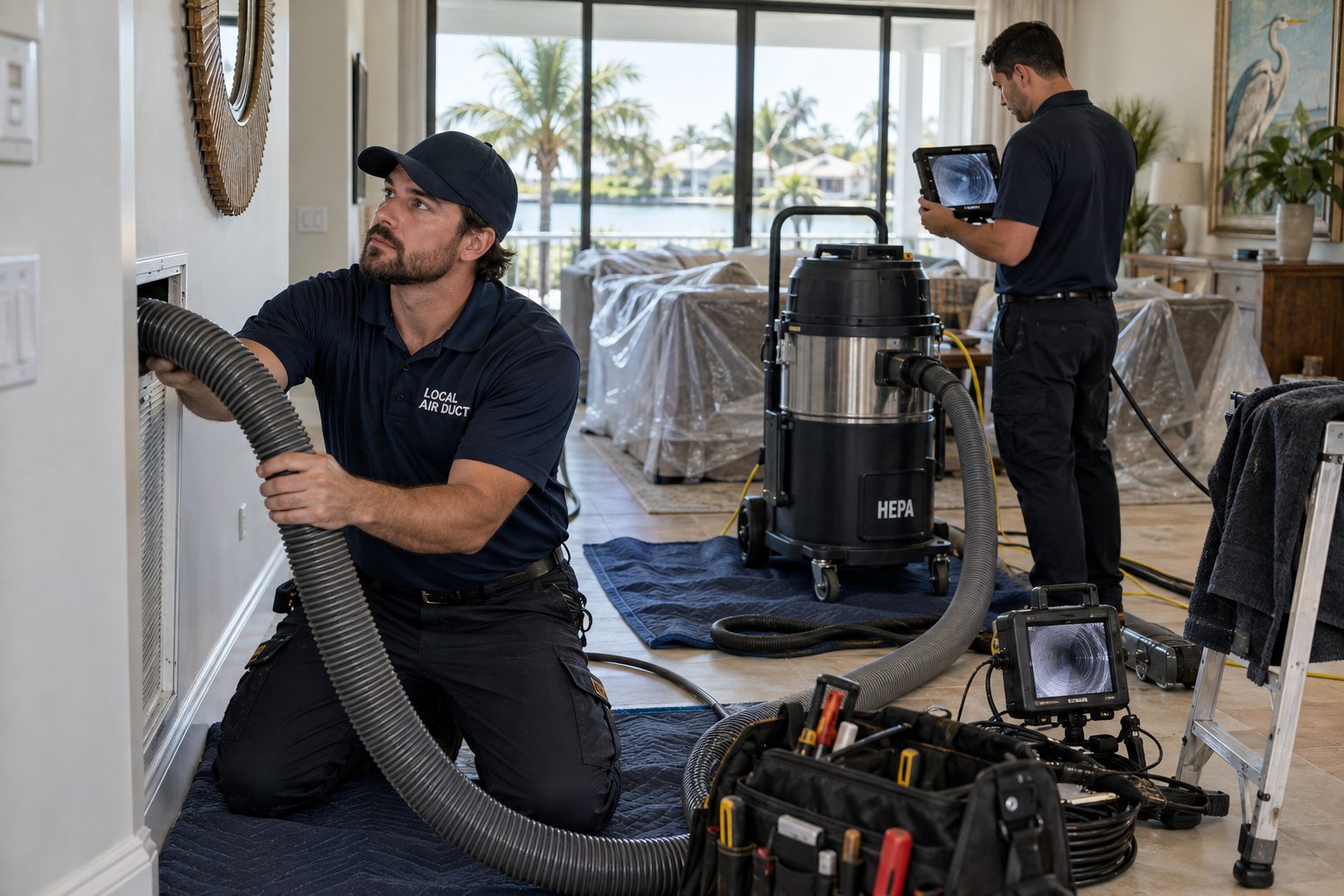
Starting with a phone call that gives the right details
Every duct cleaning job begins with a conversation, and the quality of that conversation shapes everything that follows. When you call, you are not expected to know technical terms. You are expected to describe your property and what is bothering you, in your own words. Say whether it is a house, a townhome, a condo or a small office, and roughly how many rooms it has.
Mention the symptoms that led you to call. Dust that keeps returning, a musty smell when the system starts, a room that stays warm, a recent renovation, a new pet, a move into a house that sat empty. Each of these tells the technician where to look first. Say also how many air conditioning units you have and where the air handlers are, if you know.
This page is general guidance for people in Plantation. It does not describe any particular street or development, and it does not claim any past work in the city. Think of it as a map of the process, so that when you make the call and when the technician arrives, nothing feels like a surprise.
The walkthrough: what the technician looks at first
On arrival, a sensible technician starts by listening. They confirm what you described, ask a few follow up questions, and look at the layout of the house. Then they go to the equipment. The air handler is the heart of the system, and its condition often says more about the ducts than any register does.
They typically open the access panel, look at the filter slot, check the blower compartment and the coil if it is visible, and examine the plenum where the ducts connect. They note rust, residue, water stains, loose connections and how much dust has collected. A small camera is used to see inside the branches that cannot be reached by eye.
From there they walk the house, looking at registers and returns, checking airflow and noting how each room is served. They may also look at the attic or any space above ceilings where ducts run. By the end of the walkthrough, they should be able to tell you what they saw, in ordinary language, without hurrying or using jargon you cannot follow.
You are welcome to follow along. Many people like to see the camera footage on a tablet or phone while the technician explains it. Seeing a thick layer of fuzz on the floor of a trunk line, or seeing clean metal where you feared the worst, makes the conversation concrete. Ask to be shown anything you do not understand, and ask for the same spots to be photographed again after the work.
Understanding the scope before anything starts
After the walkthrough comes the part many people care about most: what exactly is going to be done, and for what price. The scope should be explained before work begins, in plain terms, and it should refer to your system. Which supply and return runs will be cleaned? Is the blower compartment part of it? What about the coil, the plenum and the registers?
It also matters what is left out. Perhaps a section of duct is too damaged to clean safely, or a part of the system cannot be reached without cutting into a finished ceiling. Perhaps the dryer vent is a separate job. A clear scope names these exclusions so you are never surprised later.
If anything is unclear, ask. If you need time to think, take it. The air duct cleaning scope guide explains how to read the typical lines of a scope, and the air duct cleaning service page describes the work itself. A decision made with full information is always a better one.
Keep in mind that a scope is a plan, not a contract with the unknown. If the technician opens a section and finds something different from what the camera suggested, the scope may need to change. What matters is how that change is handled: stop, show, explain, and ask. You should never feel that a number was settled and then quietly moved.
Getting the house ready
A little preparation makes the visit smoother. Clear a path from the front door to the air handler, and clear the space around it so the technician can open panels without moving boxes. If the equipment is in an attic, make sure the hatch is accessible and the area below it is clear.
Move small valuables, fragile items and loose papers away from registers, since air pressure changes during the work. Take down wall hangings near large registers if they are loose. Cover or move anything delicate that sits directly under a ceiling vent. Technicians protect floors and furniture near their work, but your own preparation adds an extra layer.
Secure pets, and let children know that equipment will be running. If someone works from home, tell the technician which rooms are in use, so the work can be planned around calls and meetings. If someone in the household is sensitive to dust, say so in advance. Small notes like these make a visit calmer for everyone.
If your air handler sits in an attic, think about the weather and the time of day. Attics get extremely hot, and technicians work more carefully and more comfortably when the heat is not at its peak. Mention any known problems with the attic floor, loose boards or low clearance, because safety comes before everything else, and nobody should step where the structure is uncertain.
- Clear a path to the air handler and its access panels.
- Move fragile items and loose papers away from registers.
- Secure pets in a quiet room with the door closed.
- Tell the technician about any dust sensitive family members.
- Note which rooms need to stay in use during the work.
Questions worth asking before you agree to anything
A calm set of questions protects you better than any amount of research. Start with the basics. Will someone inspect the system before a price is set, or is the price fixed over the phone? A price set before anyone has seen the ducts is a guess, and a guess can swing in either direction once the technician opens the air handler.
Ask what method will be used for your type of duct, and why. Ask how debris is contained so it does not end up in your rooms. Ask whether registers and grilles are cleaned too, since those are the parts you see every day. Ask who will be on site, and whether you can see the photos as the work proceeds or only afterwards.
Ask what happens if the technician finds something unexpected. A crushed duct, a patch of damp insulation or a disconnected branch can change the plan. The right answer is that work pauses, you are shown what was found, and you choose how to proceed. If the answer is vague, that is information as well.
Finally, ask what is not included. Honest scopes have edges. Nobody can clean every inch of every duct in every building, and a provider who says so plainly is easier to trust than one who promises everything. Write the answers down, so you can compare them later or share them with a family member.
Working in an occupied home
Most cleaning is done in occupied homes, and technicians are used to it. The goal is to contain the mess. Equipment draws air through the system, pulling debris out into a collection unit instead of letting it fall into the room. Drop cloths protect floors, and registers are removed and replaced with care.
You will hear noise. A collection unit runs like a large vacuum, and compressed air or rotating brushes inside ducts make their own sounds. Ask what to expect, and plan quiet activities for children or nap time for a different part of the house. You do not need to leave, but you may want to be in a room away from where the work is happening.
If you rent or live in a building with shared walls, consider neighbors too. Loud equipment can carry through walls. Requirements for work in multi unit buildings vary, so ask your association or property manager what they expect. A short heads up to the unit next door is a courtesy that goes a long way.
Think about the rhythm of your day as well. If you have a video call, a nap, or an appointment, tell the technician at the start so that the noisiest steps are planned for a different part of the visit. Most technicians are glad to adjust the order of work when they know what matters to you, and a little flexibility on both sides makes the whole visit smoother.
How different duct materials change the method
The tools used depend on what the ducts are made of. Metal ducts can handle brushes and air whips well. Flexible ducts, common in homes, have a thin inner liner that can tear if scrubbed hard, so the method is gentler. Duct board, a rigid fiberglass product used for some trunk lines, can be damaged by aggressive agitation and needs careful handling.
A technician who understands this will choose accordingly, and will tell you if some part of the system is too fragile for the usual approach. That is not a failure. It is the right call, and it protects your system from harm. Sometimes the right advice is that a section should be repaired or replaced, not cleaned.
If you want to know more about the options for damaged sections, the duct repair and sealing page explains how repairs are made. It helps to know the possibilities before the technician explains what they found.
Coils, blowers and the dryer vent: the add ons worth understanding
During a duct cleaning visit, other parts of the system come up. The blower wheel and evaporator coil inside the air handler can collect dust, and a dirty coil cools less effectively. Cleaning them takes different tools, and it is described on the coil and blower cleaning page.
The dryer vent is another common question. Lint collects inside the vent, especially if it has bends or a flexible hose, and a blocked vent is a safety concern as well as a drain on efficiency. The dryer vent cleaning page explains the work.
You do not have to add anything. Ask what is recommended and why, and decide based on what the technician found. If an add on is not needed, you should hear that. If it is, you should see evidence in photographs. Nothing should be added to the scope without your agreement.
The final check and what you should be shown
When the work is complete, the technician reconnects what was opened, replaces registers and panels, and runs the system to confirm it operates normally. They check that airflow is present at the registers they cleaned, that nothing is rattling, and that the work area is tidy.
Before and after photos are shared with you. The most helpful way to use them is a side by side comparison of the same spots, so you can see what changed. The before and after photo guide explains what to look for in the pictures.
If something remains that cleaning could not address, such as a leak or a damaged section, it should be explained at this point. You decide whether to act on it, and you can take your time. A complete visit leaves you with a clean system, a record of what was done, and a clear picture of any next steps.
What to do between visits
After the work, a few habits help keep the system cleaner. Change the filter on a schedule that suits your household, and mark the date on the frame. Keep supply registers and return grilles clear of furniture. Wipe grilles when you dust. Keep the closet or room around the air handler tidy, and avoid storing dusty items next to the return.
Pay attention to the signals your home gives you. A new musty smell, a room that stops cooling, or water near the air handler are reasons to call. A filter that looks unusually dirty after a short time is another.
Keep your photos and notes together. If you ever need to compare conditions later, or show a buyer or tenant what has been done, you will have a record. A simple folder with dates and pictures is enough.
It also helps to set a gentle reminder for yourself. Once a season, look at the filter, glance at the return grille, and listen to how the system starts. These small checks take a minute or two and tell you whether things are drifting. If something seems different, you can describe it precisely when you call, which makes the next inspection more focused and more useful.
Commercial spaces and nearby places
Small offices, shops and other commercial spaces in the area have their own considerations, including operating hours, shared systems and landlord rules. The commercial systems page explains how those jobs are approached, and the same principles of inspection, scope and photographs apply.
If you are reading about nearby areas, the Fort Lauderdale page and the Sunrise page raise related points. The air duct cleaning in Plantation guide and the duct inspection guide add further detail.
Take your time with the decision. A good provider answers questions patiently and does not pressure you to commit during the first conversation.
If you manage a property for someone else, such as a parent, a tenant or an owner who lives elsewhere, share the findings and photos with them before work goes ahead. A short message with a few pictures and a plain description of the scope keeps everyone informed, and it protects you from misunderstandings later.
Common questions
What should I tell the technician when I call?
Describe the kind of property, roughly how many rooms it has, how many air conditioning units you have, and what you have noticed. Dust that returns, odors, warm rooms, recent renovations or a recent move all help. You do not need technical terms. Plain descriptions are exactly what the technician needs to start in the right place.
Do I have to leave the house during the work?
No. Most work is done in occupied homes. The equipment is loud, so you may prefer to stay in a room away from the work area. Keep children and pets clear, mention anyone sensitive to dust, and tell the technician which rooms must stay in use so the plan can account for it.
How will I know what the price covers?
The scope and price are explained before work begins. You should hear which duct runs, the blower compartment, the coil, the plenum and the registers are included, and what is excluded. If anything is unclear, ask. If anything changes after the inspection, you should hear why before agreeing to proceed.
What if part of my duct system is too fragile to clean?
Then the technician should tell you and show you. Some flexible or board ducts can be damaged by aggressive cleaning. The scope may be adjusted, and repair or replacement of a section may be suggested. You decide what to do, and nothing is changed without your agreement.
What will I get at the end of the visit?
You will get before and after photos of the same parts of the system, a final check that the equipment runs and everything is back in place, and an explanation of anything that needs a separate decision. Keep the photos and notes in a folder so you can compare them with future inspections.
Is this page about work done in Plantation?
No. It is general guidance for people in the city and does not describe specific streets or claim past jobs. The details that matter are yours: the property, the equipment and what you notice. Share them when you call, and the inspection will start in the right place.