Inspection, cleaning or repair: three different questions
People often say they need their ducts cleaned when what they really need is an answer. Is something wrong inside the system? If so, what is it? And what, if anything, should be done? Those are three separate questions, and the work that answers them is different at each step.
An inspection answers the first question. It looks at the equipment and a sample of the ducts, and it reports what is there. Cleaning answers the second, when the finding is buildup of dust, lint, pet hair or construction debris. Repair or sealing answers the third when the finding is damage, disconnection or leakage. Sometimes the answer is a combination, and sometimes it is that nothing needs doing.
This page is general guidance for people in Sunrise. It does not describe any particular street, building or business, and it does not claim past work in the city. Its purpose is to help you separate the questions, so that you pay for what you need and understand what you are paying for.
Why an inspection can be the right first purchase
It may seem odd to start with an inspection when you suspect the answer. But an inspection protects you from two kinds of mistakes. One is paying for cleaning that was not needed. The other is paying for cleaning that will not solve the actual problem, such as a disconnected duct or a poorly insulated trunk line.
A thorough inspection uses a light and a small camera, and it covers the air handler, the filter slot, the plenum, a sample of runs and the registers. It produces photographs and a plain description. If cleaning is suggested, you can see why. If it is not, you have saved money and learned something about your system.
An inspection also creates a baseline. If you inspect now and again after a year or two, you can compare the two sets of photographs and see how much the system collects in your particular building. The duct inspection guide for Sunrise describes what a visit includes.
Reading a proposal without being a duct expert
Proposals vary a great deal, and the difference is often hidden in wording. A good proposal names what will be done in terms you can picture. It lists supply runs, return runs, registers, the plenum and the air handler compartment. It states the method, the number of systems, and any exclusions.
A weak proposal says things like whole house cleaning or complete system service without saying what that means. It might cover only the registers and the first few feet of duct. It might leave out the returns, which are often the dirtiest part. It might include add ons that were never discussed.
When you compare two proposals, put them side by side and look for differences in what is covered, not just in the number at the bottom. Ask each provider to explain any difference. The air duct cleaning scope guide walks through the typical lines of a scope and what each can mean, and it makes the comparison much easier.
- Does the scope name supply runs, return runs and registers separately?
- Is the blower compartment or coil included, or listed as separate?
- Does the proposal state the method, and does it suit your duct type?
- Are exclusions written down in plain words?
- Will before and after photos of the same spots be shared?
Homes in Sunrise: the usual and the unusual
Most residential jobs are straightforward. A family home, a townhome or a condo with a single air handler, a typical set of ducts, and a build up of household dust. The inspection finds the usual things, the scope is clear, and the visit goes as planned.
The unusual cases deserve a note. A house with several additions may have a mix of old and new duct. A property with a history of water problems may have wet insulation or staining. A home used as an office or workshop may carry unusual dust. In each case, tell the technician early so the inspection looks for the right things.
Also mention any health concerns that influence your decision. If someone in the household is sensitive to dust, say so. If you have an infant or an elderly family member at home, the technician can plan the work to keep them comfortable. These details change how the visit is run, though they do not change the basic logic of inspect, explain, then act.
Condos and townhomes bring their own questions about access and association expectations. If your air handler is in a closet inside the unit, access is usually simple. If anything is shared, the decision may belong to the building. Requirements vary, so ask your association or manager, and tell the person you speak with what you know about your equipment.
Older and newer buildings differ as well. An older building may have a mix of original and added ductwork, with seams between them that deserve a close look. A newer one may carry construction dust from the first months. Whichever you have, the inspection will tell you what is true, and the scope will follow from that.
Small offices, shops and other commercial spaces
Commercial systems add layers. A small office may have a rooftop unit, a split system or a set of ceiling mounted units, and the ducts may run through a drop ceiling shared with other tenants. Shops and restaurants add grease, food odor or customer traffic. Medical and service spaces may have their own expectations.
Access and timing are the practical questions. Work may need to happen outside business hours, landlords may need to approve it, and tenants in neighboring suites may need notice. Requirements vary, so ask your landlord, property manager or association what applies before you book.
The commercial systems page explains how larger and multi unit jobs are approached, and the commercial duct cleaning guide for Sunrise adds local context. The same principles of inspection, clear scope and photographs apply, with extra attention to access, scheduling and documentation.
Landlords and tenants should clarify who is responsible for what. In many leases, the building owner handles the main air handling equipment while the tenant is responsible for filters in their own suite, or the other way around. Read the lease or ask the property manager. Knowing who decides saves a lot of back and forth later, and it ensures the right person is on the phone.
The role of filters, returns and building habits
Whatever the type of property, the same three things decide how dirty the ducts get: what enters through the returns, how well the filter catches it, and how long the system runs. In offices, the returns often sit in ceilings, and the filters may be in a rooftop unit or an air handler closet that nobody has opened in a long time.
Building habits matter too. Propped doors, boxes stacked against returns, storage in air handler closets, cardboard dust from a supply room, and cooking or printing activity all send material into the system. A simple walk through the space with a clear eye often reveals the sources.
For homes, the equivalent is pets, children, cooking, laundry and open windows. You do not have to change how you live, but knowing the main sources lets you decide how often to look. A system in a quiet, tidy space may go many seasons between inspections. A system in a busy, dusty one may need a closer eye.
Ask the technician what stands out in your building. They have seen the insides of many systems, and a short, honest observation, such as the return is pulling from a storage room, can save you more than a cleaning does. Make a note of it, and fix what you can.
What a clear record looks like
Photographs are the backbone of a record. Good ones show the same locations before and after: the floor of a trunk line, the inside of a return, the area around a register boot, the blower compartment. They are labeled or described so you know what you are looking at.
A written or spoken summary completes the record. It states the date, the systems inspected, what was found, what was done, and what was recommended. If a section could not be cleaned or was excluded, the summary says so. If repairs are suggested, they are listed.
For businesses and property managers, this record serves several purposes. It documents the condition of the building systems. It supports conversations with landlords, tenants or insurers. It helps plan budgets. The before and after photo guide explains how to read the pictures and what a useful set looks like.
When repair or sealing comes up
Sometimes the inspection finds that cleaning is not the main issue. A duct has come apart at a joint. A section is crushed. Insulation is torn and the duct is sweating. In these cases, cleaning may be a secondary step or may wait until repairs are done.
Repair and sealing address leaks and damage so the system moves air where it is meant to go. They can improve comfort, reduce the dusty air drawn from attics and wall cavities, and protect cleaned ducts from new debris. The duct repair and sealing page describes the work.
A fair recommendation separates the two clearly. It tells you what cleaning will do, what repair will do, and which should come first. If you are given a combined package, ask for each part to be explained and priced in the scope, so you can choose to do one, the other, or both.
If you decide to repair first, ask when cleaning should follow. In some cases it makes sense to clean right after repair, so that debris loosened by the repair work does not remain. In others, the repair is small and cleaning can proceed independently. The technician can advise based on what the inspection showed, and you decide the order that suits your budget and calendar.
Air quality concerns and when to consider testing
Some owners and managers want to know what is in their air before they spend money. Testing can provide measured information on certain aspects of indoor air, and it can help when symptoms are persistent or when a complaint needs data behind it.
Testing is not a substitute for inspection, and it does not fix anything. It tells you something about the air or surfaces at the time of sampling. The results need interpretation, and sometimes the right next step is to consult a specialist. The indoor air quality testing page explains the idea.
For many properties, an inspection with photographs is enough. If it reveals moisture, growth or a recurring odor, testing may be worth discussing. As always, nothing should be added to the scope without your agreement, and you should feel able to ask why it is being suggested.
If you do choose testing, ask what is being measured, how samples are taken, and who will explain the results. A report full of numbers is not useful unless someone can tell you what the numbers mean for your building. Keep the report with your photographs, so the whole picture is in one place.
Preparing for the visit and what to expect
Whether it is a home or an office, a little preparation makes the visit smoother. Clear access to the air handler, the ceiling panels or the rooftop unit. Move fragile items away from registers. Tell staff or family members what is happening. Secure pets and arrange for children to be elsewhere.
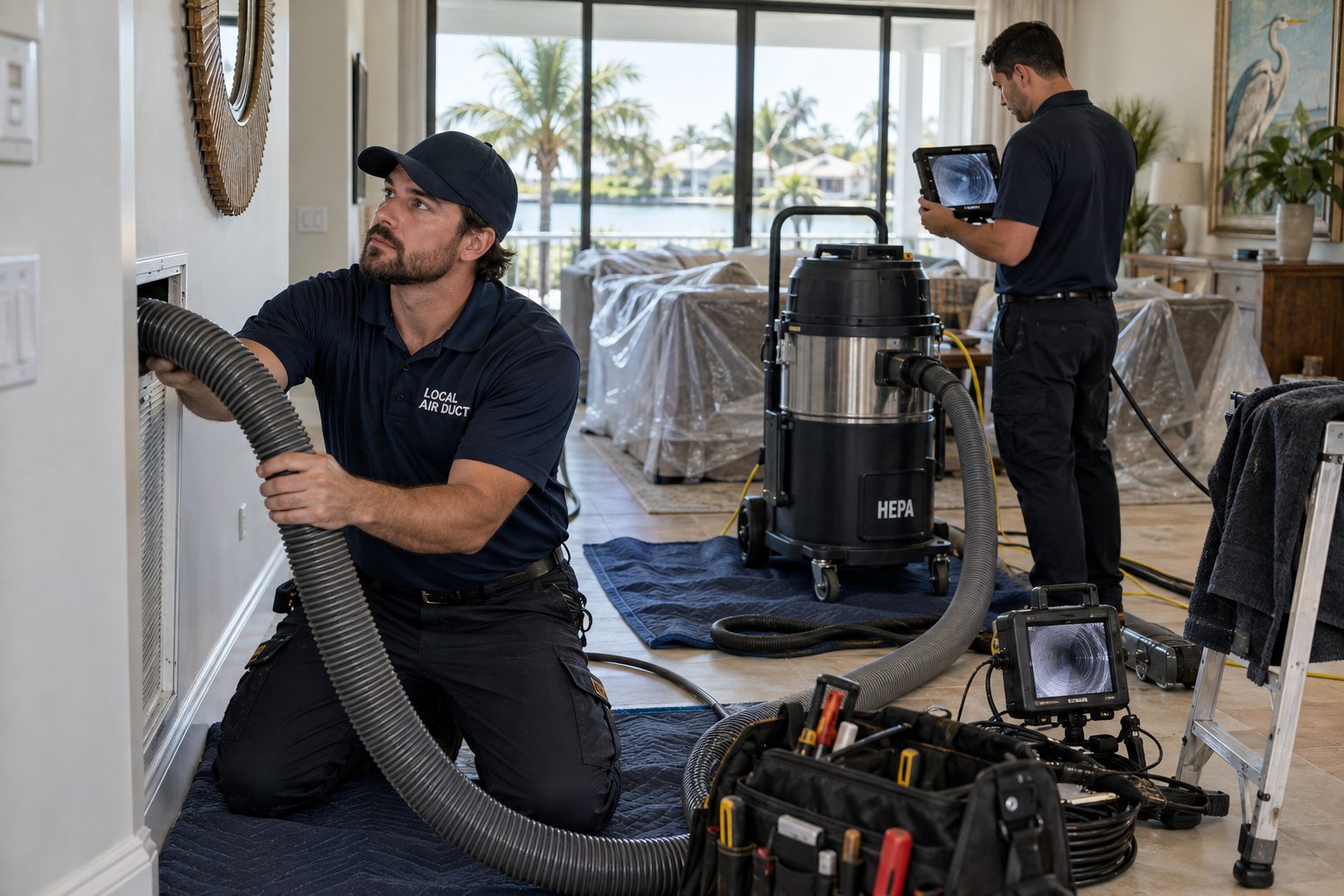
On the day, expect a walkthrough, a clear explanation, and then the work. The system is contained with negative pressure, debris is drawn into a collection unit, and surfaces are protected. You will hear noise, and you may be asked to avoid certain rooms for a time.
Afterward, the technician reconnects everything, runs the system, and shares the photographs and a final check. Our process stays the same every time. You call and describe the property and the symptom. The system is inspected. The scope and price are explained before work begins. Photos and a final check are shared with you.
If something unexpected appears during the work, the technician should stop and show you. A collapsed section, wet insulation or an undocumented branch can change the plan. You then choose whether to proceed, adjust or pause. Nothing should be added without your agreement, and you should always know what you are paying for.
Dryer vents, nearby places and further reading
Dryer vents deserve a mention, because lint is flammable and a blocked vent is a safety issue. If clothes take extra cycles to dry or the laundry area feels hot, have the vent looked at. The dryer vent cleaning page explains the work.
Readers comparing neighboring areas may find the Plantation page and the Pembroke Pines page useful, since they approach the same service from other angles. The air duct cleaning in Sunrise guide pulls together local planning points.
Whatever you decide, take your time. A good provider answers questions plainly and gives you room to think.
One more practical suggestion: write down your goal before you call. Are you trying to settle a comfort complaint, prepare a property for sale, respond to a tenant, or simply learn the condition of a system you inherited? A clear goal shapes the inspection, keeps the scope focused, and makes it easier to judge afterward whether the visit did what you needed. It also gives the technician something concrete to answer, which usually leads to a more useful conversation for both sides.
If you are acting for someone else, such as an employer, a family member or an owner who lives elsewhere, say so at the start. The technician can then explain the findings in a way you can pass along, and the photographs become the shared reference for everyone involved in the decision.
Common questions
Should I start with an inspection or go straight to cleaning?
An inspection is usually the safer first step, because it tells you whether cleaning is needed and what else might be wrong. It uses a light and a small camera, and it produces photographs and a plain description. If cleaning is suggested, you can see the reasons for yourself.
How do I compare two cleaning proposals fairly?
Look at what is covered, not only the final number. Check whether supply runs, return runs, registers, the plenum and the blower compartment are named, what method is used, and what is excluded. Ask each provider to explain any difference. A clear scope makes the comparison straightforward.
Are commercial duct jobs handled differently?
Yes, in practical ways. Access, timing, landlord approval and notice to neighboring tenants matter more, and shops or restaurants may have grease or odor concerns. The principles of inspection, clear scope and photographs stay the same. Requirements vary, so ask your landlord or property manager what applies.
What should a good photo record include?
Before and after pictures of the same spots, such as the floor of a trunk line, the inside of a return, a register boot and the blower compartment. Each should be described so you know what you are seeing. A short summary of findings and recommendations completes the record.
What if the inspection finds damage instead of dirt?
Then you will be told and shown. Cleaning does not fix a disconnected or crushed duct, and repair or sealing may be suggested first. A fair recommendation explains what each step will do and which should come first, so you can choose one, the other, or both.
Does this page describe work done in Sunrise?
No. It is general guidance for people in the city and does not describe specific buildings or claim past jobs. The details that matter are your own: the type of property, the equipment and what you notice. Share those when you call so the inspection begins in the right place.