How to use this general guidance
This page is general guidance for people in Coral Springs, Florida. It does not describe specific neighborhoods or communities, and it does not claim that work has already been done in any particular street or development. It is meant to help you think clearly about your own system before you pick up the phone.
Coral Springs is home to many families, and the homes people live in range from townhomes to larger single family houses. The advice below leans toward ordinary household life: pets, children, cooking, laundry and the dust that comes with a full house. Where something depends on your property or association, the page tells you whom to ask.
Read the headings first and pick the ones that match what you are seeing. Not every section will apply to you, and that is fine. A shorter, sharper description of your situation makes the first conversation with a provider far more useful than a long list of general worries.
It also helps to decide what you want out of the visit. Some households want visible dust gone from the vents, others are chasing a musty smell, and others are preparing a home for a new tenant or a sale. Each goal points toward a slightly different scope, and naming yours early keeps the conversation from drifting toward services you do not need.
Everyday dust in a busy household
A home with several people and a few pets produces a steady supply of fine material: skin flakes, hair, pet dander, fabric fibers, crumbs and tracked in dirt. The air conditioner draws part of that into the return grille on every cycle, and while the filter catches much of it, some passes through and settles inside the ducts.
Over time, you may notice dust returning soon after wiping shelves, or a gray film on the vent covers. Neither is proof that the ducts are filthy, but both are reasons to look. Remove a supply register and shine a flashlight inside. A light coating is normal, while thick matted material or a damp, dark film deserves attention.
Return grilles tell you the most. They sit on the intake side of the system, so they catch what the house produces. If a return grille looks furry within weeks of cleaning, the filter may be too thin, the return may be oversized for the system, or the duct behind it may have a gap that pulls in extra dust.
Cooking adds its own layer. Grease laden vapor from a busy kitchen drifts through an open floor plan and can settle on nearby registers and returns, where it holds dust like a sticky film. If your kitchen opens to the family room, check those nearby vents first. A greasy coating is a different cleaning challenge from dry dust, and the provider should know about it before the visit.
- Dust returns to flat surfaces within days of wiping.
- Return grilles look gray or furry soon after cleaning.
- Supply registers show dark rings or streaks around the edge.
- Pet hair is visible inside the vent opening.
- Allergy symptoms seem worse indoors than outdoors.
Pets, hair and what they do to a system
Pet hair and dander behave differently from ordinary dust. Hair is long enough to stick to the edges of registers and to catch on rough duct seams, where it forms small mats that collect more material. Dander is lighter and travels farther through the airflow, settling wherever air slows down, such as inside plenums and around the blower.
Pet households often use up filters sooner. A filter that looks fine in a quiet home can be coated surprisingly soon when dogs or cats shed heavily. Checking the filter often and replacing it when it looks packed is a simple habit that protects the coil and blower.
If you have pets, tell the provider on the first call. It affects how the crew plans to enter the home, how doors are handled and where animals should stay during the visit. It also explains what the inspection may find, so there are no surprises when photos are shared.
Think also about timing around grooming and shedding. A pet that sheds heavily at certain times of year puts more hair into the return side, and a cleaning scheduled just before a heavy shedding period may look less effective sooner. Ask the provider for habits that fit your household, such as brushing outdoors, washing pet bedding regularly and keeping the filter fresh, so the benefit of the visit lasts as long as it reasonably can.
Garage and closet air handlers
Many homes in this part of Broward County place the air handler in a garage, a hall closet or a utility room. Garage installations are convenient for service, but the unit can pick up dust, lawn debris and fumes from stored items. The return side deserves a careful look in that setting.
Closets are tidier but tight. A crew needs space to open the cabinet, reach the blower and coil, and set up equipment. Items stored around the unit should be moved in advance, and a clear path from the door to the closet saves time on the day of the visit.
The air handler cabinet is a sealed space when it is in good shape. Gaps around the cabinet, loose panels or missing tape let unfiltered air in. If the inspection reveals such gaps, they should be discussed along with the cleaning scope. A cleaning that ignores a leaking cabinet will not hold.
Garage installations also bring up a safety point. Stored paints, fuels and cleaning chemicals can release fumes that a leaky return will draw into the house. Keep those items away from the air handler and make sure the area around it is clear. If you notice any chemical smell when the system runs, mention it right away and ask for it to be investigated by the proper trade before cleaning begins.
The laundry room and the dryer vent
The dryer vent is a separate system from the air conditioning ducts, and in a busy family home it works hard. Every load pushes warm, moist air and fine lint toward the outdoors. When the duct is long, bent or crushed behind the machine, lint settles in the path and slowly restricts flow.
Signs of trouble are easy to spot: towels still damp after a full cycle, a hot laundry room, a burnt smell, or lint blowing out of the outside cover in clumps. The dryer vent cleaning page describes what that service includes and why it is a different job from duct cleaning.
Do not try to reach into the wall or the roof to clear the vent. Pulling lint from the back of the dryer is safe if the machine is unplugged, but anything beyond that belongs to a trained technician. Mention the symptoms on the call and let the inspection show where the blockage is.
Installation details matter as well. A dryer pushed tight against the wall can crush the flexible connector behind it, and long runs with several turns trap lint much more easily than short straight ones. If you move the dryer for any reason, look at the connector, check that it is not kinked, and ask the technician what type of duct is in place. Flexible plastic or foil ducts hold lint more than smooth metal, and the type is worth knowing about.
Townhomes and shared walls
Townhomes often have compact layouts, with air handlers on separate floors or in small mechanical closets. Duct runs are short, but access can be limited, and shared walls may mean shared rules for contractors. Ask your association what is expected before booking, since requirements vary.
Noise and parking are practical concerns. A cleaning visit involves vacuum equipment, hoses and tools, and neighbors may notice. A short note to the people next door and an agreement about where the crew can park keep the day calm and prevent small frustrations.
If you rent, talk to the owner first. The equipment may be the owner's responsibility, and unauthorized work could create problems. When owner and tenant agree, the provider can speak with whichever party is available on the day.
Think about the schedule too. Townhome living often means a tight daily routine, with commuters leaving early and children coming home at set times. A visit that respects those patterns will go more smoothly, so share any limits on when the unit can be open, when pets are home and when quiet hours apply. That information lets the provider plan realistically.
What the visit should look like
A well organized visit starts with a conversation at the door. The crew asks about the symptoms, looks at the air handler, inspects a few registers, and explains what they see. The scope and price are explained before any work begins, in words you can follow.
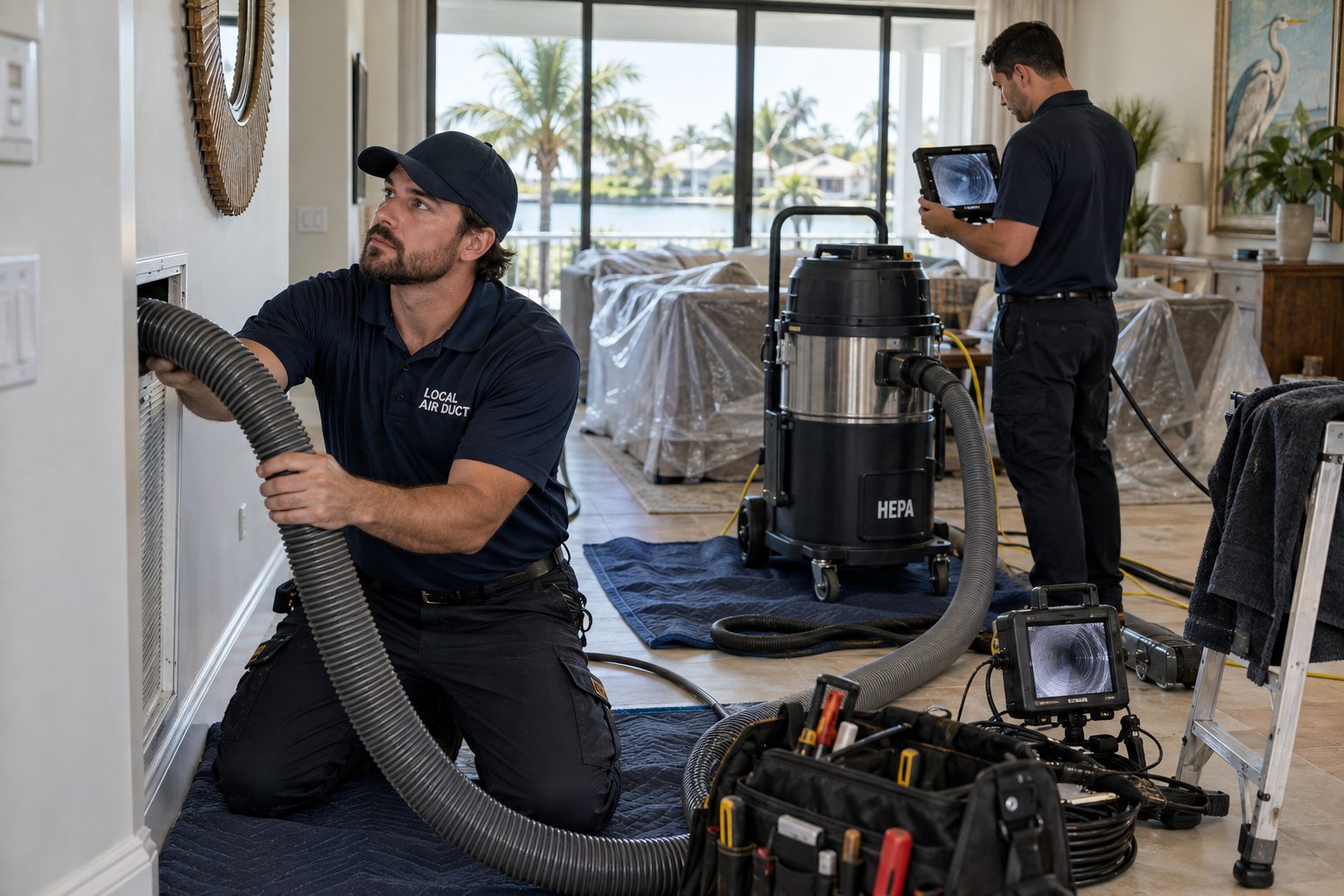
During the cleaning, registers are removed and protected, negative pressure is created, and the ducts are agitated while debris is pulled away. The blower and coil are addressed if they are in the scope. Floors and furniture near the work area should be covered or kept clear.
At the end, the system is checked, covers are replaced, and before and after photos are shared. You should leave the visit with a clear idea of what was done, what was found and what, if anything, should be handled later. If you want a second opinion, the photos make that easy.
Plan to be present, or to have a trusted adult at home, for at least the start and the end of the visit. The beginning is when questions about scope are answered, and the end is when the final check and the photos are shared. Being there lets you point out the vents that worry you and confirm that they were handled, which is the simplest way to close the loop.
Cleaning, sealing and the cause of repeat dust
If dust keeps coming back soon after cleaning, the cause may be a leak. A loose joint, a torn flex duct or a poorly sealed return can pull in dust from attic or wall spaces. Cleaning removes what is there now, but it does not change where the new dust comes from.
The duct repair and sealing page explains how leaks are found and fixed in general terms. A good inspection looks for obvious gaps, listens for whistling, and watches how dust moves at the registers.
Insulation is part of the same picture. Ducts in warm attics without good wrap can sweat in humid weather, which stains drywall and encourages odors. If this sounds familiar, read about attic duct insulation before deciding what to do.
Be cautious with sweeping claims. A single stained register does not prove that the entire system is failing, and a clean looking register does not prove that everything inside is fine. The goal of an inspection is to replace guesses with observations, and the right provider will show you what is happening at the points that matter rather than telling you a story about the whole house.
Comparing nearby cities and guides
People in Coral Springs often look at the neighboring pages as well, such as Pompano Beach and Sunrise. There is also a longer Coral Springs duct cleaning guide, and the service area page shows the wider region.
The process is the same wherever you live, whether the home is a first floor townhome with a closet unit or a two story house with a unit in the attic. Differences in access and layout change how the job is set up, but they do not change the basic order of events, which keeps the experience predictable. You call and describe the property and the symptom. The system is inspected. The scope and price are explained before work begins. Before and after photos and a final check are shared.
If you are not sure which service you need, start with the symptom, not the product name. A family that says the house smells stale and the vents are dusty gives a provider far more to work with than one that simply asks for a package. Details lead to a scope that fits, and a scope that fits is easier to price, easier to check and easier to trust. Describe what you see, smell or feel, and let the conversation lead to the right scope.
Questions worth asking before you agree
Before you say yes to any plan, ask who will actually perform the work and what equipment they bring. Duct cleaning relies on strong suction that is connected to the duct system, not a household vacuum used from the outside of a vent. You are entitled to understand how debris leaves your home, where it goes and how the area around each register will be protected.
Ask whether the coil and blower are part of the plan, since they are described separately on the coil and blower cleaning page and are easy to leave out by accident. Also ask whether the before and after photos will show the same spots, so you can compare them honestly. Ask what happens if something unexpected turns up. A crushed section of flexible duct, a wet patch of insulation, or a loose connection at the plenum changes the job. The right answer is that the crew stops, shows you the problem, and talks through the options, including the choice to leave something alone for now. Pressure to approve extra work on the spot is a warning sign.
Ask about the price and what it includes. The figure should be explained before work begins, with a clear list of what is covered and what would be extra. If two providers give you different numbers, compare the descriptions line by line. A smaller number that leaves out the return side or the blower is not a smaller price for the same job, it is a smaller job.
Finally, ask about the finish. You should see before and after photos, a final check of the system, and a clear note about anything that was found. If something is unclear, ask for it to be explained in plain words. A calm, specific answer is what a dependable provider offers, and it is what you should expect from the first call onward.
Common questions
Will pets be a problem during the visit?
They can be managed. Tell the provider about dogs, cats or other animals when you call so doors and entry points can be planned. Keeping pets in a closed room or away from the home during the work makes the visit calmer and safer for everyone.
How often should I check my filter?
Check it regularly, especially in a home with pets, children or heavy cooking, and during the long cooling season. Replace it when it looks packed with dust. If you are unsure which size or type your air handler uses, ask the provider to note it during the visit.
Is the dryer vent part of duct cleaning?
No. It is a separate exhaust path to the outdoors and has its own service and scope. Many households ask about both at once, so mention slow drying, a hot laundry room or a burnt smell when you call, and the plan can include a separate look at the vent.
Do I need to move furniture?
You should clear the area around the air handler and any registers that are blocked by furniture. Small items near vents may need to be moved. Describe your layout on the call so the crew arrives with a plan for tight spaces.
What if my townhome association has rules for contractors?
Follow them. Associations differ, and some have requirements about notice, hours or access. Ask your manager or board what applies and share it with the provider so the visit fits within those rules and does not cause problems for your neighbors.
Does this page say work was done in Coral Springs already?
No. It is general guidance for people in Coral Springs and does not claim past jobs in any neighborhood. To learn what can be arranged for your property, call, describe the home and the symptom, and let the process begin with an inspection.