What to expect from this page
This page is general guidance for people in Dania Beach, Florida. It does not describe specific streets, buildings or neighborhoods, and it does not claim that work has been done in any particular spot. Its purpose is to help you understand how duct cleaning and related services usually work so that your own conversation with a provider starts from solid ground.
Dania Beach has a mix of building ages and types, and that mix shapes the advice here. Some owners live in compact older homes, some in newer townhomes, and others run small shops or offices, so the page moves between those situations and tries to keep each explanation practical. Older homes may have ductwork that has been repaired or modified over time, while newer buildings often have tighter, better insulated systems. Neither is automatically better or worse for cleaning purposes, but each calls for different questions at the inspection.
Where rules or requirements apply, such as association policies or city regulations for contractors, the page says requirements vary and tells you whom to ask. Treat the page as a map of questions to bring to the conversation, not as a statement of what any local authority requires.
One more thought about timing in your own head. Duct cleaning is rarely an emergency. It is a maintenance and comfort decision, and it is perfectly reasonable to inspect, compare descriptions and think it over. The exceptions are signs of water damage, a strong burning smell or a dryer that overheats, which deserve prompt attention from the right trade, and the call should say so plainly.
Moisture, coastal air and what it does to ducts
Properties closer to the water in South Florida often deal with humid air for much of the year, and some owners also notice a salty film on exterior surfaces. You do not need to treat that as a scientific claim about your property. What matters is the practical effect: warm, moist outdoor air meeting cold ductwork can cause condensation, and condensation helps dust cling and grow stains.
When air conditioning runs steadily, the evaporator coil stays wet, and the drain pan and line carry the water away. Dust that reaches the coil becomes a damp film, and over time that film restricts airflow and can add a musty odor. This is why coil and blower condition matters as much as the visible duct runs.
Signs of moisture trouble include dark streaks around supply registers, water stains on a nearby ceiling, a musty smell at startup, and insulation that looks damp or sagging. None of these proves a specific cause, but each one is a good reason to ask for a careful inspection that looks at the coil, the pan, the drain and the ducts as a whole.
The condensate drain deserves its own mention. When a drain line grows slime or collects debris, water can back up into the pan and spill, and a stained ceiling near the air handler is often the first clue. Clearing a drain is a separate task from cleaning ducts, but a thorough inspection should note the pan and line condition, so ask the provider what they check and what they would pass along to an air conditioning technician.
- Dark streaks or rings around supply registers.
- A musty smell when the system starts.
- Water stains on a ceiling near a vent or the air handler.
- Damp or sagging insulation on duct runs.
- Rooms that feel clammy even while the system is running.
Older ductwork and what it can hide
Homes that have been updated several times may contain a blend of materials: rigid metal in one section, flexible duct in another, and duct board somewhere else. Each material ages differently. Flexible duct can sag and kink, metal can separate at joints, and duct board can shed fibers or wear at its edges if it was damaged.
An inspection should look at the condition of each type before cleaning begins, because the method must fit the material. Aggressive agitation can damage soft or aging duct, and a careful technician will explain which tools are suitable and when the safest answer is to repair before cleaning.
If your home has had additions, a converted garage or a remodeled kitchen, ask whether the duct layout was changed. Extensions are sometimes built with long, awkward runs that are harder to clean and tend to collect more debris. Knowing the history of the system helps the crew plan the right approach.
If you bought the property recently, you may not know any of this. In that case, treat the first inspection as a way to learn what you have. Ask for photos of the main trunk, the plenum and a few branch runs, and keep them. Those images become the baseline for every future decision, and they help you tell normal aging from a problem that is developing.
Smaller attics, tighter spaces
Many mixed age properties have modest attic space, and some have air handlers in small closets or exterior utility rooms. Tight access limits how a crew can move, what equipment fits, and how long the work might take. It also means that any duct or equipment problems are harder to see without a deliberate look.
When you call, describe the access you know about. Is the attic reachable through a ceiling hatch? Is the closet door wide enough for a person to reach the cabinet? Are stored belongings in the way? These details let the provider arrive prepared.
Heat is another factor. Attics in South Florida get very hot, and any work there needs care for the crew and for the system. A responsible provider plans for safe working conditions and will explain what can and cannot be done in a limited space.
If the air handler sits in a small closet, ventilation around it matters too. A unit squeezed behind shelves or boxes can starve for return air, and stored items can block the access panel. Clearing the closet before the visit shows the crew the real condition of the equipment, and it makes the final photos clearer for you. A tidy path to the cabinet is one of the simplest ways to help the visit go smoothly.
Dryer vents in older laundry arrangements
Older homes sometimes have laundry spaces that were added later, which means dryer vents may run through unusual paths. Long runs, multiple elbows and exits through low walls all make lint buildup more likely. Even a short vent can clog if the cover outside has a screen that catches lint.
Slow drying, a hot laundry area and a burnt smell are the standard warning signs. If you notice any of them, read the dryer vent cleaning page and mention the symptoms on the call. Cleaning the vent is a separate task from cleaning the air conditioning ducts, with its own tools and its own scope.
Do not attempt to reach into the wall or work at height on the outside. Unplug the dryer and clear lint from the visible trap and the area behind the machine, and leave anything farther along the run to a trained technician.
Look at the outside cover when you can see it safely from the ground. A cover that is blocked by paint, plants or a nest will hold back air no matter how clean the duct inside may be. Do not climb to reach it. Take a photo from where you stand and describe it on the call, which gives the provider a head start when planning the visit.
How the process should unfold at your door
A good first visit begins with questions. The crew asks about the symptoms, looks at the air handler and the registers, and explains what they find. Only then does the conversation turn to scope and price, and both should be explained in plain words before any work begins.
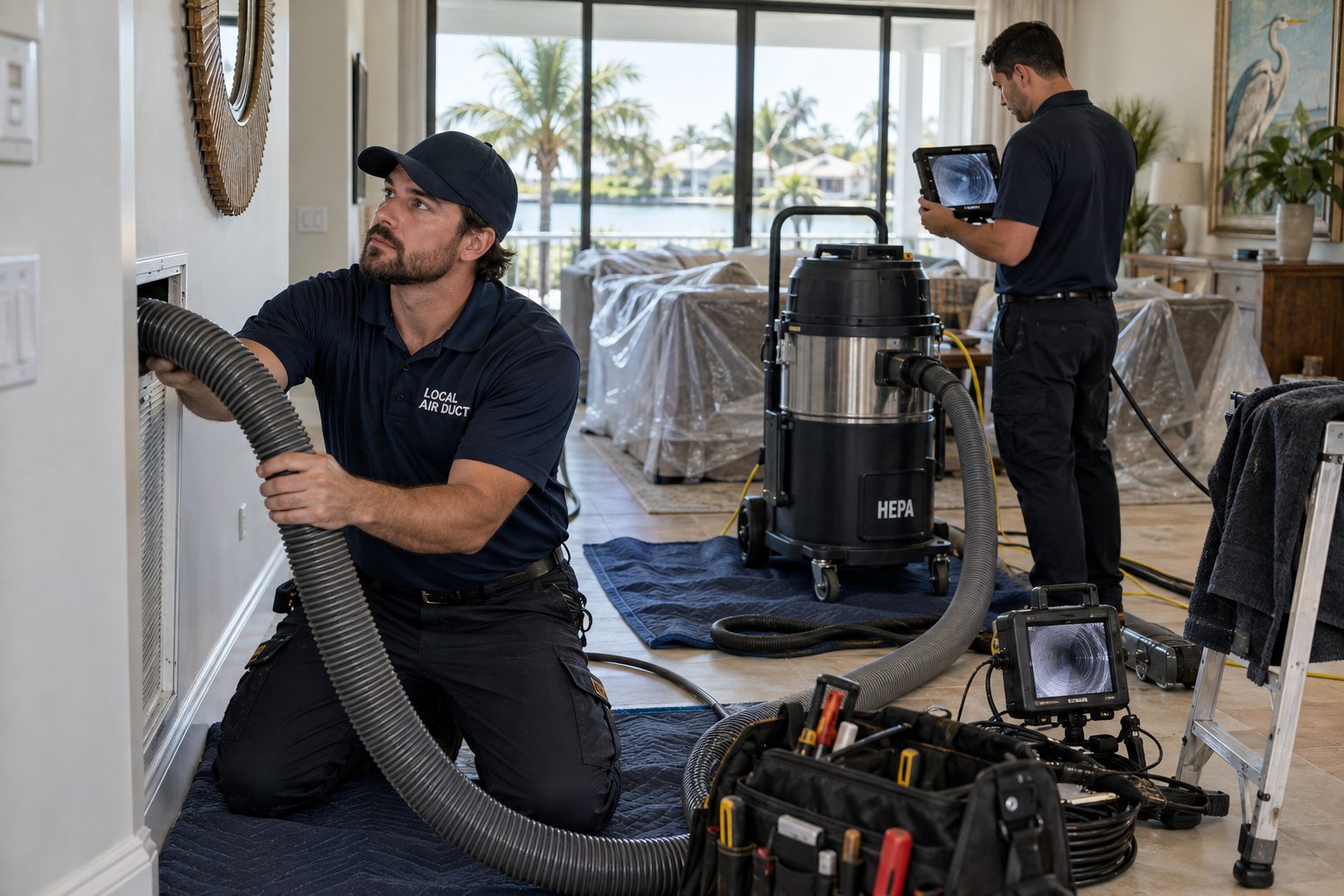
If the visit includes the coil and blower, the coil and blower cleaning work follows a similar order of inspection, explanation and photos. Registers are removed and protected, and the system is placed under negative pressure so loosened debris is drawn toward a collection point. The ducts are agitated with brushes or air tools, and the work moves along each run. If the coil and blower are part of the plan, they are cleaned with methods that suit the equipment.
At the end, the crew checks the system, replaces covers, and shares before and after photos. You should hear what was found, what was done and whether anything else deserves attention later. If you want a detailed checklist, the scope guide lists what a complete description should include.
Ask how the work area will be protected. Floors, furniture and nearby surfaces should be covered where the crew will work, and tools should be set up so that debris stays contained. If you have fragile items or an expensive floor, say so ahead of time. A provider who plans for protection shows respect for your home and reduces the chance of an unwelcome surprise.
Repair and sealing when cleaning is not enough
An older system often has leaks. Tape on joints can dry and peel, flexible ducts can pull off their collars, and a return may draw air from a wall cavity. Leaks bring dust and moisture into the airflow, and cleaning will not stop them.
The duct repair and sealing page explains how leaks are found and addressed. In many cases, a modest repair at the right spot makes the system tighter and the cleaning last longer.
Insulation also deserves a look. In a warm attic, duct wrap protects against sweating, and damaged wrap invites condensation. If you see bare or torn sections, read about attic duct insulation and ask whether it belongs in the plan.
A fair repair recommendation is specific. It names the location, explains the problem, and describes the fix. A vague claim that the whole system is bad is not enough to act on. Ask to see the damaged spot, and ask what happens if you decide to wait. Sometimes the honest answer is that a minor issue can be monitored and handled later without harm.
Small businesses and shop spaces
Dania Beach also has small businesses, and their air systems have their own quirks. A shop or office may rely on a rooftop unit or a ceiling mounted air handler, and the returns may be hidden above a drop ceiling. Customers and staff share the space, so odors, dust and temperature swings get noticed by everyone.
Read about commercial duct systems to see how those jobs are scoped. Landlord and tenant responsibilities vary by lease, so check who is responsible for the equipment before booking.
Plan the visit around business hours. After hours work may require building access, and the property manager may have rules about notice. Confirm them in advance.
Small businesses should also think about what customers notice. A dusty return grille above the counter, a stale smell near the entrance or an uneven temperature in the back room all affect how a space feels. Take photos of the trouble spots, write down when the problem is worst, and share both with the provider. Facts shape a scope more than general complaints do.
Nearby cities and related guides
If you are exploring nearby areas, you may want to read the general pages for Hollywood and Fort Lauderdale. There is also a local guide for Dania Beach with more about the process.
Whichever page you choose, the steps are the same. You describe the property and the symptom, the system is inspected, the scope and price are explained, and photos and a final check are shared.
If you are comparing several places before choosing a provider, write down how each page and each conversation felt. Notice whether answers were specific or vague, whether the process was described in order, and whether anyone pushed you to decide on the spot, and whether your questions were welcomed. A provider who is comfortable being compared is usually one who has nothing to hide, and that comfort tends to show in the details of the conversation. Those impressions are data, and they are worth more than a long list of claims. Take notes during the visit, and ask for the key findings to be repeated if you missed them. They are useful if you later want to compare conditions, answer questions from a landlord, or explain the history to a future owner.
Finish by setting a simple routine. Check the filter on a schedule, look at a few registers each season, and notice any change in smell, drying time or comfort. Catching small changes early keeps future work smaller, and a short list of things to watch is easier to follow than a long maintenance plan nobody reads.
How to compare providers without guesswork
Start by listening. A provider who asks about the symptom, the equipment and the access is thinking about your property. One who goes straight to a package without questions is selling a script. The difference shows up on the first call, and it usually predicts how the rest of the experience will feel.
Next, compare the descriptions. Ask each provider to name what is included: supply registers, returns, trunk lines, plenums, the blower and the coil. Ask what is excluded, how debris is contained, and what happens if damage is found. The near me guide offers more ways to weigh these answers.
Then think about the photos. Ask what will be photographed before and after, and whether the pictures show interior duct surfaces or only vent covers. Photos taken from the same spot twice are the easiest way to judge the work, and the before and after photo guide explains what a useful set looks like. Finally, think about how you want to be treated. You should hear the price explained before work begins, you should be shown what was found, and you should receive photos and a final check. If any of those pieces feels optional, keep looking until you find a provider who treats them as standard.
Common questions
Can humid weather make duct cleaning more necessary?
Humidity does not make cleaning mandatory, but it makes dust stickier and can encourage staining and musty odors. If you see dark streaks, smell something damp, or notice moisture near vents, ask for an inspection that looks at the coil, drain pan and ducts together.
Is it safe to clean old flexible ducts?
It can be, if the method suits the material. Aging flexible duct can tear under aggressive tools. A careful provider will inspect first, explain what is safe, and tell you if repair or replacement of a damaged section makes more sense than cleaning it.
What if my attic is hard to reach?
Tell the provider about narrow hatches, low clearance or stored items when you call. Limited access can change the plan, and the crew may need to explain what can be reached safely. Honest information from you leads to a more accurate description of the work.
Should the dryer vent be cleaned at the same time?
Many owners ask about both together, but dryer vent cleaning is a separate service with its own scope. If clothes are slow to dry or the laundry area is hot, mention it on the call so the plan can include a separate look at the exhaust.
How do I compare two quotes?
Look at what each one includes. Check whether returns, trunk lines, the blower and the coil are named, and whether photos and a final check are part of the visit. Two numbers can describe very different amounts of work, so compare the descriptions line by line.
Does this page mean the company has worked in Dania Beach?
No. It is general guidance for people in Dania Beach and does not claim past jobs in any neighborhood. To learn what can be arranged for your property, call, describe the home and the symptom, and let the process begin with an inspection.