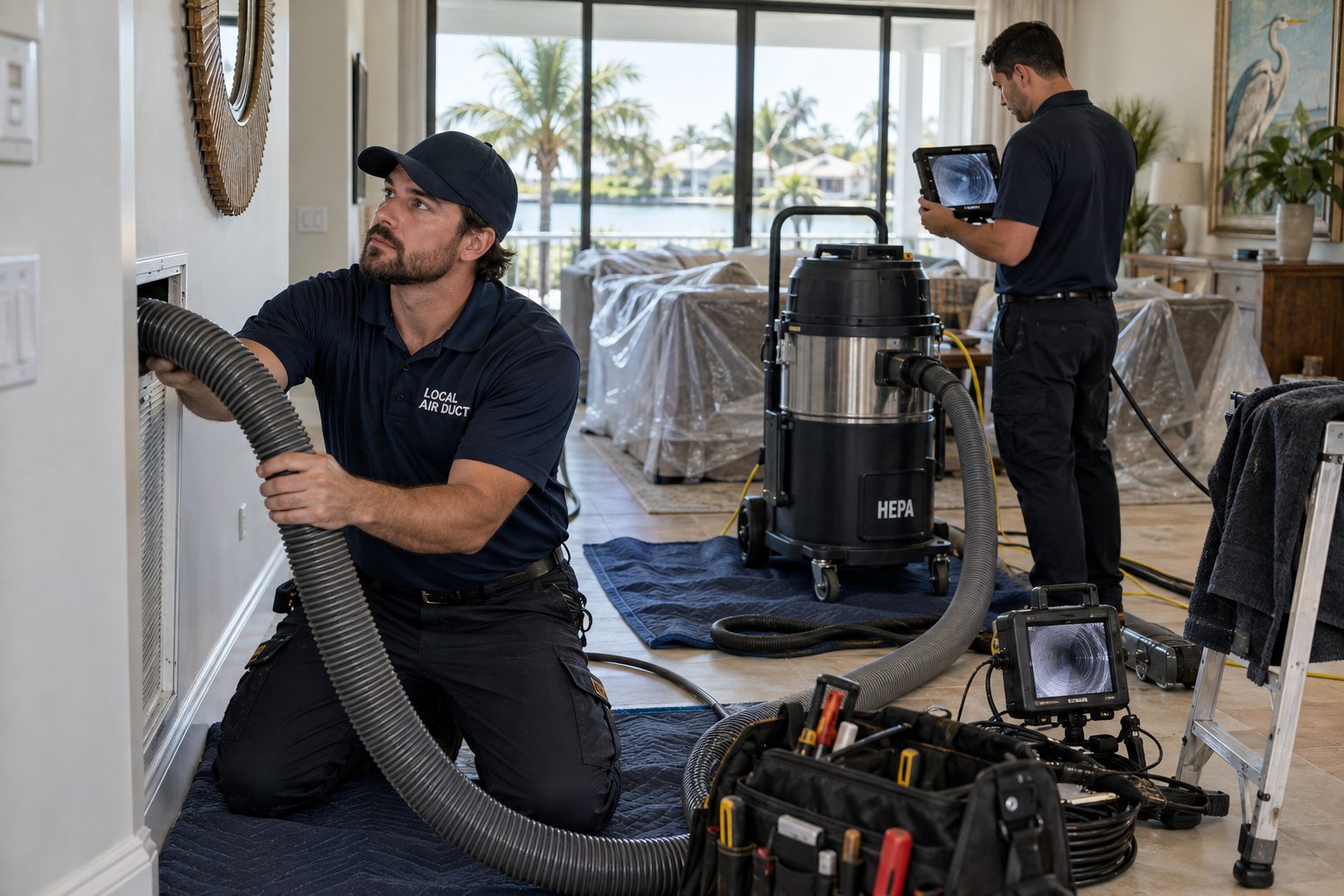
Do newer houses really need their ducts cleaned?
It is a fair question, and the honest answer is sometimes yes and sometimes no. A house that is only a few seasons old will usually have cleaner ducts than one that has lived through decades of use. But new does not automatically mean clean. Construction creates an enormous amount of fine dust, and some of it finds its way into a duct system before the house is even occupied.
During building, ducts are often installed early, while drywall is hung, sanded and finished around them. Open duct ends, uncovered returns and unsealed registers can collect drywall powder, sawdust, insulation fibers and even small debris. If the system was run before the house was properly cleaned, that material can spread from the returns through the air handler and into the supply runs.
This page is general guidance for people in Miramar. It does not describe any specific neighborhood, builder or development, and it does not claim any past work in the city. What it does is give you the questions to ask about your own home, so that you can decide with information rather than with worry.
What construction dust looks like inside a duct
Drywall dust is pale, powdery and extremely fine. Inside a duct it can look like a pale grey or white film, thickest at the bottom of the run, near the air handler and around register boots. It can be mixed with wood shavings, bits of tape, insulation fibers, and sometimes a surprising amount of grit.
This kind of dust behaves differently from household dust. It is more abrasive, and it can clog filters in a short time. If you noticed a fine white film on furniture in the first months of living in a new home, or if the filter looked loaded far too soon, that is a sign the system may have taken in more than normal.
The only reliable way to know is to look. A camera inspection of a few representative runs shows whether the film is there and how heavy it is. If the inside is clean, you will have saved yourself an unnecessary service. If it is not, you will see why cleaning is being suggested, and the decision stays yours.
- A fine white or pale grey film on furniture soon after moving in.
- Filters that load up far sooner than expected.
- Grit or powder visible around supply register boots.
- Dust that blows out of registers when the system starts.
- A house that was occupied before final construction cleaning was complete.
The attic air handler and the long runs around it
Many houses in South Florida place the air handler in the attic or in a closet that connects to an attic. In larger homes, the ducts can run a long way from the air handler to the farthest bedroom, and the flexible duct commonly used in modern builds can sag, kink or compress if it is not well supported.
A sagging flex duct has a lower point where dust, moisture and debris settle. A kink restricts the flow, and a crushed section can reduce airflow to a room so badly that no thermostat setting will compensate. These are installation matters, not cleaning matters, but cleaning inspection often finds them, and a technician who notices should tell you.
Support is a simple idea that gets overlooked. Flexible duct should hang from straps at regular intervals, with gentle curves instead of sharp bends. When it rests on the ceiling joists or drapes over insulation, it can pinch. If you ever go into your attic, you might see long runs that dip, and you can mention that to the technician. Please do not climb into an attic that is unsafe, and do not step between joists.
Heat is also a factor. Attics in this climate get very hot, and that heat works on every material up there. Insulation wrap can degrade, tape can lose its grip, and plastic liners can become brittle. If the inspection finds such wear, the duct repair and sealing page describes what can be done, and it can be a better investment than cleaning alone.
Two story homes and multiple air handlers
Larger houses often have more than one system, with one air handler serving the upstairs and another serving the downstairs. Each system has its own filter, its own returns and its own set of ducts. They may differ in condition, because they work differently and collect different loads.
When you call, mention how many systems you have and which rooms each one serves. This helps the inspection cover the whole house instead of just the system that is easiest to reach. It also helps with comparing results, since you can see whether one system is worse than the other.
If one system is dirtier, ask why. Perhaps its return is in a dustier part of the house, perhaps a door often stays open, or perhaps it serves a room where a hobby or renovation created extra dust. Understanding the cause lets you decide whether cleaning is a one time need or something to repeat. The technician can often suggest a simple change, like moving a return or adding a filter grille, that helps.
It is also worth asking whether the two systems have been maintained alike. In many houses, the downstairs unit gets the attention because it is easier to reach, while the upstairs unit sits in a hot attic and is forgotten. A forgotten filter in a hard to reach spot is one of the most common reasons an upstairs system looks worse than the one below it.
How filters and returns shape what the ducts collect
In a newer house, most of the dust that reaches the ducts arrives through the return. The return is the opening that pulls air back to the air handler, and the filter is its gatekeeper. If the filter is the wrong size, installed with gaps, or left in place too long, dust walks right past it.
A common misunderstanding is that a thicker, denser filter is always better. A filter that is too restrictive for the blower can reduce airflow and strain the system. The right filter is the one the equipment is designed to use, in the right size, installed facing the right way. If you are not sure, ask the technician during the visit.
Mark the date on the frame of the filter with a pen when you install it, so anyone in the household can see how long it has been in place. Also consider the return grilles. Wipe them with a soft cloth or vacuum brush when the system is off. Make sure furniture and rugs are not blocking them. If a return is in a closet or behind a door, check that the door or louvers are not covered with stored items that shed dust into the air stream.
Pets, children and the way a family lives in a house
Families put any duct system to a real test. Children bring in dirt, toys shed fibers, pets shed hair and dander, and everyone cooks, cleans and entertains. The result is a steady supply of fine material in the air, and the duct system sees all of it.
You do not need to change how you live. But if the household is large, has several animals, or includes someone sensitive to dust, it is reasonable to inspect on a more regular schedule than a quiet home. Inspection frequency is a judgment, not a rule, and your own observations are a dependable guide.
Pay attention to the air at home. Does it feel stuffy? Do rooms seem dustier than your cleaning habits would explain? Do allergy symptoms improve when you are away? None of these proves a duct problem, but together they can justify a closer look. The indoor air quality testing page describes how measurements can add information when you want it.
Settling in after a move or a renovation
Moving into a house is a messy event, and the first weeks of ownership are when dust, packing material and fresh paint all enter the picture at once. If your home was built recently, you may also be dealing with punch list repairs, touch ups and last minute adjustments that kick up more fine dust. It is not unusual for the air to feel unsettled for a while.
Renovation of an existing Miramar home adds a similar load. Sanding, cutting tile, removing old flooring and opening walls all release material that can be drawn into returns if the system is running. The ideal approach is to cover returns and registers during the work, and to run an inspection afterward to see what slipped through anyway.
If you have just finished a project, consider waiting until the dust has truly stopped before scheduling cleaning, so that new material does not settle on freshly cleaned ducts. Also replace the filter after the messy stage ends. A loaded filter left in place can release trapped debris back into the airstream.
Whatever the situation, describe it plainly when you call. Mention what was done, where, and when it ended. That context helps the technician judge how heavy the likely buildup is and which parts of the system to look at first.
Inspection first, then a scope you can read
Every job begins with a look at the system. The technician checks the air handler, the filter slot, the plenum and a sample of ducts, and notes the condition of each. In a newer house, they may find that the system is clean and that nothing beyond a filter change is needed. That is a perfectly good outcome.
If cleaning is suggested, the scope should be written or explained in plain language. It should name the parts of the system that will be cleaned, the method, what will be protected in the house, and what is excluded. The price should follow from that scope. If something is added later, you should hear why.
Our process is straightforward. You call and describe the property and what you notice. The system is inspected. The scope and price are explained before work begins. Before and after photos and a final check are shared with you. The scope guide goes into more detail about how to read each part.
Coils, blowers and the parts people forget
The air handler is more than a box that pushes air. Inside it sits a blower wheel and an evaporator coil, and both can collect dust, especially when filtration has been weak. A dirty blower wheel moves less air than a clean one, and a dirty coil cools less effectively and can hold moisture that feeds odors.
These parts need different tools and more caution than ducts, because the coil is delicate and the blower is a precision part. Cleaning them is its own service, described on the coil and blower cleaning page, and the Miramar guide to coil and blower cleaning adds more detail.
In a newer house, this part of the system may be fine, but construction dust can reach it, so it is worth asking the technician to look. If it is clean, say so and move on, because nobody benefits from work that is not needed. If it is not, you can decide whether to include it in the scope. Either way, you will see photographs and hear a plain explanation.
Dryer vents in newer homes
New houses have dryer vents too, and they can be just as prone to lint buildup as older ones. In fact, the long runs and extra bends sometimes used to reach an exterior wall give lint more places to collect. Vents that end at a roof or high wall can also be harder to reach and inspect.
Signs of trouble include damp clothes after a full cycle, a hot laundry room, a smell of warm lint, or a vent flap outside that barely opens. Because lint is flammable and trapped heat is hard on the dryer, a blocked vent should not be ignored. Do not push tools into the duct yourself.
The dryer vent cleaning page explains how a vent is cleaned and checked, and the Miramar dryer vent guide covers local planning. Many homeowners ask for the vent to be looked at during the same visit as the ducts, since the technician is already on site.
Photos, the final check and neighboring areas
The photos are your proof. A useful set shows the same parts of the system before and after, taken from similar points, so you can compare directly. Look at the bottom of the duct, the seams and the area near the air handler. A clean result looks even and bare, with no clumps or film.
The final check confirms that registers are back, panels are closed, the system runs, and the work area is tidy. If any questions remain, ask them then. Keep the photos and notes for your records so you can compare them with future inspections.
One last habit is worth building. When you change the filter, glance at it and at the nearest return grille. A filter that is only lightly dusty after a season tells you the house is gentle on the system. A filter that is thick and heavy tells you the opposite, and it may be time for an inspection. Small observations like these cost nothing and give you a sense of the trend, so you are never relying only on a calendar or on someone else's opinion.
If you are reading about nearby places, Pembroke Pines and Weston have pages that raise similar points. The air duct cleaning in Miramar guide gives extra context, and the before and after photo guide explains how to read the pictures.
Common questions
My house is only a few years old. Do I still need a duct inspection?
Not always, but it can be worth a look, especially if you noticed fine white dust after moving in or if filters loaded up unusually soon. Construction dust can enter ducts before the house is finished. A camera check of a few runs shows whether anything is there, and the answer may simply be that nothing is needed.
Will a denser filter protect my ducts better?
Not necessarily. A filter that is too restrictive for your blower can reduce airflow and strain the equipment. The right choice is the filter your system is designed to use, in the correct size, installed facing the right direction. Ask the technician during the visit if you are unsure which type fits.
My house has two air handlers. Do both need work?
Not necessarily. Each system collects dust differently, so one may be dirtier than the other. Tell the technician how many systems you have and which rooms each serves. The inspection covers both, and you will hear what was found in each so you can choose what to clean.
What can cleaning not fix in a newer house?
Installation problems such as sagging, kinked or crushed flex duct, poor connections, or a system that was never well matched to the house. Cleaning removes debris but does not correct layout or support. If the inspection finds such issues, they are explained so you can consider repair or sealing.
Should the dryer vent be checked at the same time?
Many people do this, since the technician is already on site, but it is your choice. A blocked dryer vent is a safety issue as well as an efficiency one. If clothes take extra cycles to dry or the laundry area feels hot, have the vent looked at soon.
Does this page describe a particular neighborhood or builder?
No. It is general guidance for people in Miramar and does not describe specific developments, builders or past work. The details that matter are your own: how old the house is, where the air handler sits, how many systems you have and what you notice. Share those when you call.