What families usually notice first
Households rarely start by thinking about ducts. They start by noticing symptoms: dust on the bookshelves a day after wiping, a stuffy bedroom, a dog bed that seems to attract fuzz, a child who sneezes more at home than elsewhere. These everyday clues can lead to a good question about the air inside the house, and the ducts are a reasonable place to look.
A caution belongs here. Dust, sneezing and stuffiness have many causes, including pollen carried in on clothes, pet dander on furniture, humidity, cleaning products, mattresses, and plain old housework. Ducts are one possible contributor among many. A sensible approach is to treat them as a suspect worth checking, not as the certain culprit.
This page is general guidance for people in Pembroke Pines. It does not describe any specific neighborhood, and it does not claim past work in the city. It also does not offer medical advice. If someone in the household has breathing concerns or allergies, their doctor is the right person to ask about symptoms, and the duct inspection is simply one way to learn about your home.
Pets and what they add to a duct system
Pets are wonderful and messy. Dogs and cats shed hair constantly, and they track in dirt, leave dander on soft surfaces and kick up fur when they run through the house. A good share of that material gets drawn into returns, especially low ones near floor level.
Hair does not behave like dust. It clumps, wraps around other debris and forms mats on the screens of returns and at the blower wheel. A thin mat on a grille may be only the visible part of what the system has collected. Inside the ducts, long hairs can lodge on seams, screw heads or rough joints and gather lint around them like snow on a fence.
If you have pets, tell the technician how many, what kind, and whether they are allowed on furniture and in bedrooms. That information helps estimate how much debris to expect. It also helps the technician plan the day so animals are kept calm and safe while doors are open and equipment is running. Please arrange for pets to be secured in a quiet room before the visit.
Pet owners also tend to have particular spots where hair collects: the closet that houses the air handler, the hallway return, and the grille in the room where the dog sleeps. Vacuuming those spots between visits is a sensible habit, and it extends the time before the filter needs changing. Pet bedding placed directly in front of a low return can make things worse, since it sends a steady supply of fur straight into the system, so consider moving it a few feet away.
- Fuzz or hair matting on return grilles.
- Dust and fur on the floor of the air handler closet.
- A pet smell that seems to come from the registers.
- Filters that load with hair after a short time.
- Dust that settles on surfaces soon after cleaning.
Bedrooms, returns and the path the air takes
Most people think about the supply registers, the vents that blow cool air into a room. The return side, the openings that pull air out, deserves equal attention. In many houses, bedrooms with closed doors depend on a small gap under the door or a dedicated return to let air flow back. If neither exists, the room can build pressure, and air may be forced out through cracks and into the walls.
When a bedroom feels stuffy even though the supply is blowing, check whether the door is closed all night. A closed door with no return path can cause uneven temperature and unusual air movement. A technician can measure and explain whether the room is balanced, and whether a transfer grille or jump duct would help.
This matters for dust too. Air that has no easy path out will find a difficult one, such as through the attic or wall cavity, and may bring dust with it. A well balanced system pulls air through the filter and keeps the rest of the building envelope calm. Cleaning the ducts is helpful, but it cannot fix a room that lacks a return path.
Teenagers and home offices add another twist. A bedroom used as a study with a computer, a monitor and a closed door can run warm, and the family may blame the ducts when the real problem is heat from electronics and no way for air to circulate. Mention how each room is used, because the answer to a comfort complaint often lies in the way people live with the room, not just in what is inside the walls.
What duct cleaning can and cannot change
Cleaning removes the loose and settled material from the inside of the system. After a good cleaning, the airstream passes over clean surfaces, and there is less debris to dislodge and carry into the house. That is a real benefit, and many owners notice the system feels fresh afterwards.
It will not remove pet dander from your sofa, pollen from your clothes, or dust that arrives from outside every time the door opens. It will not turn a humid house into a dry one, and it will not cure a symptom whose cause is elsewhere. Honest providers say so up front, and they do not promise outcomes they cannot control.
A useful way to set expectations is to ask what you will be able to see afterwards. You will be able to see clean duct surfaces in photographs, registers that are clear of the old fuzz, and an air handler that has been checked. What you may or may not notice in daily life, such as less dust on a shelf, depends on many other things in the house, and nobody can honestly predict it in advance.
Think of cleaning as one tool in a set that includes good filters, regular housework, humidity control and sensible habits. The technician can tell you which of these seems most relevant for your home, based on what the inspection finds. That kind of balanced advice is more useful than a dramatic promise, and it keeps expectations realistic.
If your goal is simply a house that feels cleaner, say that directly. The technician can then point out the habits and fixes that matter most for your household, from the position of a pet bed to the type of filter, instead of treating the ducts as the only lever.
The inspection, step by step
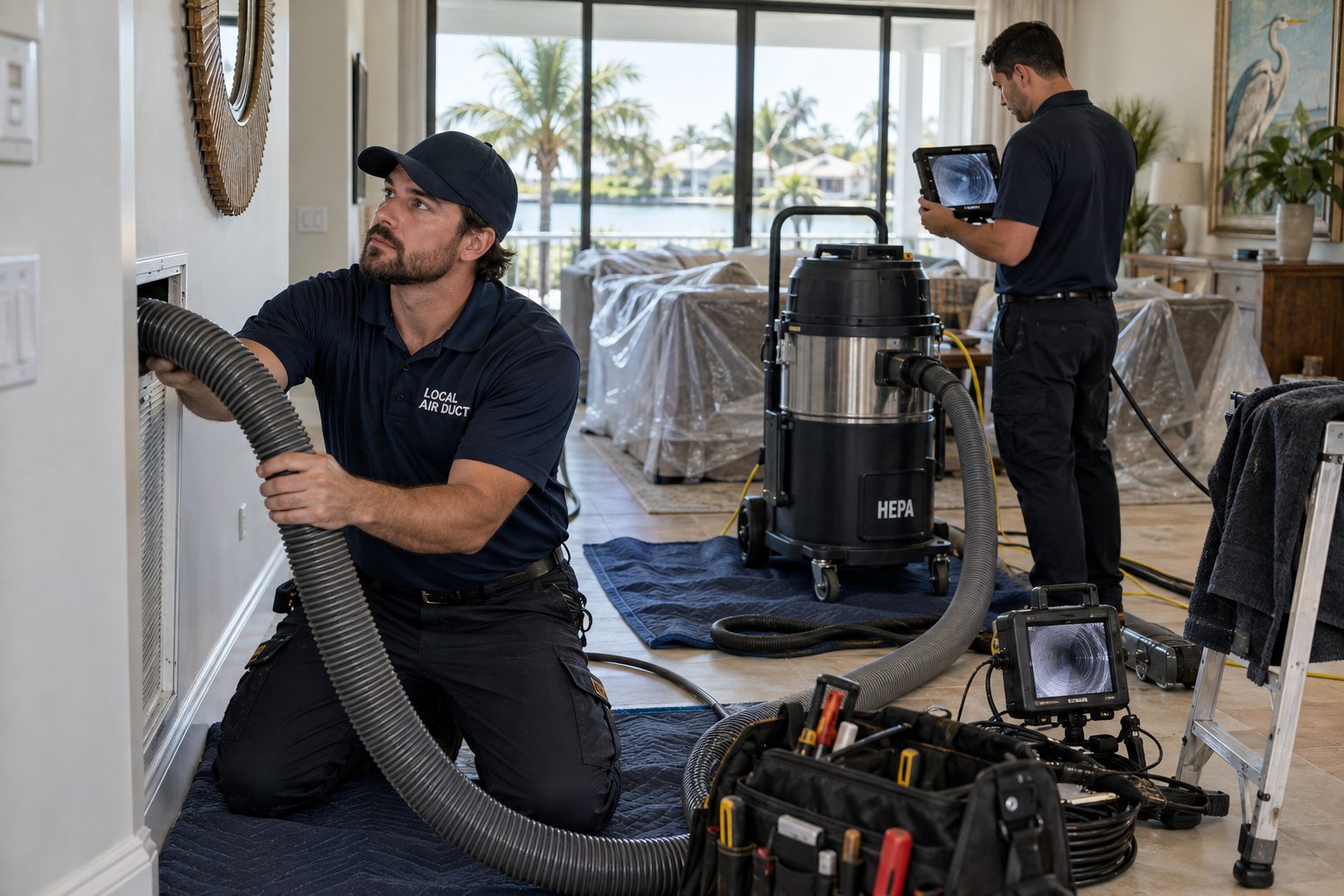
Our process starts with a call. You describe the property, the household, and what you have noticed. Then the system is inspected: the air handler, the filter slot, the plenum, a sample of supply and return runs, and the registers. A light and a small camera let the technician see inside parts that cannot be reached by eye.
Next the scope and price are explained before work begins. You should hear what will be cleaned, how it will be done, what will be protected, and what is excluded. If the inspection finds a problem that cleaning cannot solve, such as a disconnected duct or a wet insulation wrap, that is said plainly.
Finally, before and after photos and a final check are shared with you. The photos show the same parts of the system, so you can compare. The air duct cleaning scope guide explains how to read the scope, and the duct inspection guide for Pembroke Pines describes the inspection in more detail.
Sanitizing treatments and testing: when are they worth asking about?
Some households wonder about add ons such as sanitizing treatments or air quality testing. These are separate from cleaning and should be offered as options, not bundled by default. Each has a purpose, and each has limits that should be explained.
A sanitizing treatment is usually applied after cleaning, to surfaces that have been made accessible. It is not a substitute for removing debris, and it should be considered only when the inspection suggests a reason. The sanitizing treatment page describes what it involves.
Testing, on the other hand, gathers information. It can help when you want measured results about the air or surfaces in your home, particularly if someone has persistent symptoms and you want data to discuss with a professional. The indoor air quality testing page explains the idea. Neither service is necessary for every cleaning, and you are welcome to decline both.
Large houses, long runs and multiple systems
Bigger family homes often have two or more air handlers and long duct runs. A single story house with a large footprint may have branches that stretch a long way from the air handler, which means more places for debris to settle and more joints that can leak.
If your house has more than one system, ask the technician to check each one. Compare the condition of the filters, returns and ducts, and ask whether the difference suggests a cause. One system may serve the kitchen and living areas, which tend to collect cooking residue and lint, while another serves quieter bedrooms.
Also consider the practical side of a large job. More ducts mean more time, more access points and more equipment. Make sure the scope is clear about which systems are included, and ask how access will be made. A thorough plan reduces surprises and keeps the household comfortable during the work.
In a big house it also helps to decide in advance how you want to handle findings. Some owners ask the technician to stop and talk whenever something unexpected appears. Others prefer a full report at the end. Either is fine, as long as you say so at the start, and as long as no change in scope or price happens without your agreement.
Dryer vents and the laundry that never stops
Families do a lot of laundry, and the dryer works hard. Lint builds in the vent, especially when there are bends, long runs or a flexible foil hose. A restricted vent makes the dryer work longer, wastes energy and creates a fire hazard, since lint is flammable.
Signs to watch for include towels that stay damp after a full cycle, a hot laundry room, a burnt smell, or a vent flap outside that barely moves. Clean the lint trap every load, but understand that the trap does not catch everything. The rest travels down the vent and settles.
The dryer vent cleaning page and the Pembroke Pines dryer vent guide describe how the vent is cleaned and checked. If you are booking duct work anyway, it makes sense to ask about the vent in the same conversation.
Coils and blowers: the part you cannot see from a register
Dust that gets past the filter does not vanish. It lands on the blower wheel and the evaporator coil, which are inside the air handler. A coated coil cools less effectively and holds moisture, and a dirty blower wheel moves less air and may throw dust through the house.
These parts are delicate, and they need different tools than ducts do. Cleaning them is its own service, covered on the coil and blower cleaning page. Ask whether it is included in the plan you are offered, and if not, ask why.
If the coil looks clean, say so and move on. Nothing is gained by cleaning a part that does not need it. If it is dirty, you will see photographs, and you can decide whether to include it. Either way the explanation should be clear and unhurried.
Moisture is a related concern. If the drain pan holds standing water, or the coil area shows rust or slime, the cause is a drainage or condensation issue that cleaning will not remove for good. Mention any water you have seen around the air handler, because it changes what the technician looks for and what the next sensible step might be.
Preparing for the visit with children and pets at home
Plan the day so that the household is comfortable. Clear a path to the air handler and any access panels, move toys and fragile items away from the registers, and make sure there is room to work. If a closet holds the equipment, empty the space around it.
Children and pets should stay out of the work area. Equipment is loud and hoses and cords can trip small feet. If there is a nap schedule, tell the technician. If someone is sensitive to dust, mention that so the work area can be sealed and the collection equipment set up carefully.
After the work, the technician will confirm the system runs, replace what was removed, and share the photos. This is a good moment to ask about filters and habits for your particular home. A few sensible tips from someone who has just seen the inside of your system are worth more than a generic checklist.
Comparing nearby areas and where to read more
Neighboring communities have similar questions, and reading about them can help. The Miramar page looks at newer homes and construction dust, while the Davie page and the Weston page raise other angles.
For service specific detail, the air duct cleaning in Pembroke Pines guide pulls things together, and the air duct cleaning service page explains the work itself.
Whatever you decide, take your time. A good provider is happy to answer questions and will not push you to commit on the spot.
If you are weighing several options, write down the questions that matter to your household before you call. How will the work be done around young children? What happens if a pet gets out? Will the photos show my own ducts and not stock pictures? How will changes in scope be handled? Having the list in front of you makes the conversation calmer and makes it easier to compare answers later. It also shows which provider explains things clearly and which one avoids the details, and that difference is usually obvious once you start asking for specifics, and worth noticing before you commit to anything.
Common questions
Will cleaning my ducts help with allergies?
It may reduce one source of airborne dust, but it cannot promise a change in symptoms, which have many causes. Pollen, pet dander on furniture, humidity and housework all play a part. If someone has persistent symptoms, their doctor is the right person to ask, and a duct inspection is simply one way to learn about your home.
How much does a pet change what is in my ducts?
Quite a lot. Hair clumps with dust and lodges on seams and at the blower wheel, and dander travels with it. Tell the technician how many pets you have and whether they are allowed on furniture and in bedrooms. That helps estimate what to expect and how to plan the visit.
Why does my bedroom feel stuffy with the door closed?
The room may lack a return path, so air has nowhere to go. That can cause uneven temperature and odd air movement. A technician can check whether the room is balanced and whether a transfer grille or other fix would help. Cleaning ducts will not correct this by itself.
Are sanitizing treatments part of every cleaning?
No. They are separate options, usually applied after cleaning, and should be offered only when the inspection suggests a reason. They do not replace removing debris. You can decline them, and the scope and price are explained before any work begins so that you only pay for what you choose.
Should I be home during the work?
It is a good idea to be available, at least at the start and at the end. You can point out the air handler and any concerns, then go over the photos and final check afterwards. Keep children and pets away from the work area and mention anyone who is sensitive to dust.
Does this page describe jobs done in Pembroke Pines?
No. It is general guidance for people in the city and does not describe specific neighborhoods or claim past work. The details that matter are your own: the household, the pets, the layout and the symptoms. Share those when you call, and the inspection will begin in the right place.