Why the question comes up in a humid climate
South Florida air conditioning runs for most of the year, and that long cooling season is the first reason duct questions come up in Weston. Cool air moving through ductwork meets warm, damp air around it, and that contrast is exactly the condition that lets moisture, dust and the occasional spot of growth settle in places you never see. A system that runs nearly every day moves a large amount of air, and the air carries whatever the home has put into it.
This page is general guidance for people living in and around Weston. It does not describe specific neighborhoods, builders or local rules, because those details change from one property to the next. What it can do is help you decide what to look for, what to ask, and how to tell whether a cleaning visit would be worth the disruption in your own house.
Most households do not think about ducts until something prompts them. A musty smell when the system starts, dust that returns a day after wiping, a vent that blows weaker than the one next to it, or a family member whose allergies seem worse indoors can all send a person looking for answers. None of these symptoms proves the ducts are the cause, which is why the first step is always an inspection rather than a purchase.
It also helps to think about how the home is used. A household with several people, pets that shed, a smoker, or a busy kitchen puts more material into the air than a quiet two person home. Recent construction or a remodel adds fine drywall and sawdust particles that can travel straight into open returns. Knowing your own situation lets you describe it accurately on the phone, and that makes the answer you get more useful.
Symptoms worth taking seriously
Visible dust blowing out of a register is the most obvious sign, and it is worth a closer look. Shine a flashlight into the vent opening and see whether the metal is coated in grey fuzz or whether debris has built up near the edges of the grille. Dark streaks around a supply register can come from airborne particles drawn toward the cool surface, and they are a common reason people call.
Smell is the second clue. A stale or earthy odor that appears when the air handler starts, and fades after a few minutes, often points to moisture somewhere in the path of the air. That might be the evaporator coil, the drain pan, or a section of ductwork that sweats. Sorting out which one is the job of an inspection, because the fix for a dirty coil is different from the fix for a leaky duct.
Uneven comfort is the third clue. If one bedroom is always warmer than the rest, the cause could be a crushed flexible duct, a disconnected joint in the attic, a closed damper or a blocked return. Cleaning does not repair a disconnection, so it matters that whoever visits looks at the whole system and tells you honestly which problem they found.
Noise can also be a clue. A rattle near a register, a whistle at a return grille, or a humming blower that sounds labored may point to restricted airflow, a loose component or heavy buildup on the fan. These sounds are worth mentioning when you describe the problem, because they help the person inspecting your system know where to look first. Write down what you notice and when it happens, since patterns tell more than a single observation.
- Dust that comes back soon after you wipe surfaces.
- A musty smell when the system first starts.
- Rooms that never reach the temperature of the rest of the home.
- Visible debris or dark buildup at supply registers.
- Insulation or construction dust after remodeling work.
What a proper visit looks like from start to finish
A good visit begins with a phone call where you describe the property and the symptom you are noticing. The company then inspects the system, looking at the registers, the return, the air handler cabinet, and where possible the trunk lines. Before any work starts, the scope and price are explained to you, so you know which parts of the system will be cleaned and which will be left alone.
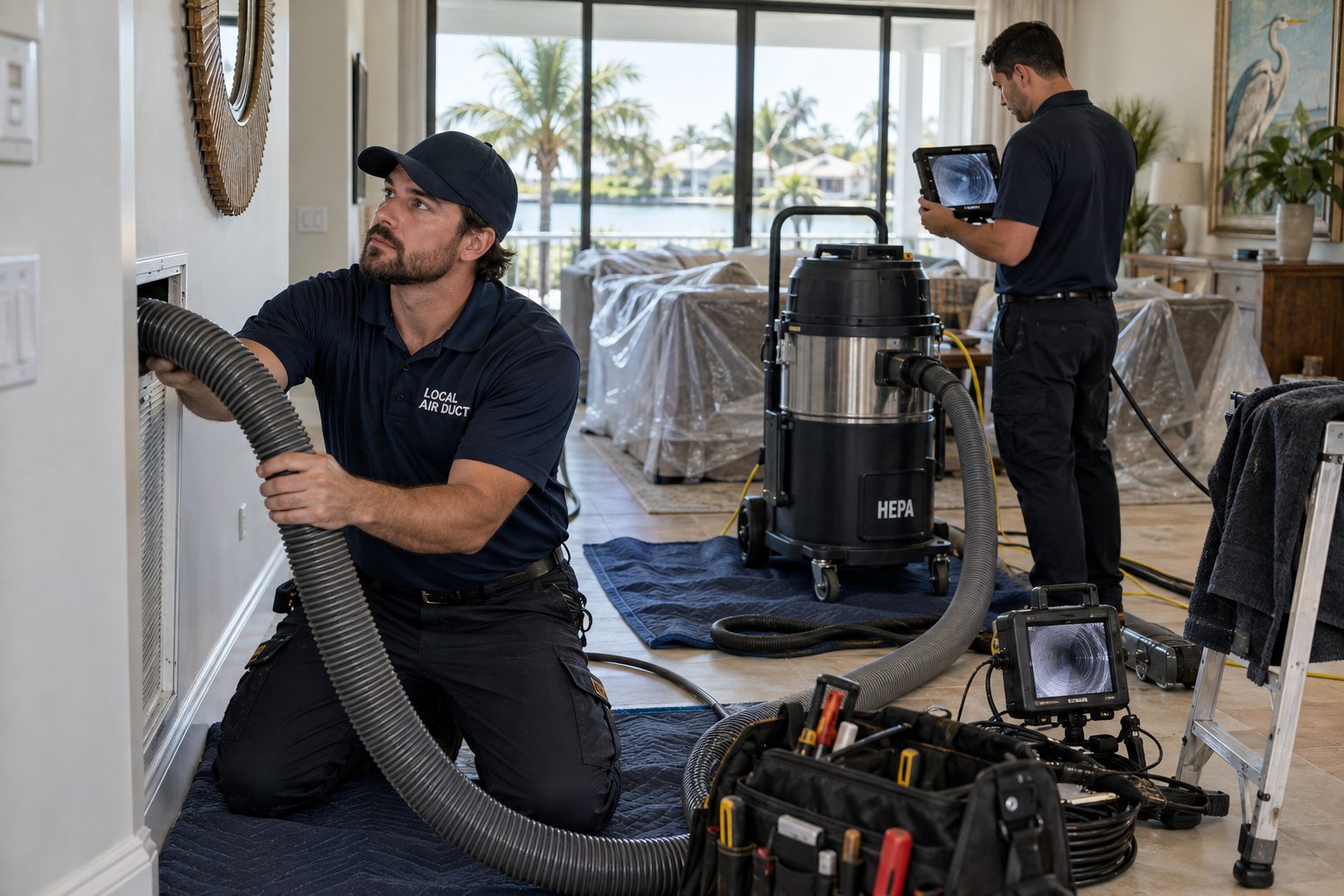
During the work, technicians typically use negative pressure so the dislodged dust is pulled into a collection unit rather than pushed around the house. Agitation tools loosen buildup from the duct walls, and the supply and return sides are both treated. Registers are removed, cleaned and put back, and openings are protected so floors and furniture stay clean.
At the end you should see before and after photos and have a final check explained to you. That record matters because ducts are hidden, and photos are the only way to confirm what was done. You can read more about that in the before and after photo guide, which explains what useful pictures actually show.
Ask who will be doing the work and what to expect on arrival. You should be told what the crew will bring, which areas of the house they need to reach, and roughly how they will protect your floors. If any part of the plan is unclear, say so before anything is opened. A calm, specific explanation at this stage is a good sign that the rest of the job will be handled the same way.
Getting the scope right before you agree to anything
Not every system needs every service. Some homes need only the supply and return ducts cleaned, while others also need the coil and blower looked at, since those components sit directly in the air stream. The air duct cleaning scope guide lays out the common components so you can tell whether a proposal covers what you are told it covers.
Ask how many returns and supplies are included, whether the air handler is part of the work, and whether the plenum and trunk lines are accessed or only the register openings. A vague proposal that says whole house without describing parts is a reason to ask more questions. A clear one names the system components and what will be done to each.
Also ask what happens if the crew finds something outside cleaning, such as a torn duct or wet insulation. A reliable provider stops, shows you, and explains options before continuing. You are under no obligation to approve repairs on the spot, and you can always compare with a second opinion before deciding.
If your home has more than one system, ask whether the proposal treats each air handler separately. Larger houses are often split into zones, and a scope written for a single unit will not cover the others. Seeing the system count written down prevents misunderstandings on the day of the visit and helps you compare two proposals fairly.
The coil and blower are part of the story
Many homeowners focus on the long metal runs and forget that the heart of the system is the air handler. The blower wheel and evaporator coil collect dust too, and a coil coated in debris restricts airflow and holds moisture longer. If your system smells when it starts, the coil is often involved, and coil and blower cleaning addresses that directly.
Blower wheels are shaped like a squirrel cage with many narrow fins. A layer of dust on those fins makes the fan less efficient and can add noise. Cleaning them requires access, and in some installations that access is tight, which is why an inspection first is more useful than a promise made over the phone.
Coil cleaning also needs care because the fins are delicate and the drain pan nearby can clog. A technician who treats the coil should explain what cleaner is used, how runoff is controlled, and how the drain is checked. Those details tell you whether the person understands the equipment or is simply following a routine.
Access matters as well. Some air handlers sit in a tight closet, others in an attic where space and heat limit how long anyone can comfortably work. Telling the provider where yours is located lets them plan tools and protection in advance. It also gives them a chance to say honestly if a particular unit is difficult to reach and what that means for the scope.
When ducts are damaged rather than dirty
Sometimes the real problem is not dust but a leak. Flexible ducts in attics can pull loose at a collar, tear when someone walks across them, or sag into a pinched shape. Air escaping into the attic wastes cooling effort and can draw hot, humid air back toward the system. If your upstairs rooms struggle while the system runs constantly, duct repair and sealing may matter more than cleaning.
Sealing is generally done at joints and connections using appropriate materials, not the household cloth tape that dries and peels. A repair visit should show you the failed section, explain what changed, and leave the area tidy. Photos again make the difference between trust and guesswork.
Cleaning a leaking duct system first can be a waste, because dust will be pulled in again through the same gaps. When both problems exist, the sensible order is to repair, then clean, so the clean system stays clean. Ask any provider you speak with how they would sequence the work for your house.
Insulation on the outside of ducts is another thing to look at. Wet, flattened or missing insulation lets the cold duct surface sweat in a hot attic, and that moisture can stain ceilings and feed the musty smell people notice. If the insulation is damaged, cleaning the inside of the duct will not stop the sweating. Mention it if you see stains on a ceiling below an attic run.
Preparing the house so the visit goes smoothly
Clear a path to the air handler, and make sure the closet or attic access is not blocked by storage. Move small furniture away from floor registers and wall grilles so they can be removed without scraping. Pets should be secured in a room away from the work, since open registers and equipment can frighten them.
Plan to be home, or have a trusted adult present, because you will want to see the inspection and approve the scope. Occupied homes are normal for this kind of work, and a careful crew protects floors and keeps dust contained. If anyone in the house has breathing sensitivities, mention it when you call so the approach can be discussed.
Afterward, replace your air filter with a fresh one. A new filter keeps the newly cleaned system from collecting dust at the same pace as before. Choose the filter size and rating your equipment calls for, since a filter that is too restrictive can strain the blower.
Think about the days around the visit as well. Wipe down surfaces and vacuum a day or two afterward, because a small amount of settled dust is normal once registers have been handled. Keep windows closed on the day so outdoor air does not undo the effort. Small habits like these help you judge the results honestly.
Dryer vents and air quality as related topics
Ducts are not the only hidden airflow path in a Weston home. The dryer vent carries hot, lint laden air to the outside, and a clogged vent is a fire concern as well as a drying problem. If your clothes take longer than they used to, or the laundry area feels unusually warm, see dryer vent cleaning for what the work involves.
If your main concern is how the air feels or what it carries, indoor air quality testing can add information before you spend on cleaning. Testing is not a verdict by itself, but it can help separate a duct problem from a humidity issue or an unrelated source.
Seeing these services together helps you plan. A household that is already scheduling duct work might as well ask whether the dryer vent was ever cleaned, since the crew is already in the house and a separate visit can be avoided.
Condominium and townhome residents should add one more question. Shared buildings sometimes have shared vertical chases or exhaust lines, and the unit owner may only be responsible for the portion inside the unit. Ask the property manager or association who handles each part before booking, and tell the provider what you learn so the scope matches reality.
Comparing your options with nearby communities
Homes across Broward County share a climate but not a floor plan. If you want to compare how the same questions play out nearby, the pages for Davie, Pembroke Pines and Miramar cover the same topics in their own words. The differences are mostly about property type, not about method.
There is also a more detailed Weston air duct cleaning guide and a page on duct inspection in Weston that go further into what to look for before deciding. Reading both takes only a few minutes and will leave you better prepared for the phone call.
Whatever you choose, treat the decision as practical rather than urgent. Unless there is visible growth, water damage or a strong smell, you have time to ask questions, compare explanations, and pick a provider who communicates clearly.
A short comparison list can keep you organized. Write down what each provider says will be included, how the price is explained, and what they will show you afterward. Differences in those three points usually matter more than small differences elsewhere. Keep the notes with your home paperwork.
Making the call with confidence
When you call, describe your home type, the age of the system if you know it, and the symptom that made you reach out. Say whether the home has more than one air handler, since that changes the scope considerably. The more specific you are, the more useful the answer will be.
Expect to hear what the inspection involves, how the scope and price are explained before work begins, and how results are shared. If anyone pushes you to commit before they have seen the system, take that as a signal to slow down. Honest providers are comfortable with questions.
Once the work is done, keep the photos and any notes with your home records. If you sell, rent or hand the property to a property manager later, that paper trail shows the system has been cared for.
Finally, set a rhythm for yourself. Check the filter on a regular schedule, glance at your registers now and then, and notice if smells or dust patterns change. Early attention to small signs is what keeps larger problems from forming, and it costs nothing but a little awareness.
Common questions
How do I know if my Weston home actually needs duct cleaning?
Look for dust blowing from registers, a musty smell when the system starts, rooms that stay warm, or debris near the grilles. None of these proves the ducts are the cause, so an inspection comes first. A good provider will show you what they find and explain whether cleaning, repair or neither is the sensible next step.
Will the crew make a mess inside my home?
A careful crew protects floors and furniture, uses negative pressure so loosened dust is collected rather than spread, and removes and replaces registers neatly. You should still clear access to the air handler and move small items away from vents. Photos and a final check at the end let you confirm the work was done cleanly.
Should the coil and blower be cleaned along with the ducts?
Often they should, since both sit in the air stream and collect dust and moisture. A dirty coil can cause smells and weaker airflow that cleaning the duct runs alone will not fix. Ask during the inspection whether the air handler is included in the scope, and what condition the coil and blower are in.
Is duct cleaning useful if my ducts are leaking?
Cleaning a leaking system is only a partial fix, because dust can be pulled back in through the same gaps. When both problems exist, repair and sealing usually come first, followed by cleaning. Ask any provider how they would sequence the work, and expect them to show you where the leak is.
Do I need to be home during the visit?
Yes, or have a trusted adult there. You will want to see the inspection, hear the scope and price before work begins, and go over the final check. Occupied homes are normal for this work, and the crew should work around your household while keeping dust contained and areas protected.
Does this page describe Weston rules or local conditions?
No. It is general guidance for households in the area and does not state local regulations, association requirements or neighborhood facts. If your community, building or association has rules about contractors, work hours or access, ask the property manager or association directly before scheduling.