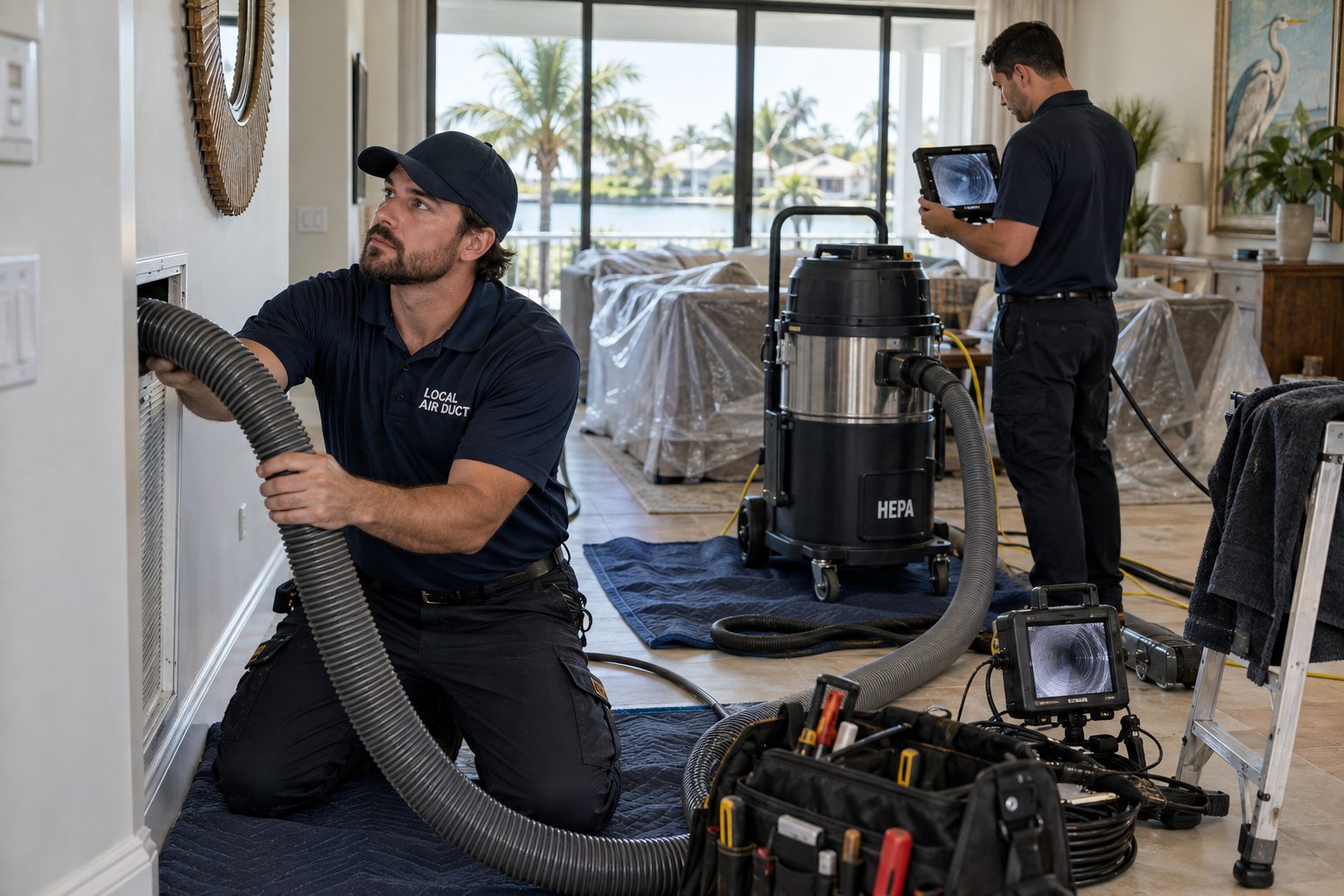
About this guidance
This page offers general guidance for people in Davie, Florida. It does not describe particular roads, neighborhoods or communities, and it makes no claim that work has been done in any specific place. Its goal is practical: to help you understand how duct cleaning works so that you can have a better conversation about your own property.
Davie properties come in many forms, including townhomes, single family houses on varied lot sizes, and homes that have grown over time through additions. Some owners also use outbuildings, home offices or workshops. The advice below follows that variety and highlights the points that matter most when a system is larger, older or modified.
When a rule or requirement comes up, such as association policies or city regulations, the page says that requirements vary and points you to the right person to ask. Treat each section as a prompt for a question, not as a verdict on your property, because only an inspection of your own system can tell you what is really going on inside the ducts and around the air handler. Bring what you learn to the first phone call, along with the details you noticed while walking through your own property. Specific observations, however small, help the provider ask better questions and help you judge whether the answers fit your situation.
Before you call, walk through the property for five minutes with a flashlight. Look at a few supply registers, find the return grilles, locate each air handler and note which rooms feel different from the rest. Take a few photographs with your phone. That small effort turns a vague worry into a set of facts, and facts are what let a provider describe a sensible plan without guessing.
Why additions and long runs change the picture
A house that has been expanded often shares one air handler across rooms that were never part of the original plan. The duct run to a new bedroom or family room may be long, with several turns, and a longer run has more surface for dust to settle and more joints that can leak. Airflow at the far end can be weaker, which owners sometimes blame on dirt when the cause is design.
That is why an inspection must look at the layout as well as the dirt. Is the far room weak because the duct is crushed, disconnected, undersized or simply long? Cleaning may help where debris restricts airflow, but it will not fix a duct that was never sized for the load. A responsible provider will explain which problem they see.
If your home has had work done, tell the provider about it. Describe which rooms were added, whether a garage was converted, and when the work took place. Even approximate answers help the crew plan access, anticipate surprises and decide where to look first.
Think about whether airflow problems are new or old. A room that has always been hard to cool points toward design, while a room that changed recently points toward something that moved, broke or filled with debris. Mention the timeline, because it tells the inspector whether to look first at the original layout or at the parts most likely to have been disturbed. Owners who remember what changed and when are a great help to the crew.
- Rooms at the end of a long run that feel weak or stuffy.
- A converted garage or added room sharing an older system.
- Visible kinks or sags in flexible duct in the attic.
- Dust streaks near joints or at the air handler connection.
- Different comfort levels between old and new parts of the house.
Dust that arrives from outdoors
Homes on larger lots, or near open ground, can see more outdoor material come inside: pollen, soil dust, leaf fragments and the fine debris that comes from landscaping and construction nearby. Every time a door opens, some of it enters. Some also rides in on shoes, pets and laundry.
This material tends to collect in the first places the airflow slows down, such as return grilles, filter slots and the base of the air handler. A filter that is too thin or too old cannot hold back as much. If your filter looks packed after a short time, that is useful information, and you should mention it on the call.
Landscaping work nearby adds its own surge. Mowing, trimming, blowing and soil work lift fine particles into the air for hours, and an open door or a garage left up lets them drift inside. If you notice more dust after outdoor work, note the timing and check your filter and returns. Patterns like that help the provider see whether the source is outside, inside or both. Simple habits help. Use door mats, keep windows closed when the system is running, change the filter on a schedule and vacuum with a sealed system when you can. These steps reduce what reaches the ducts, and they make the benefit of any cleaning last longer.
Look at your return grilles as a barometer. A return that gathers a visible coat of dust within a short time tells you the household or the surroundings produce a lot of material. A return that stays clean for months suggests the filter and the system are doing well. Cleaning a return grille with a soft brush is a safe habit, as long as the system is off and you do not force anything.
Workshops, garages and the dust they make
Some Davie owners use a garage or small building for woodworking, car care, hobbies or storage. These spaces generate fine dust, fumes and overspray, and if a return grille or air handler sits nearby, the system can draw those particles into the airflow. Sawdust and sanding dust in particular can coat the coil and blower.
If you work in a space with equipment that creates dust, describe it to the provider. Tell them whether the air handler is in the same room, whether a return is nearby, and how often you work. This changes what the inspection looks for and how the cleaning is planned.
Fumes are a safety matter. If you ever notice a chemical smell in living areas when the air conditioning runs, do not treat it as a cleaning issue. Open windows, stop the activity that causes the smell, and ask the proper trade to investigate how air is moving between the garage and the house.
Sealing matters here too. Garages should be separated from living space, and a return duct with gaps in a garage can pull the garage air into the system. If your inspection shows loose or open connections near a garage, discuss repair with the provider and, where rules apply to the separation of spaces, ask your city office or a qualified trade what is required, since requirements vary.
Two story homes and attic air handlers
In a two story home, the upstairs system often sits in the attic, and the ducts run through a hot space. Heat affects flexible duct and insulation, and the attic is where leaks and sagging are most likely. The ground floor may be served by a separate unit in a closet or garage.
Working in an attic takes care. Space is limited, temperatures are high, and framing can be hard to move around. A trained crew plans for safe working conditions, and you should expect them to explain what can be reached and what cannot.
Ask which system serves which floor and whether both are included in the scope. It is common for one system to be cleaner than the other, and it is common for owners to assume that both were done when only one was. Clear language prevents that mistake.
Attics also tell stories. Look for compressed insulation, signs of past leaks, droppings or nesting material, and ducts lying against hot roof framing. You can peek into a hatch from a ladder if it is safe, but never step between joists or move around the framing yourself. Describe what you saw, and let the trained crew confirm it during the inspection.
The coil and blower behind all of it
The evaporator coil and blower do the heavy lifting in any system. The blower moves the air, and the coil removes heat and moisture. When they are coated, airflow falls, the system runs longer, and damp grime can produce odors.
Cleaning them is a different task from cleaning ducts. The cabinet has to be opened, the blower wheel reached, and the coil cleaned with methods that suit the metal fins. The coil and blower cleaning page describes the work in general terms.
If the coil and blower are not part of the plan, ask why. Sometimes access is limited, and sometimes the equipment simply does not need work. But the answer should be given plainly, and you should see photos that support it.
Humid weather puts extra pressure on these parts. A coil that stays wet for months of cooling is a natural home for damp grime, and the drain pan below it carries away water that can pick up dirt on the way. If you notice a musty smell when the system starts, a slow drip or a stained ceiling near the air handler, say so on the call. Those clues guide the inspection toward the places that need attention.
What a clear scope looks like
After the system is inspected, the provider should explain what will be cleaned and what will not. In a larger home, that might include supply registers, returns, branch ducts, trunk lines, plenums and the air handler components. Each item should be named, and exclusions should be stated.
The scope guide offers a checklist you can use to compare descriptions. If a piece is missing, ask. If a piece is included that seems unnecessary, ask why. A fair provider will welcome the questions, because questions let the scope become more accurate. Ask also how long each part of the work is expected to take in general terms, without a promise, so you can plan your day around the visit. The provider cannot know every detail until the system is opened, and an honest answer will say so.
The price should be explained before work begins, along with what could change it. If the crew finds a disconnected duct, crushed flex or wet insulation, the right response is to stop, show you and agree on the next step.
Occupied homes call for extra planning. Furniture near vents, children's toys, pets and delicate flooring all affect how the crew sets up. Tell the provider about anything that needs special care, and ask how floors and furnishings will be protected. A clear conversation here prevents most of the small frustrations that otherwise turn up during the visit.
Dryer vents in larger homes
Larger homes sometimes put the laundry room in the center of the house or upstairs, which means the dryer vent has farther to go. A long path with several elbows collects lint, and the farther the lint has to travel, the more likely it is to settle.
Watch for towels that stay damp, a laundry room that gets very warm, or lint around the outside cover. Those signs suggest restricted airflow. Read about dryer vent cleaning to see how the service works and why it is separate from duct cleaning.
Do not try to reach into the vent or work at height outside. Unplug the dryer, clear the visible lint trap and the space behind the machine, and leave the rest to a trained technician.
If you also own a detached workshop or a second building with its own dryer, keep an eye on that vent too. Secondary laundry spaces are easy to forget, and a vent that is used less often can still hold lint that has been sitting for a long time. Mention every dryer on the property when you call so the plan accounts for all of them.
Repair, sealing and insulation
Long runs through hot attics are exactly where leaks and damaged wrap appear. A disconnected branch pours cooled air into the attic and pulls hot, dusty air back through the return. Cleaning will not change that. The duct repair and sealing page explains how leaks are found and fixed.
Insulation also matters. Torn or missing wrap lets ducts sweat in humid weather, which stains ceilings and encourages odors. Read about attic duct insulation if you see damaged sections.
Ask to be shown any damage the inspection finds. Photos of the exact spot, with a plain explanation of what is wrong and what the fix involves, are the strongest foundation for a decision. They let you pause, think and ask another trusted person for an opinion without feeling pressed.
Neighboring areas and where to read next
People in Davie often compare nearby places, so you may want to read the pages for Plantation and Pembroke Pines. There is also a longer Davie duct cleaning guide and a wider service area overview.
Whatever you read, the process is the same. You describe the property and the symptom, the system is inspected, the scope and price are explained before work begins, and before and after photos and a final check are shared.
Keep your notes and photos in one place so that you can compare conditions later or explain the history to a future owner. Include the date, the rooms involved, what was found and what was recommended for later. A tidy record is useful to the next air conditioning technician, to a property manager, and to you when you try to remember whether a certain vent was cleaned last season or the season before.
If you are still deciding, give yourself permission to take the first step without committing to the whole job. A phone call to describe the property and the symptom costs nothing in time or trust. The inspection that follows is where the scope becomes real, and it is where you learn whether the provider explains things the way you would like. Everything after that is a choice you can accept, adjust or decline.
Common questions
Why does the far room in my house feel weaker than the others?
Several causes are possible, including a long duct run, a crushed or disconnected section, an undersized duct or a dirty filter. Cleaning helps only when debris is part of the problem. An inspection should look at the layout and explain what it finds.
Can workshop dust get into my air conditioning system?
Yes, if a return grille or air handler is near the dusty space. Fine sawdust and sanding dust can coat the coil and blower. Tell the provider about the workshop so the inspection looks in the right places and the plan fits what you do.
Should I clean the upstairs and downstairs systems together?
Many owners do, but each system has its own ducts and equipment. Ask for each one to be named in the scope so you know exactly what was included. Clear wording prevents the common mistake of assuming that both were cleaned.
What if the inspection finds a disconnected duct?
The crew should stop, show you the problem and explain the options. Repair may be needed before cleaning will hold. You decide whether to proceed, and the scope and price should be updated and explained before additional work begins.
How can I reduce outdoor dust inside the home?
Use door mats, keep windows closed while the system runs, change the filter on schedule and clean return grilles gently. These habits reduce what reaches the ducts. They do not replace cleaning when buildup exists, but they help any cleaning last longer.
Does this page mean work has been done in Davie?
No. It is general guidance for people in Davie and does not claim past jobs in any neighborhood. To learn what can be arranged for your property, call, describe the home and the symptom, and let the process begin with an inspection.